Cocoons
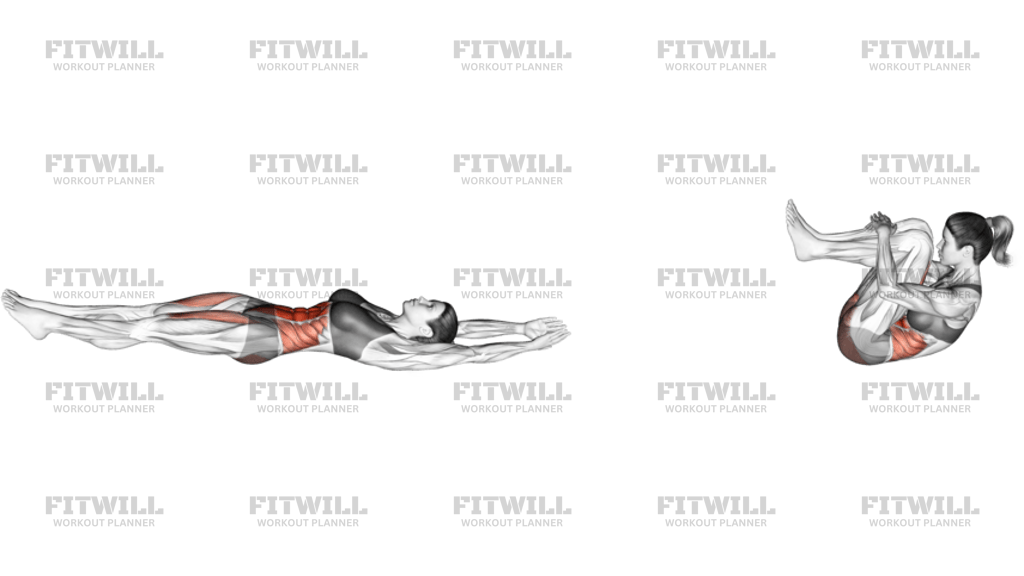
Cocoons are a floor-based core compression exercise that moves from a long, extended body position into a tight tuck and back again. The drill trains controlled trunk flexion, rib control, and coordinated hip fold, so the abs do more than just crunch the torso forward. In the starting position, the body is stretched out and organized; in the finish, the knees draw in and the torso folds into a compact ball shape.
This exercise is especially useful when you want a bodyweight core movement that feels more deliberate than a fast crunch. The abdominal wall, deep stabilizers, and hip flexors all contribute, but the quality of the rep depends on how well you keep the spine and pelvis controlled as you change shape. If the low back arches or the neck takes over, the movement stops being a cocoon and turns into a sloppy leg pull.
Setup matters because the first few inches of the rep determine the rest of it. Lie on your back with your arms reaching overhead and your legs long, then use an exhale to curl the ribs down and bring the shoulders off the floor before folding the knees in. The movement should feel smooth and compact, not explosive. If you need to bend the knees a little or shorten the range to keep the lower back quiet, that is the correct adjustment.
At the top, think about drawing the knees toward the chest while keeping the shoulders soft and the chin gently tucked. On the way back out, release the tuck slowly and return to the long position with control instead of dropping the limbs and losing tension. Cocoons fit well in core circuits, warm-ups, and accessory work where you want clean repetition quality, body awareness, and a strong contraction without external load.
[ Workout Log & Planner ]
Put your next workout in Fitwill
Keep your plan and training log ready when you are.


Instructions
- Lie on your back on a mat with your legs straight, feet together, and arms reaching overhead.
- Set your ribs down and keep a slight posterior pelvic tilt so your lower back does not arch.
- Take a breath in, then exhale to curl your head, shoulders, and upper back off the floor.
- Sweep your arms forward as you fold at the hips and draw your knees toward your chest.
- Bring the body into a tight tuck or hug the shins with your arms without yanking on the neck.
- Pause briefly in the compact position and keep the ribs closed instead of flaring open.
- Inhale as you slowly release the hold and extend your legs back out under control.
- Reach the arms overhead again and return to the long starting shape without bouncing.
- Repeat for the planned number of reps with the same controlled tempo on every repetition.
Tips & Tricks
- Keep the neck long by moving the ribs and torso first instead of pulling hard with the hands.
- If your low back lifts or arches on the way out, shorten the extension and keep a small knee bend.
- Think about closing the space between your ribs and pelvis rather than throwing the knees upward.
- Use a slow return so the abs keep working after the tuck instead of relaxing at the top.
- Let the exhale start the rep; the breath helps you compress before the knees move in.
- Stop the set when the tuck becomes jerky or you start swinging the legs to finish reps.
- Keep the shoulders relaxed away from the ears when you come into the compact position.
- A mat helps, but the real goal is to keep the spine controlled against the floor throughout the set.
Frequently Asked Questions
What muscles do Cocoons work most?
They primarily train the abdominals and deep core, with the hip flexors helping as the knees fold toward the chest.
Can beginners perform this exercise?
Yes. Beginners should keep the range smaller at first and focus on smooth control rather than forcing a huge tuck.
Do I need any equipment for Cocoons?
No equipment is required, just a mat or a comfortable floor surface.
Should my legs stay straight the whole time?
The starting position is long and straight, but the rep finishes in a tuck. If straight legs make your low back arch, bend the knees slightly on the return.
Why does my neck feel tense during Cocoons?
That usually means you are pulling with the arms or craning the head forward. Keep the chin gently tucked and let the torso do the work.
How is this different from a standard crunch?
A cocoon goes from a long, stretched body position into a compact tuck, so it trains more full-body compression and control than a short crunch.
What is the biggest form mistake?
Rushing the return and letting the lower back arch or the legs swing open instead of extending under control.
How can I make Cocoons harder?
Slow down the lowering phase, pause longer in the tuck, or keep the legs straighter as long as the spine stays controlled.