Barbell Lying Close-Grip Triceps Extension
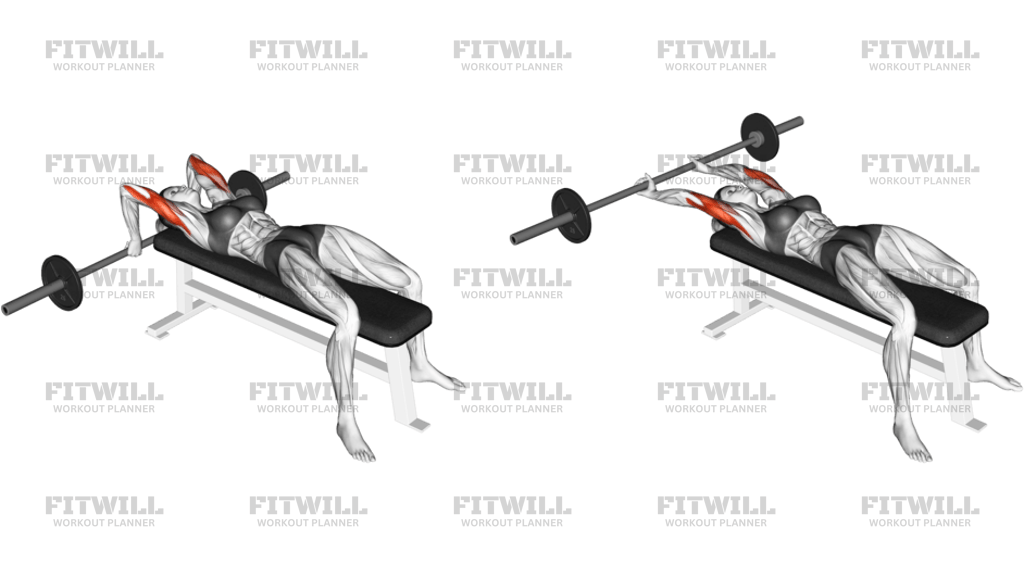
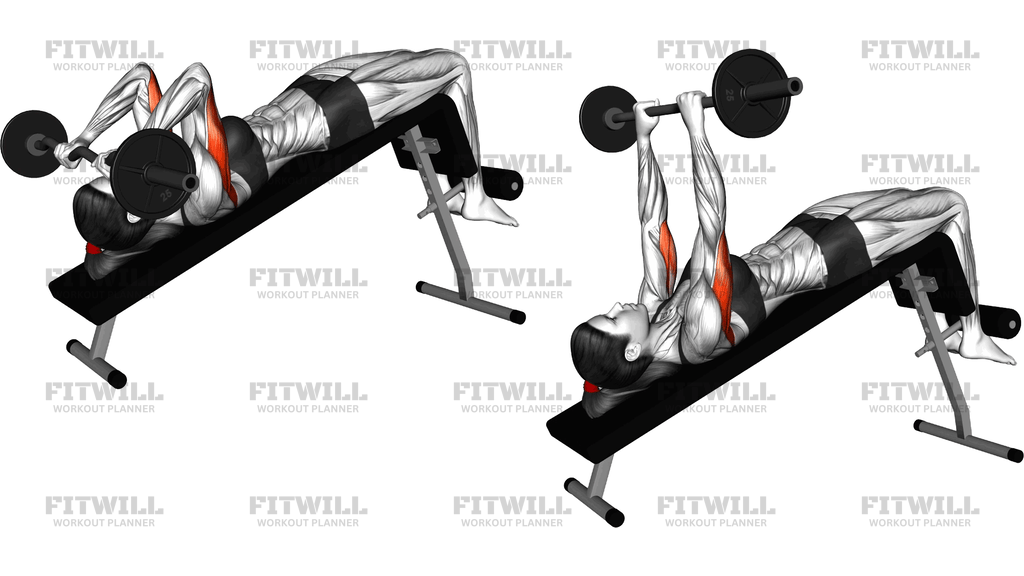
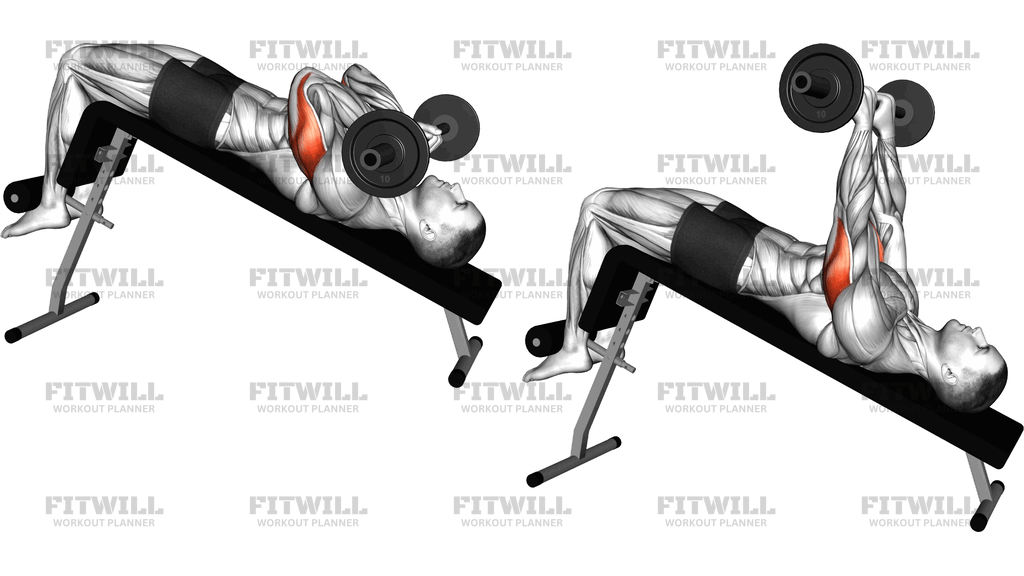
The Barbell Lying Close-Grip Triceps Extension is a bench-based isolation press for the triceps. You lie flat on a bench, hold the barbell with a narrow grip, and flex and extend the elbows so the bar travels in a short arc over the face or just behind the forehead. The movement looks simple, but the setup matters because small changes in elbow angle, wrist position, and shoulder position change how much tension stays on the triceps.
This exercise mainly trains the triceps brachii, especially when you keep the upper arms steady and let the elbows do the work. The forearms grip and stabilize the bar, the shoulders help anchor the upper arm, and the torso braces against the bench so the rep does not turn into a whole-body press. That combination makes the Barbell Lying Close-Grip Triceps Extension useful for lifters who want direct triceps work without relying on chest drive or leg drive.
A good setup starts with your head near the top of the bench, feet planted, shoulder blades pulled back and down, and the bar stacked over your upper chest or face. Use a grip that is narrow but still lets your wrists stay straight. If the grip is too tight, the wrists fold back and the elbows flare; if it is too wide, the triceps lose some of the direct loading this exercise is meant to create.
During the rep, lower the bar slowly by bending only at the elbows while keeping the upper arms mostly fixed. The bar should descend in a controlled arc toward the forehead or slightly behind the head, depending on shoulder comfort and the bench angle. Press the bar back up by extending the elbows until the arms are straight again, then stop before the shoulders drift forward or the bar bounces off position.
The Barbell Lying Close-Grip Triceps Extension is useful as accessory work after pressing, on arm-focused days, or whenever you want a controlled triceps stimulus with minimal momentum. It is also a good exercise for learning to separate elbow extension from shoulder movement, which carries over to other pressing patterns. Keep the load honest, the tempo deliberate, and the range pain-free; if the elbows or wrists complain, shorten the descent slightly and keep the rep path smooth rather than forcing a deeper stretch.
[ Workout Log & Planner ]
Put your next workout in Fitwill
Keep your plan and training log ready when you are.


Instructions
- Lie flat on a bench with your head near the top edge, feet planted on the floor, and your eyes lined up under the bar.
- Grip the barbell just inside shoulder width, wrap your thumbs around the bar, and keep your wrists stacked over your forearms.
- Unrack the bar or bring it to the starting position above your shoulders with your elbows straight and your upper arms nearly vertical.
- Pull your shoulder blades back and down into the bench so your chest stays open and your upper arms stay steady.
- Lower the bar in a slow arc by bending only at the elbows, guiding it toward your forehead or slightly behind your head.
- Keep your elbows pointed mostly up and avoid letting them drift wide as the bar descends.
- Reverse the motion by straightening your elbows and pressing the bar back to the start without bouncing.
- Exhale as you press up, inhale on the way down, and keep the rep smooth from the first rep to the last.
- Finish the set by returning the bar to the rack or the starting position with control before sitting up.
Tips & Tricks
- Use a grip that is narrow enough to load the triceps but wide enough that your wrists stay stacked instead of bent back.
- If your elbows flare, lower the bar toward the top of the head instead of forcing it lower behind the bench.
- A 2-3 second lowering phase keeps tension on the triceps and prevents the bar from dropping under control.
- Keep your upper arms nearly fixed; if they swing toward your chest, the exercise turns into a sloppy press.
- If the bar touches your forehead area, keep the path short and controlled rather than letting it crash into the bench line.
- Use a spotter or rack safeties when the load is heavy, because a missed rep finishes near your face.
- Stop the set when your wrists start folding back or the elbows lose their narrow path.
- A slightly lighter load with cleaner elbow tracking usually grows the triceps better than a heavier cheat rep.
Frequently Asked Questions
What muscles does the Barbell Lying Close-Grip Triceps Extension train most?
The triceps are the main target, with the forearms gripping the bar and the shoulders stabilizing the upper arms on the bench.
Is the Barbell Lying Close-Grip Triceps Extension the same as a skullcrusher?
Yes. Skullcrusher is the common nickname for this lying triceps extension pattern, especially when the bar travels toward the forehead or slightly behind it.
Where should the bar go on the way down?
Lower it in a controlled arc toward the forehead or just behind the head. The best stopping point is the one that keeps the elbows tucked and the shoulders from drifting forward.
Why do my elbows flare during the Barbell Lying Close-Grip Triceps Extension?
That usually means the grip is too wide, the load is too heavy, or the bar is being lowered too far. Narrow the grip slightly and keep the upper arms more vertical.
Can beginners do this exercise safely?
Yes, if they start light, use a spotter or safeties, and learn to keep the bar path controlled before adding load.
Why do my wrists hurt on the barbell?
The wrists usually hurt when they are bent back by an overly narrow grip. Keep the bar lower in the palm and stack the wrist over the forearm.
How is this different from a close-grip bench press?
The close-grip bench press uses chest and shoulder drive to move the bar. The lying close-grip triceps extension keeps the upper arms mostly fixed so the elbows do most of the work.
Should I use an EZ bar instead of a straight barbell?
An EZ bar can be easier on the wrists for many lifters, but the straight barbell is fine if your wrists stay stacked and the grip feels comfortable.