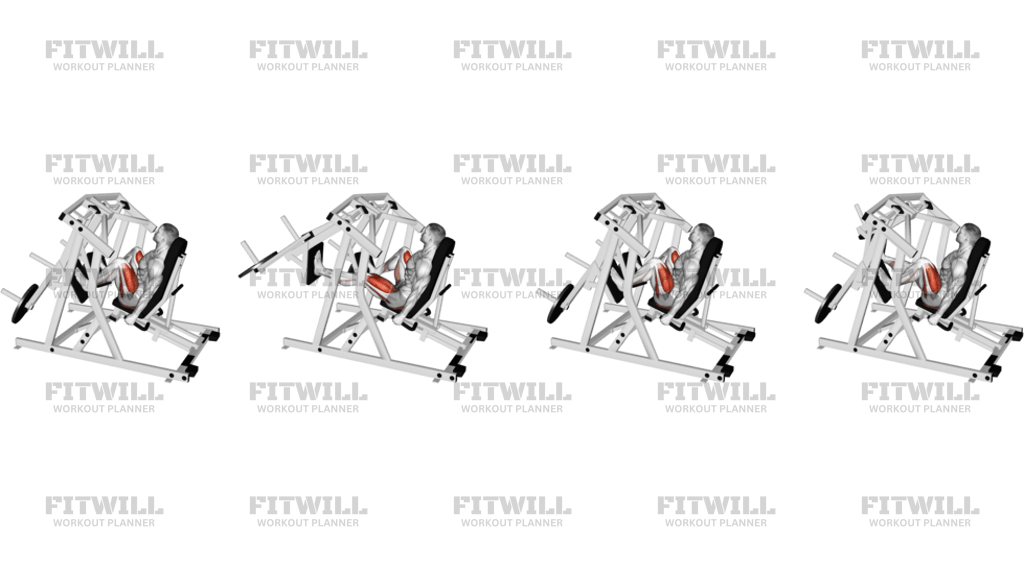
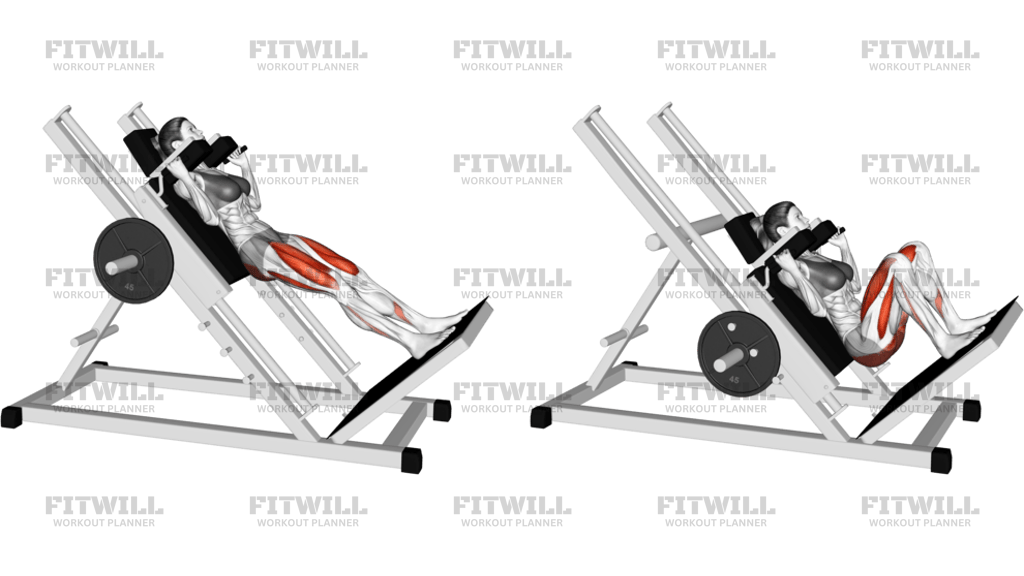
Lever Seated Leg Press
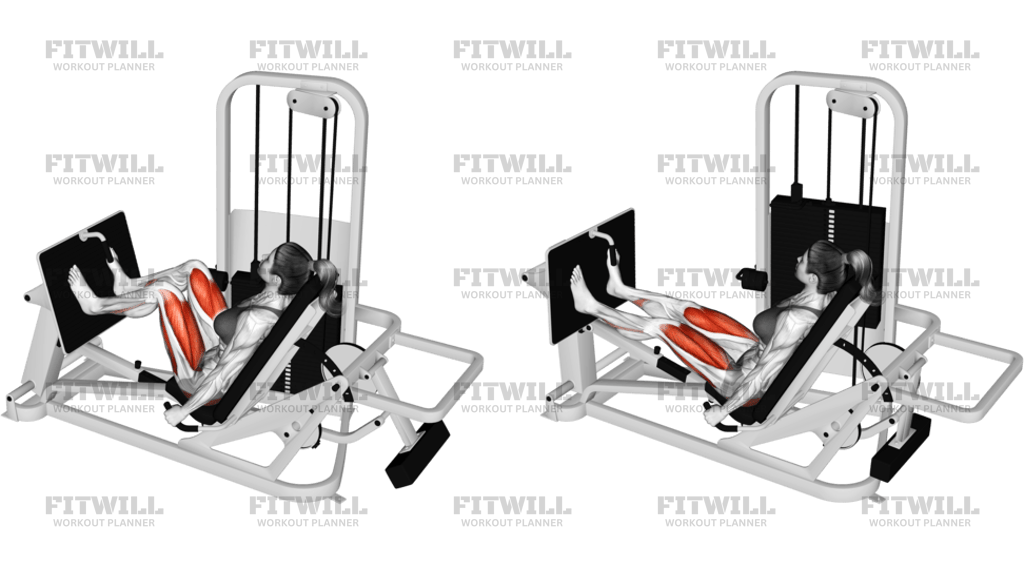
Lever Seated Leg Press is a machine-based lower-body strength exercise built around a fixed foot platform and a reclined back pad. The seated position lets you load the legs hard while keeping the torso supported, which makes the movement useful for quad-focused work, glute and hamstring contribution, and general leg strength when you want a stable pressing pattern.
The setup matters because the machine decides the line of force for the whole rep. With your back and hips anchored into the pad, your feet should sit flat and evenly on the platform, usually about shoulder-width apart with toes turned slightly out if that feels natural for your hips. The goal is to press through the full foot while keeping the knees tracking in line with the toes instead of collapsing inward.
On each rep, start from a bent-knee position that keeps the sled or lever under control, then drive the platform away by extending the knees and hips together. Stop short of locking the knees hard, especially if the machine allows a deep finish, and lower the weight back under control until the thighs approach the torso without the pelvis rolling off the pad. That controlled return is where the quads and glutes stay loaded rather than letting the stack or lever crash into the bottom.
Lever Seated Leg Press is especially useful for lifters who want leg volume without the balance demands of free-weight squats, or for sessions where the legs need focused work after heavier compounds. It can also be a practical option when the back prefers a supported position, provided the seat angle and depth do not force the hips to tuck under. Good reps should feel smooth, deliberate, and consistent from the first repetition to the last.
If the machine allows a long range of motion, only go as deep as you can without the lower back leaving the pad or the knees pinching inward. Load choice should let you keep the same foot pressure, knee path, and torso contact throughout the set. With that standard in place, Lever Seated Leg Press becomes a reliable builder for size and strength instead of a machine you simply survive.
[ Workout Log & Planner ]
Put your next workout in Fitwill
Keep your plan and training log ready when you are.


Instructions
- Sit back in the Lever Seated Leg Press with your hips and low back fully against the pad and your feet set flat on the platform.
- Place your feet about shoulder-width apart, with your heels planted and your toes angled slightly outward if that keeps your knees comfortable.
- Grip the machine handles or side supports, brace your trunk, and unlock the lever or release the safety only when you are stable.
- Lower the platform until your knees bend deeply and your thighs move toward your torso without your pelvis lifting off the seat.
- Press through your whole foot to drive the platform away, extending your knees and hips in one smooth line.
- Keep your knees tracking over your toes instead of caving inward as you push through the middle of the rep.
- Stop just short of hard knee lockout so the legs stay loaded and the joints do not snap at the top.
- Lower the platform again in a slow, controlled return and keep your back glued to the pad.
- Re-rack or re-engage the safety only after the final rep is fully controlled and the platform is settled.
Tips & Tricks
- If your hips tuck under at the bottom, reduce the depth before the low back rounds on the pad.
- A mid-foot pressure pattern usually feels more balanced than driving only through the toes or only through the heels.
- Let the knees travel naturally, but do not let them collapse inward when the load gets heavy.
- Move the feet higher on the platform to shift more work toward glutes and hamstrings; lower foot placement usually biases the quads more.
- Use a load that lets the sled or lever move smoothly without bouncing out of the bottom position.
- Keep the descent slow enough that you can feel the thighs lengthen instead of dropping into the stack.
- Do not slam into full knee lockout; a soft finish keeps tension on the legs and is easier on the joints.
- If your lower back feels strained, shorten the range and check that the seat angle is not forcing pelvic tilt.
- Exhale as you drive the platform away and inhale on the controlled return.
Frequently Asked Questions
What muscles does Lever Seated Leg Press work most?
It mainly trains the quadriceps, with glutes and hamstrings contributing to the press and the controlled return. The exact emphasis shifts with foot placement on the platform.
Where should my feet go on the Lever Seated Leg Press platform?
Start with your feet about shoulder-width apart and your whole foot flat on the platform. If the knees feel crowded, move the feet slightly higher until the path feels smoother.
How deep should I lower on this machine?
Lower only until your thighs approach your torso without your pelvis lifting or your lower back rounding off the pad. Depth is useful only if you can keep the same back contact and knee path.
Should my knees lock out at the top?
No. Finish the press with a soft bend in the knees so the machine stays under control and the joints do not snap into lockout.
Is Lever Seated Leg Press good for beginners?
Yes, it is often easier to learn than free-weight squatting because the machine supports your back and guides the path. Start light and learn where your feet and seat position feel best.
Why do my hips lift off the seat near the bottom?
That usually means the range is too deep for your current setup or mobility. Shorten the bottom range, keep your back glued to the pad, and press from a position you can control.
Can I use a wider stance on the Lever Seated Leg Press?
Yes, a slightly wider stance can feel better for some lifters, but only if the knees still track cleanly over the toes. Do not force a wide setup if it makes the pelvis rock or the knees cave.
How is this different from a squat?
The Lever Seated Leg Press removes most balance demands and keeps the torso supported, so the legs can be trained with less stabilization. That makes it useful for accessory work or higher-volume leg sessions.