Mid Air Lateral Raises With Switching Palms
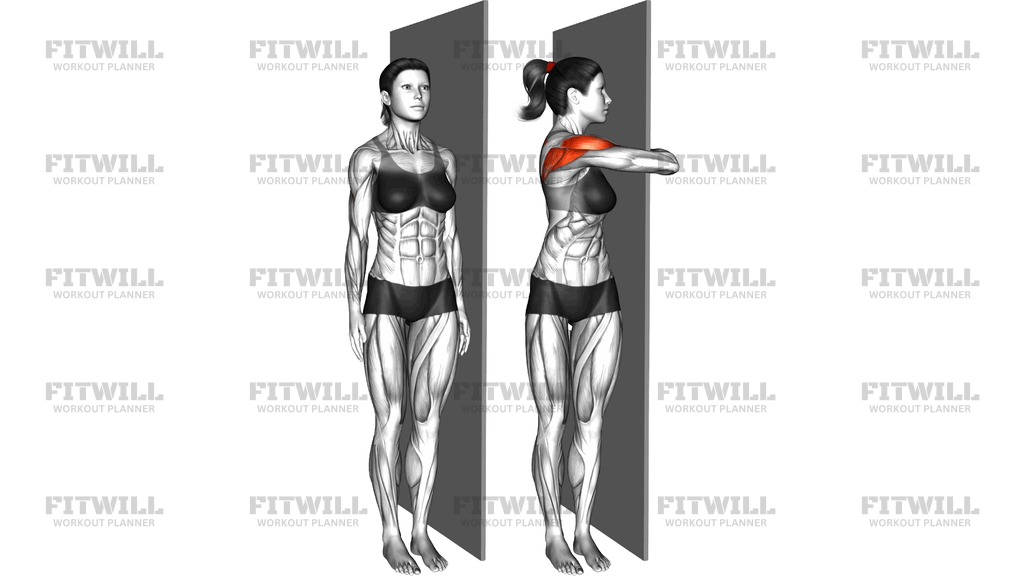
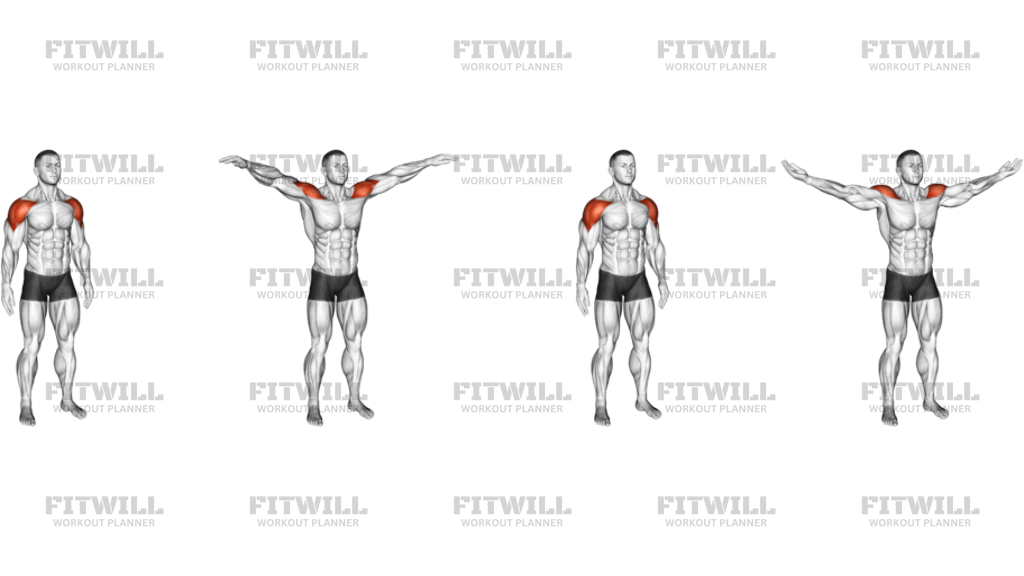
Mid Air Lateral Raises With Switching Palms is a standing shoulder drill that trains the delts through a controlled arm raise and forearm rotation. The movement is shown without external equipment, so the work comes from body position, timing, and control rather than load. It is useful when you want to build shoulder awareness, upper-arm coordination, and clean lateral raise mechanics without grinding through heavy resistance.
The main stress lands on the side and front portions of the shoulders, with the upper traps, upper back, and arms helping stabilize the motion. In anatomy terms, the primary work centers on the Deltoids, with help from the Trapezius, Rhomboids, and Triceps brachii. The palms switch during the lift to keep the shoulder action smooth and to encourage deliberate forearm rotation instead of a rushed, shrug-heavy raise.
Set up by standing tall with your ribs stacked over your pelvis, feet about hip width apart, and arms hanging relaxed at your sides. The first part of the rep should look organized before anything moves: shoulders down, neck long, elbows softly bent, and palms starting in a neutral position. That calm setup matters because this exercise is easy to turn into a fast arm swing if the torso is loose or the hands race ahead of the shoulders.
As you lift, move both arms out to the sides on a controlled arc until they reach shoulder height or the highest pain-free point you can own. Rotate the forearms as you rise so the palms switch from facing inward toward the thighs to facing down near the top. Keep the elbows slightly higher than the hands, avoid shrugging, and lower under control while reversing the palm rotation on the way back down. The goal is a smooth transition, not a forced twist.
This exercise is a good fit for warm-ups, shoulder accessory work, posture-focused training, and light technique days because it teaches the shoulders to move cleanly through abduction without relying on momentum. It is also a useful regression when heavier lateral raises feel too aggressive, since the range can stay short and precise. Stop the set if the neck takes over, the wrists start cranking, or the top position turns into a painful pinch.
[ Workout Log & Planner ]
Put your next workout in Fitwill
Keep your plan and training log ready when you are.


Instructions
- Stand tall with your feet about hip-width apart, knees soft, arms hanging at your sides, and palms facing your thighs or each other.
- Stack your ribs over your pelvis, lengthen your neck, and keep your shoulders down before the first rep starts.
- Set a slight bend in both elbows and keep that elbow angle nearly fixed for the whole set.
- Lift both arms out to the sides on a smooth arc instead of swinging them forward or backward.
- Rotate the forearms as the arms rise so the palms switch from neutral at the bottom to facing down near the top.
- Bring the arms to shoulder height or the highest pain-free point you can control without shrugging.
- Pause briefly at the top while keeping the shoulder blades quiet and the torso still.
- Lower the arms under control and reverse the palm rotation back to the start position.
- Reset your posture and repeat for the planned number of repetitions.
Tips & Tricks
- Think about reaching wide rather than shrugging up, so the upper traps do not take over the lift.
- Keep the elbow bend consistent; straightening the arms turns the movement into a different shoulder drill.
- Let the palm rotation happen gradually with the raise instead of snapping the wrists at the top.
- Stop the lift at shoulder height if the next inch forces your neck or lower back to compensate.
- Use a slower lowering phase to keep tension on the delts instead of dropping the arms back to your sides.
- Keep both sides symmetrical so one arm does not drift higher or rotate earlier than the other.
- If the front of the shoulder feels pinchy, raise the arms slightly in front of the torso instead of directly out to the side.
- Exhale as the arms rise and keep the torso quiet so the rep stays shoulder-driven.
Frequently Asked Questions
What muscles does Mid Air Lateral Raises With Switching Palms work most?
The side delts do most of the work, with the front delts, upper traps, rhomboids, and triceps helping stabilize the arm path.
Do I need any equipment for this exercise?
No. The image shows a bodyweight version, so the emphasis is on shoulder control, arm path, and palm rotation rather than external load.
What does the palm switch do during the raise?
It guides the forearms from a neutral start to a palms-down finish, which keeps the rep smooth and helps you control the shoulder rotation instead of forcing it.
How high should I lift my arms?
Stop at shoulder height or at the highest pain-free point you can own without shrugging or arching your back.
Should my elbows stay bent or straight?
Keep a small bend in the elbows and hold that angle steady. If the arms straighten and bend a lot, the movement stops feeling like a clean lateral raise.
Why do I feel this in my traps instead of my shoulders?
That usually means you are shrugging or lifting too high. Keep the shoulders down and think about reaching outward, not upward.
Is this exercise good for beginners?
Yes, because the range is easy to scale and the movement teaches shoulder control without needing heavy resistance.
What is the most common mistake with this movement?
Most people rush the raise, shrug at the top, or twist the wrists abruptly instead of letting the palms switch smoothly with the arm path.