Cable Bent-Over Row With Rope Attachment
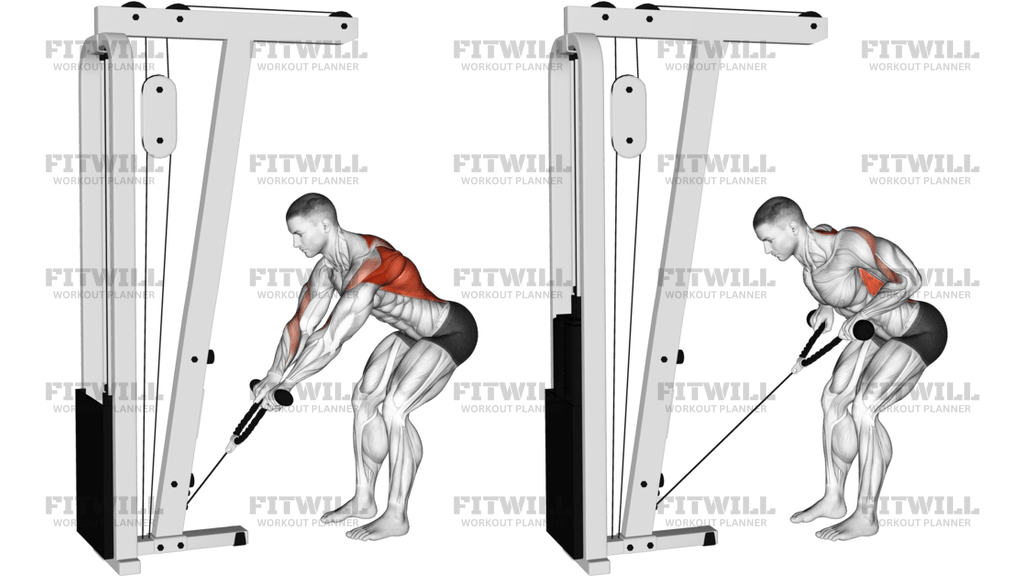
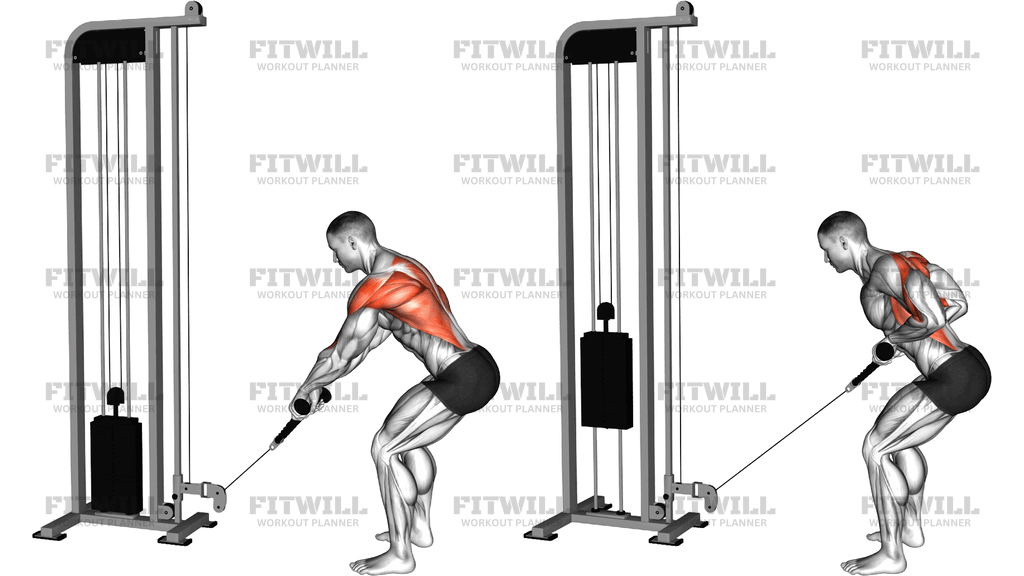
Cable Bent-Over Row With Rope Attachment is a bent-over cable rowing exercise that trains the back while asking you to hold a strong hip hinge and keep the torso from drifting upright. With a rope clipped to a low pulley, you lean forward, keep a soft bend in the knees, and row the handles toward the lower ribs or upper waist. The independent rope ends let the wrists stay neutral and make it easier to keep the elbows close to the body on every rep.
This movement is useful when you want constant tension through the lats, rhomboids, mid traps, rear delts, and arms while the spinal erectors and core work isometrically to hold your torso in place. Because the cable pulls from the start of the rep, the setup matters more than with a free-weight row: if your hinge is too shallow, the exercise turns into a standing pull; if your hinge collapses, the lower back takes over.
A good rep starts with the hips pushed back, chest open, and neck long. From that position, let the shoulders reach slightly forward at the bottom, then pull the rope toward your lower ribs by driving the elbows back and squeezing the shoulder blades. The rope should split as the handles come in, which helps keep the shoulders comfortable and the wrists in a natural line. Pause briefly near the top without leaning back or shrugging.
Lower the rope slowly until the arms are straight again and the cable tension is still pulling your shoulders slightly forward. That controlled return is part of the exercise, not just a reset. If the weight is too heavy, the torso will bounce, the hips will rise, and the row will lose its back-focused line of pull. A cleaner set comes from a stable hinge, a calm tempo, and a consistent path from the start to the finish of each repetition.
Use this row as a back accessory, a hinge-position pulling drill, or a cable variation when you want steady resistance without the need to balance a barbell. It fits well in hypertrophy work, general strength training, and upper-back-focused programs. The exercise is suitable for beginners when the load is light enough to keep the hinge, elbow path, and breathing pattern consistent from rep to rep.
[ Workout Log & Planner ]
Put your next workout in Fitwill
Keep your plan and training log ready when you are.


Instructions
- Set the cable pulley low and attach a rope, then stand facing the stack and hold one end in each hand.
- Step back until the cable is taut, hinge at the hips, and bend your knees slightly so your torso is close to parallel with the floor.
- Plant your feet about hip-width apart, keep your spine neutral, and let your arms hang straight under your shoulders.
- Set your ribs down and brace your trunk before you start the first pull.
- Let your shoulders reach slightly forward at the bottom without rounding your lower back.
- Pull the rope toward your lower ribs or upper waist by driving your elbows back and keeping them close to your sides.
- Squeeze your shoulder blades together at the top without leaning back or shrugging your shoulders.
- Lower the rope slowly until your arms are straight again and the cable has pulled your shoulders slightly forward.
- Reset the hinge and repeat for the planned number of reps with the same torso angle.
Tips & Tricks
- Pick a load that lets you keep the torso angle fixed instead of finishing each rep by standing taller.
- Aim the pull toward the lower ribs or waist, not the chest, so the elbows stay on a true rowing path.
- Keep the rope ends separated as they come in so your wrists can stay neutral instead of curling inward.
- If your lower back starts taking over, shorten the range and reduce the load before adding more reps.
- Keep the neck long and the gaze a few feet in front of you rather than cranking the chin up.
- Do not let the elbows flare wide; that usually shifts the work away from the back and into the shoulders.
- Use a brief squeeze at the top, then lower under control so the cable never goes slack.
- Exhale as you pull and inhale as the rope returns, which helps keep the torso braced and steady.
Frequently Asked Questions
What muscle does Cable Bent-Over Row With Rope Attachment target most?
It mainly targets the lats, rhomboids, mid traps, and rear delts, with the biceps and spinal erectors helping to finish and stabilize the rep.
Can beginners perform this exercise?
Yes. Beginners usually do best with a light load and a shorter set while they learn the hinge, elbow path, and controlled return.
Where should the rope move on each rep?
Pull the rope toward your lower ribs or upper waist, then let it return until your arms are straight and your shoulders are slightly reached forward.
How bent over should I be?
Your torso should be close to parallel with the floor, with a neutral spine and only a small bend in the knees.
Should I separate the rope handles at the top?
Yes. Letting the rope split naturally helps keep the wrists neutral and often makes the contraction feel smoother and more comfortable.
What should I do if my lower back feels it too much?
Reduce the weight, brace harder, and keep the torso angle fixed. If needed, shorten the range so the hinge stays solid.
Is this more like a back exercise or an arm exercise?
It is a back-dominant pull. The arms help move the rope, but the back should drive most of the work.
What is a good substitution if I do not have a rope attachment?
A neutral-grip handle or straight-bar cable row can work, but the rope version usually allows a more natural wrist and elbow path.