Lever Seated Calf Raise
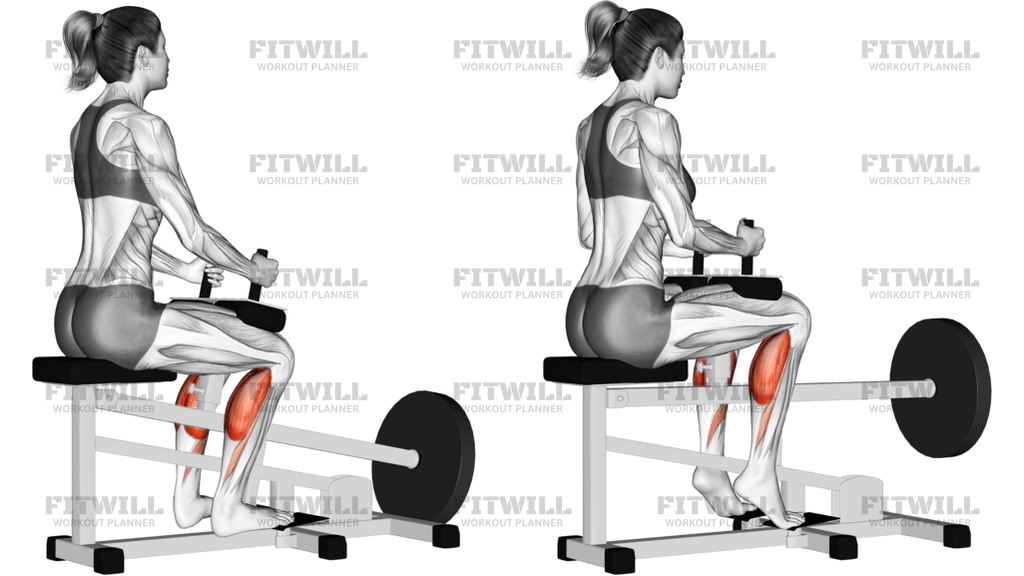
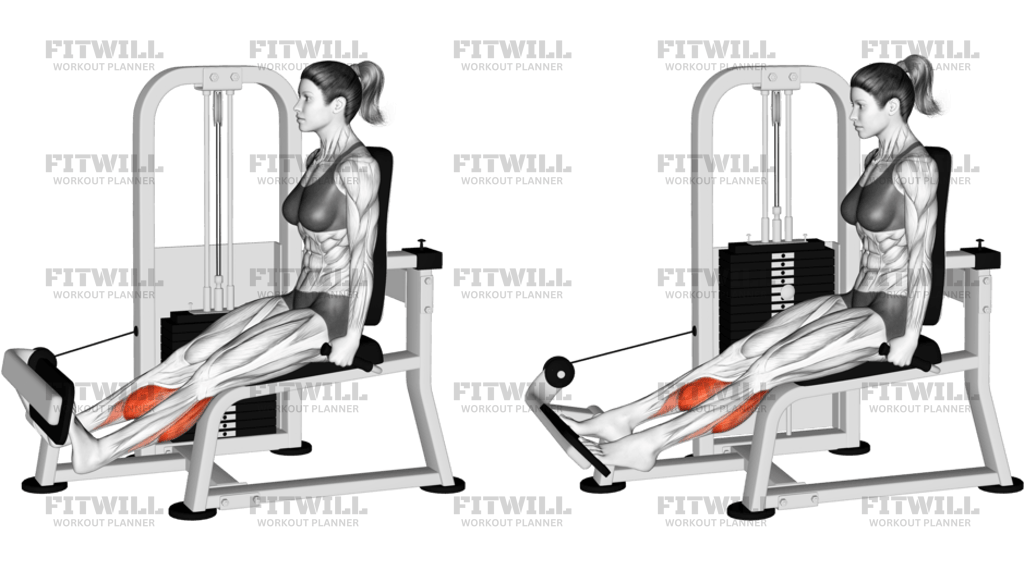
Lever Seated Calf Raise is a plate-loaded machine exercise that trains the calves through ankle movement while you stay seated with your knees bent. Because the knees remain flexed, the lower-leg work shifts heavily toward the soleus while the larger calf complex still contributes to the lift. The machine path helps keep the repetition honest, but the exercise still depends on how well you set up the thigh pad, foot position, and range of motion.
The setup matters because the pad needs to anchor the thighs firmly enough that the lower legs can work without your hips sliding forward or your torso rocking back. Sit tall on the bench, place the balls of your feet on the foot platform, and let your heels hang off so they can drop into a full stretch. If your feet are too far forward, you lose tension at the top; if they are too far back, you shorten the calf length and turn the set into a partial rep.
Each repetition should start from a controlled stretch at the bottom, then move by pressing the forefoot down and lifting the heels as high as you can without bouncing. The ankles should do the work while the knees stay fixed under the pad. A brief pause at the top helps you feel the peak contraction, and a slow return keeps the calves under load through the lowering phase. Breathing should stay simple: inhale on the way down, exhale as you drive up.
This movement is useful for calf size, ankle strength, and lower-leg endurance, especially when you want a stable machine pattern that lets you focus on the muscle rather than balance. It fits well as accessory work after squats, deadlifts, running, jumping, or any lower-body session where the calves need direct volume. Higher-rep sets are common because the calves usually respond well to controlled time under tension and a full stretch.
Common mistakes include bouncing out of the bottom, turning the rep into a hip movement, or letting the heels stop short so the calves never fully lengthen. Keep the torso quiet, avoid rolling the ankles outward, and choose a load that lets you reach a smooth stretch and a clean top position every time. If the machine forces your knees to lift off the pad or your feet to cramp, adjust the seat and foot placement before adding weight.
[ Workout Log & Planner ]
Put your next workout in Fitwill
Keep your plan and training log ready when you are.


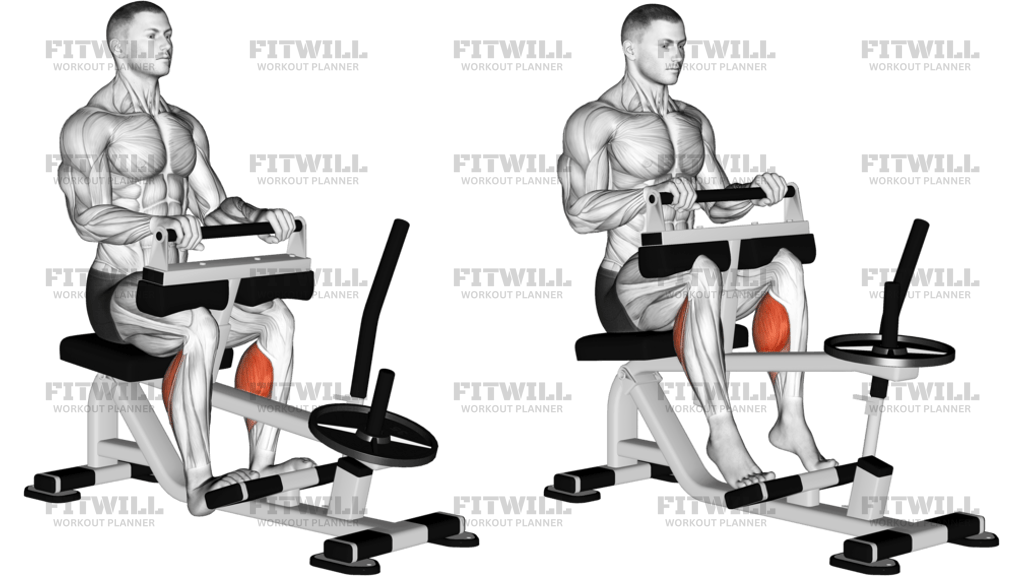
Instructions
- Sit on the machine with the thigh pad resting firmly across the lower thighs just above the knees.
- Place the balls of your feet on the foot platform and let your heels hang off the edge.
- Keep your torso tall, grip the handles, and let the knees stay bent under the pad.
- Start from the bottom with the heels lowered into a comfortable calf stretch.
- Exhale and press the forefoot down to raise the heels as high as you can without bouncing.
- Pause briefly at the top while keeping the ankles planted and the knees still.
- Lower the heels under control until you feel the calves lengthen again.
- Repeat for the planned reps, then lower the weight carefully before releasing the pad.
Tips & Tricks
- Adjust the seat so the thigh pad pins the legs down without sliding onto the knees.
- Let the heels drop enough to feel a calf stretch, but do not relax so far that the ankles collapse inward.
- Press through the big toe and second toe to keep the foot tripod stable instead of rolling to the outside edge.
- Keep the knees fixed under the pad; if the thighs rise, the set is becoming a body movement instead of a calf raise.
- Use a deliberate pause at the top so the last third of the rep is not just momentum from the lower leg.
- Lower the heel slowly enough that the calf stays loaded all the way back to the stretch position.
- Choose a load that lets you finish every rep with the same foot position and same range of motion.
- Stop before your arch or Achilles starts to cramp and reset the machine position rather than forcing extra reps.
Frequently Asked Questions
What muscles does Lever Seated Calf Raise work?
It targets the calf muscles, with a strong emphasis on the soleus because the knees stay bent under the pad.
Where should the thigh pad sit on the machine?
The pad should rest across the lower thighs just above the knees so it holds the legs down without pressing directly on the kneecaps.
How far should my heels drop at the bottom?
Drop the heels enough to feel a clear calf stretch, but stop before the ankles collapse or the feet slide out of position.
Should I move my knees during the rep?
No. Keep the knees bent and still under the pad so the ankles, not the hips, create the movement.
Can beginners use this calf machine?
Yes. It is beginner-friendly if the load is light enough to control the full stretch and the top pause.
Why do seated calf raises feel different from standing calf raises?
The bent-knee position shifts more of the work toward the soleus, so the sensation is often lower in the calf and more fatigue-driven.
What is the most common mistake on this machine?
Bouncing through the bottom and letting the thighs or hips move to fake extra height at the top.
How should I breathe during the set?
Inhale as the heels lower and exhale as you drive up into the calf contraction.