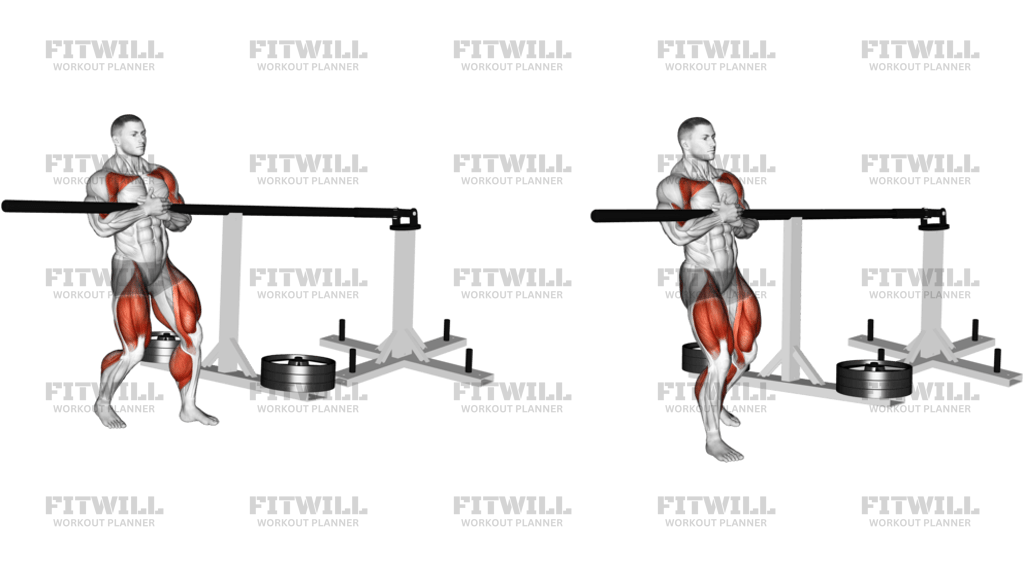
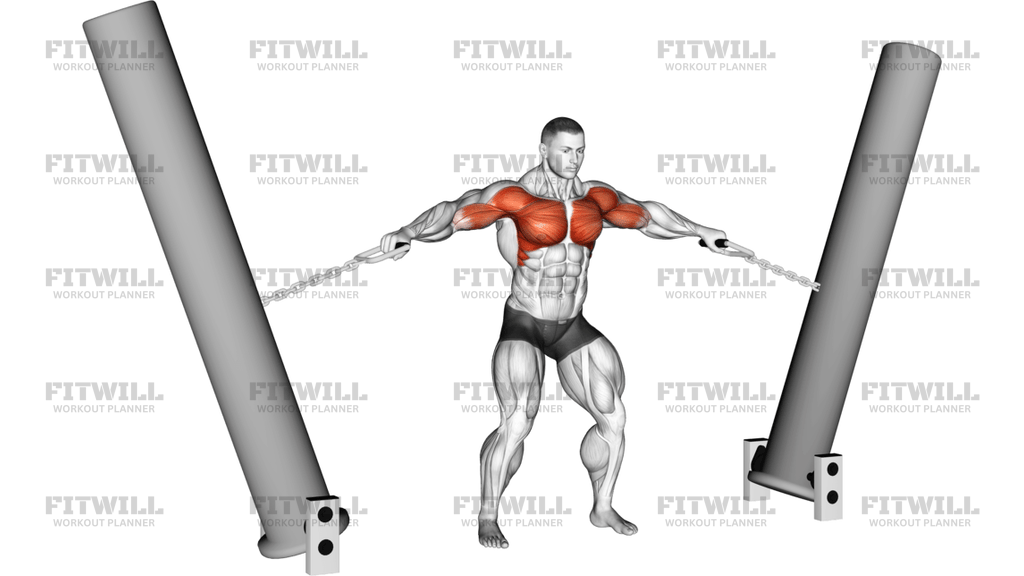
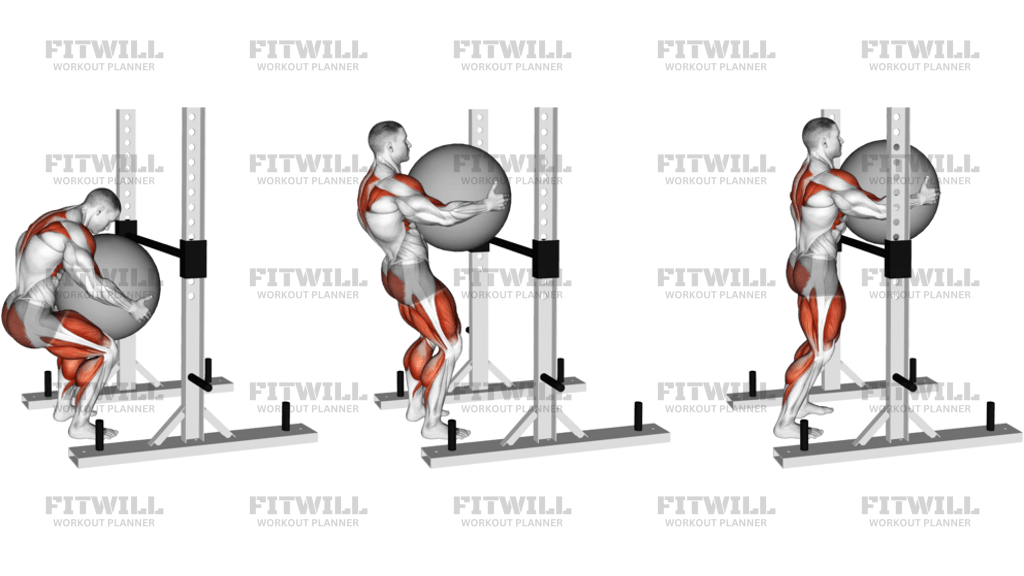
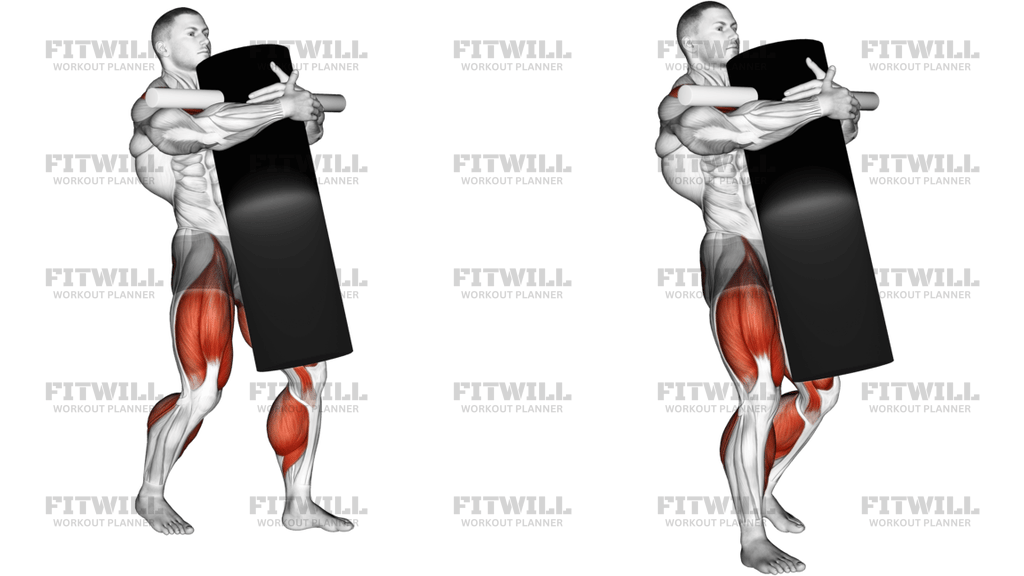
Strongman Duck Walk
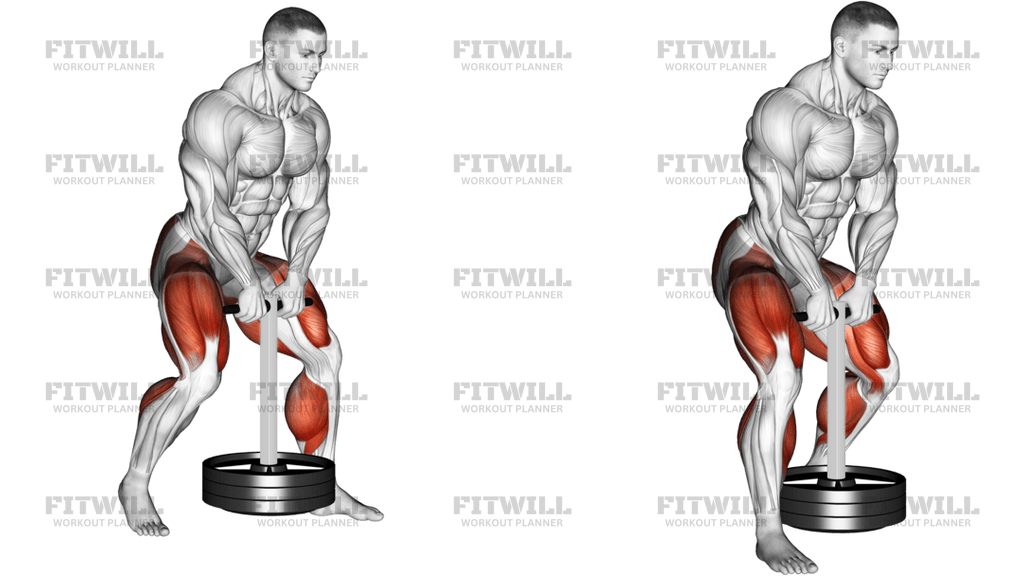
Strongman Duck Walk is a loaded squat-walk that keeps the weight hanging low between your legs while you move in short, controlled steps. It sits between lower-body strength work and work-capacity training, and it rewards the lifter who can keep the torso organized while the legs keep driving forward. The exercise is especially useful when you want quad, glute, adductor, calf, and trunk work without turning the set into a fast, sloppy carry.
The setup matters because the load should stay centered and quiet while your hips and knees stay in a usable position. A good Strongman Duck Walk starts with a stable stance, a slight toe-out angle, and enough knee bend to keep the handle close to the floor without collapsing the torso. If the chest drops too far or the implement drifts away from the midline, the walk turns into a back-dominant grind instead of a clean leg effort.
Each step should be short and deliberate. Pick the implement up only enough to clear the floor, then walk with a steady rhythm while keeping the hips low and the knees tracking over the toes. The goal is not to march upright; it is to keep tension on the legs while the body resists twisting, bouncing, and side-to-side sway. That makes the exercise valuable for strongman events, lower-body conditioning, and accessory work after squats or deadlifts.
Strongman Duck Walk also teaches you how to stay braced under awkward loading. The trunk and upper back work hard to keep the handle from wandering, and the grip often becomes a limiting factor before the legs do. Start lighter than you think, especially if you are new to the pattern, and earn longer distances only after you can keep the same body angle and step length from the first rep to the last.
Use this movement when you want a direct leg-and-conditioning stimulus that is still simple to scale. It works best when every trip looks the same: stable setup, short steps, quiet load, and a controlled return to the floor. If the set starts to turn into a wobble, shorten the distance or lighten the load so the legs keep doing the work instead of momentum taking over.
[ Workout Log & Planner ]
Put your next workout in Fitwill
Keep your plan and training log ready when you are.


Instructions
- Set the duck-walk implement on the floor between your feet, then stand over it with your feet about shoulder width apart and your toes slightly turned out.
- Sink into a shallow squat, hinge your hips back, and reach down to grip the handle in the center with both hands.
- Pull your shoulders down and back, keep your chest angled forward, and brace your trunk before the load leaves the floor.
- Lift the implement just enough to clear the floor while keeping it hanging straight between your legs.
- Take a short step forward with one foot and keep your hips at the same height as the load moves with you.
- Bring the trailing foot forward without standing fully upright, and keep your knees tracking in line with your toes.
- Continue walking in small, controlled steps so the handle stays centered and the plates do not swing side to side.
- Breathe in while you reset your brace, then use short exhales as you keep moving through each step.
- Lower the implement to the floor with bent knees, stand up out of the squat, and release the handle only after the load is settled.
Tips & Tricks
- Keep the steps short enough that the handle stays quiet; long strides usually make the load swing and pull you out of position.
- If the plates touch the floor between steps, raise your hips slightly or use less load instead of forcing the walk to stay too low.
- Hold the handle close to the midline of your body; if it drifts in front of your knees, your torso will tip forward and the set gets harder to control.
- Think about pushing the floor away through the whole foot rather than bouncing on the toes or rocking from heel to toe.
- Let the legs start the walk and the grip simply hold on; if your arms are yanking the load forward, the implement is probably too heavy.
- Keep your chest angled forward, but do not round your upper back to chase a lower body position.
- Turn the toes out slightly if your knees keep collapsing inward on the stepping leg.
- Stop the set as soon as the walk turns into a staggered shuffle or the handle starts swinging from side to side.
Frequently Asked Questions
What muscles does Strongman Duck Walk work?
It mainly hits the quads, glutes, adductors, calves, and trunk, with the upper back and grip helping to keep the load centered.
Is Strongman Duck Walk more of a leg exercise or a conditioning drill?
It is both. The legs do the main work, but the short-step walking pattern also makes it a strong conditioning and work-capacity drill.
How low should I stay during Strongman Duck Walk?
Stay in a shallow squat that you can hold while stepping. If your hips shoot up or the handle starts scraping the floor, the position is too low for the load.
Should the load swing while I walk?
No. The implement should hang quietly between your legs, with only a small amount of motion as you take each step.
Can a beginner do Strongman Duck Walk safely?
Yes, if the load is light and the distance is short. Beginners should learn to keep the torso angle and step length consistent before adding weight.
What is the most common mistake on Strongman Duck Walk?
Standing up too tall between steps is the biggest one. That shifts the work away from the legs and makes the implement swing.
What should my hands do on the handle?
Grip the center firmly and let the hands act like hooks. If you are squeezing and pulling the handle around, the load is probably too heavy for the distance.
What can I use instead of a Strongman Duck Walk implement?
A short loaded carry with a kettlebell, dumbbell, or trap-bar hold can train a similar braced walking pattern, but keep the load low and centered.