Strongman Iron Block Press
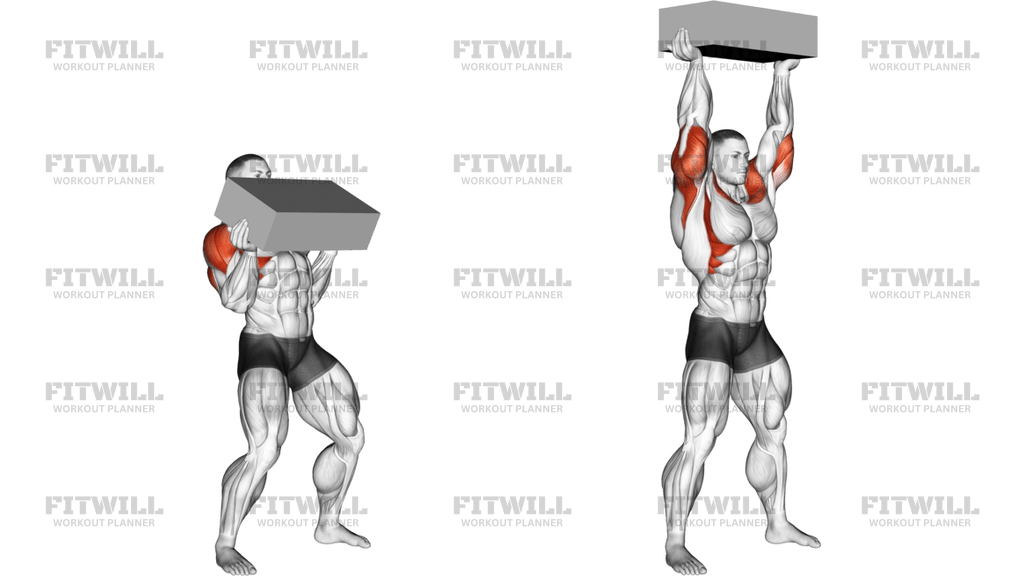
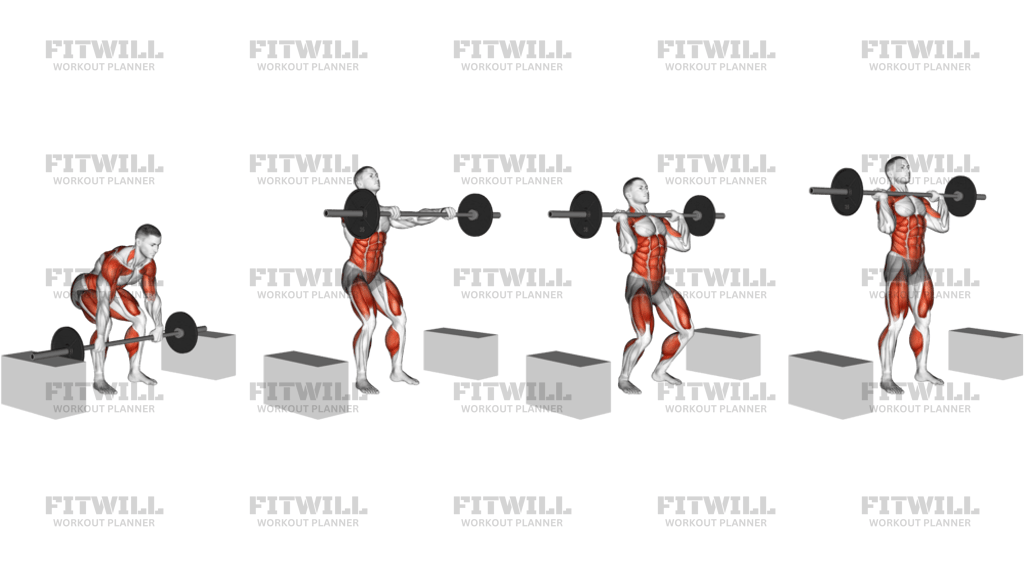
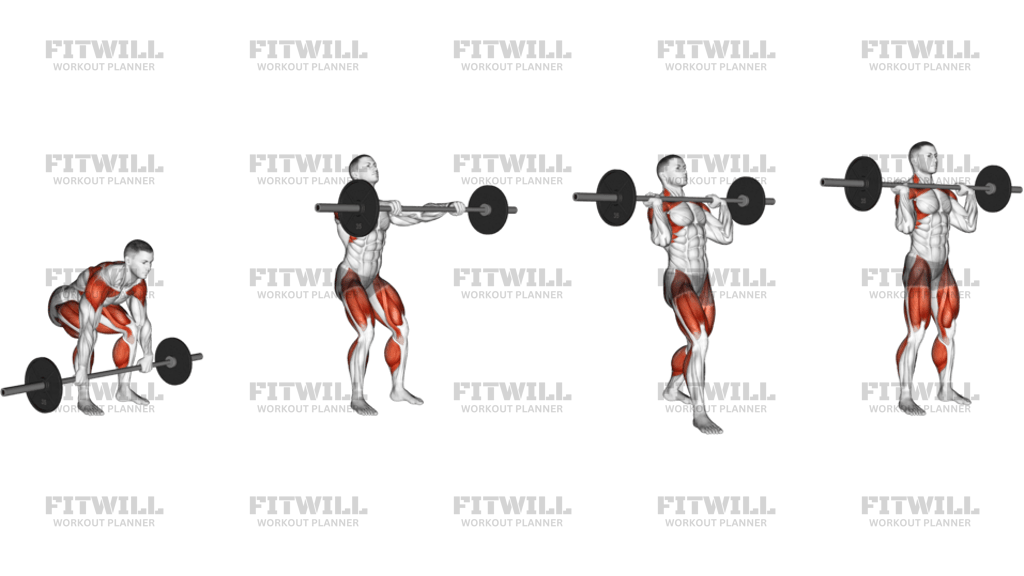
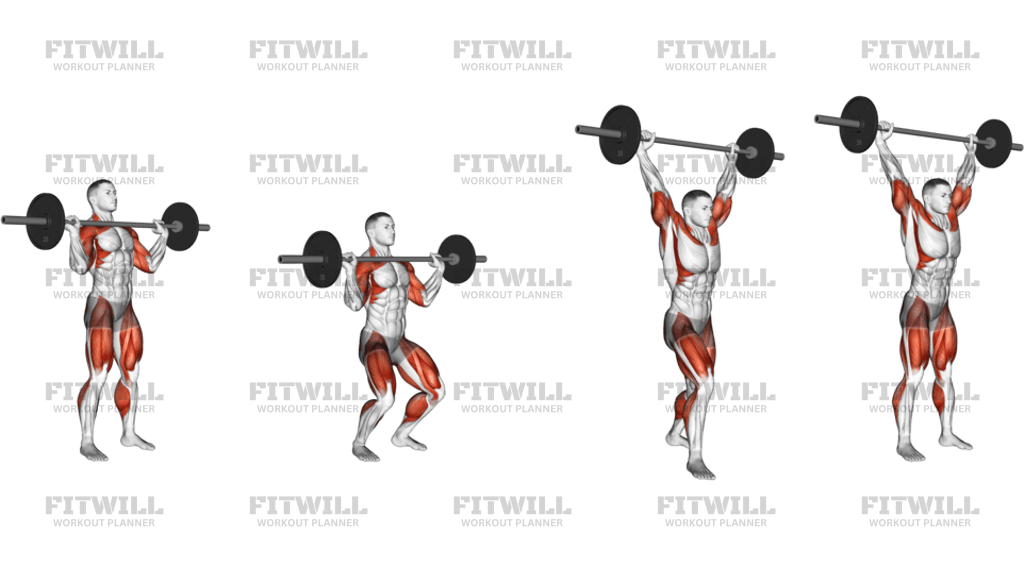
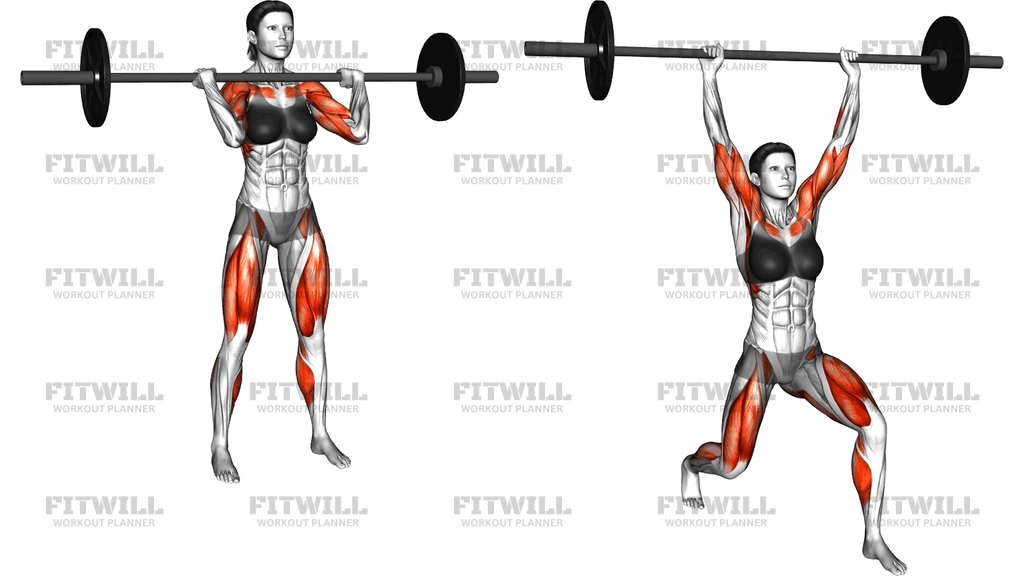
Strongman Iron Block Press is a strongman-style overhead press where you hold a heavy iron block against the upper chest and drive it to a locked-out position overhead. The image shows a two-hand press with the block starting in front of the face and finishing directly above the shoulders, so the exercise is best understood as a strict or near-strict press rather than a swing or a push press with a big leg drive.
This movement trains the shoulders, triceps, upper chest, upper back, and trunk at the same time. The rectangular block is awkward to balance, which makes the exercise more demanding than a standard barbell or dumbbell press. Because the load sits in front of the body and the grip is limited by the shape of the implement, the torso has to stay tight and upright or the block will drift forward and the press will lose power.
Setup matters a lot here. Start with the feet planted at about shoulder width, the ribs down, and the block resting high on the chest or front delts with the elbows tucked under the implement. Wrists should stay stacked under the block as much as the shape allows. If the block is very unstable, a slightly split stance can help you stay balanced, but the torso still needs to stay braced and the head should move back just enough to let the block travel in a straight line.
Press the block up smoothly, keeping it close to the face on the way past the forehead and finishing with the biceps near the ears and the elbows fully straight. Do not throw the chest forward to fake range. Lower the block under control to the same upper-chest position and reset before the next repetition. For strongman work, clean reps with a clear overhead lockout matter more than speed, and the best sets are the ones where the block travels on the same path every time.
Use this exercise when you want overhead pressing strength with a carryover to strongman events, awkward-object control, and total-body bracing. It works well in lower-rep strength blocks, event-specific sessions, or upper-body power work. Keep the load honest, because the awkward shape of the block will expose weak bracing, poor rack position, and sloppy pressing mechanics long before a smoother implement would.
[ Workout Log & Planner ]
Put your next workout in Fitwill
Keep your plan and training log ready when you are.


Instructions
- Stand with your feet about shoulder width apart and hold the iron block high on your upper chest or front delts with both hands under the lower edge.
- Stack your wrists under the block as much as the shape allows, tuck your elbows slightly in front of your ribs, and keep your chest tall without flaring your lower back.
- Brace your abs and glutes before the press so the block starts from a quiet, stable torso instead of a loose lean-back.
- Press the block upward in a straight line, moving your head back just enough for the block to clear your face.
- As the block passes forehead height, drive your head back under it and keep the block traveling close to your midline.
- Finish with your elbows locked, shoulders elevated, and the block stacked over the mid-foot rather than drifting forward.
- Lower the block under control to the same upper-chest start position, keeping your torso tight and resisting the urge to drop it early.
- Reset your breathing and position before the next rep, then repeat for the planned number of reps.
Tips & Tricks
- If the block wants to tip forward, squeeze harder through your palms and keep the forearms vertical under the load.
- Use a slightly split stance if needed, but keep the front ribs down so the press does not turn into a backbend.
- Think about pushing the block around your face rather than away from it; a close path is usually a stronger path.
- Do not chase extra range by shrugging the lower back or leaning hard backward at the top.
- Choose a load that lets you control the start position, because the hardest part of this lift is often getting the block moving cleanly from the chest.
- Keep the descent deliberate; if the block crashes back into the rack position, the next rep will usually lose its groove.
- Use chalk or a secure surface if the block is slick, since a poor grip changes the whole press mechanics.
- Stop the set when the block starts drifting in front of your shoulders or the elbows flare wildly.
Frequently Asked Questions
What does the Strongman Iron Block Press train?
It mainly trains the shoulders and triceps, with the upper chest, upper back, and trunk working hard to keep the block stable overhead.
How should the block sit before I press it?
It should rest high on the upper chest or front delts, with the elbows under the block and the wrists stacked as well as the implement allows.
Should I use a strict press or leg drive?
The image shows a controlled overhead press with a small amount of body adjustment, not a big dip-and-drive. Keep the legs quiet unless the program specifically calls for a push press.
What is the most common mistake with this block?
Letting the block drift forward away from the face and shoulders is the biggest issue, because it makes the rep unstable and weak.
Can I use a split stance for this lift?
Yes. A small split stance can help if the block pulls you off balance, but the torso still needs to stay braced and upright.
How do I know if the load is too heavy?
If you cannot keep the block close to your face, lock out overhead without leaning back, or control the lowering phase, the load is too heavy.
Is this different from a barbell overhead press?
Yes. The block is harder to balance and usually less forgiving in the front-rack position, so it demands more grip control and torso stability.
Can beginners try this exercise?
Yes, but only with a light block and a controlled range. Beginners should learn the rack position and straight press path before loading it heavily.