Strongman Timber Carry
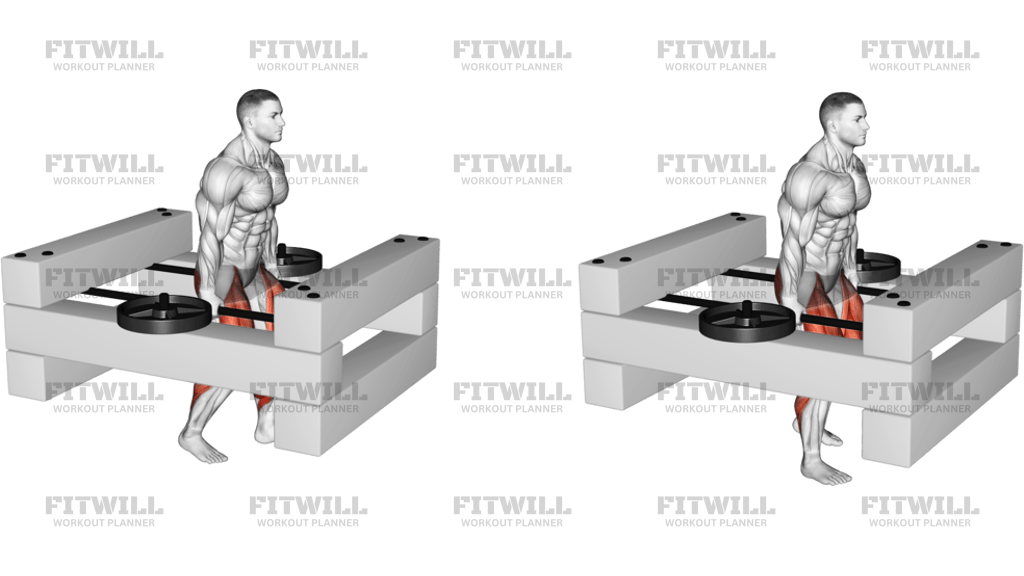
Strongman Timber Carry is a loaded strongman carry performed with a timber-style frame, and its value comes from how much full-body control it demands while you walk. The exercise trains leg drive, glutes, trunk stiffness, upper-back posture, and grip endurance at the same time, which makes it useful for athletes who need to stay organized under heavy loading. It also builds the kind of bracing and posture that carries over to other loaded carries, sled work, and general strongman preparation.
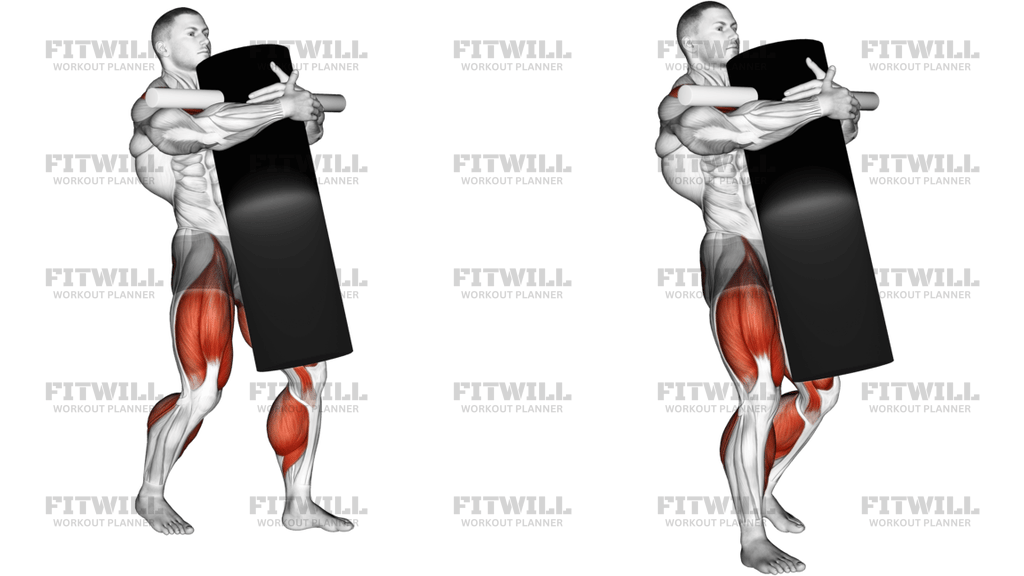
The setup matters because the frame sits wide around the body and tends to pull you into a forward lean or side-to-side wobble if you rush the start. Stand inside the frame with your feet about hip-width apart, keep your chest tall, and take hold of the side handles or frame grips with straight arms. Before you move, stack your ribs over your pelvis, pull your shoulders down away from your ears, and feel your weight centered through the middle of each foot.
Once the load is stable, stand it up with your legs rather than yanking it off the floor. Strongman Timber Carry works best when the first step is smooth and deliberate, because the transition from standing still to walking is where most people lose position. Take short, even steps, keep your head level, and let the frame travel in a straight line instead of drifting or twisting from side to side.
As the carry continues, think about staying tall against the load instead of chasing speed. Your arms should stay long, your hands should stay locked onto the handles, and your torso should resist any urge to fold forward as fatigue builds. If the frame starts bumping your thighs, if your steps get choppy, or if your shoulders start hiking upward, the load is too heavy or the distance is too long for the goal of that set.
This exercise fits well in strongman sessions, lower-body strength blocks, conditioning finishers, or general athletic work where posture under fatigue matters. It can be trained for distance, time, or multiple short trips depending on the goal, but the standard should stay the same: controlled steps, square hips, steady breathing, and a clean reset when you finish the carry. Strongman Timber Carry is simple on paper, but the best reps look calm and efficient rather than frantic.
Fitwill
Log Workouts, Track Progress & Build Strength.
Achieve more with Fitwill: explore over 9600 exercises with images and videos, access built-in and custom workouts, perfect for both gym and home sessions, and see real results.
Start your journey. Download today!




Instructions
- Set the loaded timber frame on level ground and stand inside it with your feet about hip-width apart, leaving enough space so the uprights do not brush your legs.
- Grip the side handles or frame grips firmly with straight arms, then set your shoulders down and back and stack your ribs over your pelvis before lifting.
- Brace your midsection and drive through both feet to stand the frame up until the load is fully supported without a lurch or sway.
- Take a short breath at the top, keep your chest tall, and fix your eyes forward before taking the first step.
- Walk forward with short, even steps so the frame moves in a straight line instead of swinging from side to side.
- Keep your elbows straight and let your arms act like hooks while your legs do the work of carrying the load.
- Hold your torso rigid as you move, and if the frame starts to bump your thighs, shorten your stride before you speed up.
- Slow the carry to a controlled stop, hinge at the hips and knees to lower the frame back to the floor, then release your grip only after the load is settled.
Tips & Tricks
- Choose a load that lets you walk without the frame tipping or dragging your feet into a shuffle.
- Shorter steps usually work better than longer strides because they keep the frame centered and reduce side-to-side sway.
- If the handles sit low, think about pushing the floor away rather than trying to lift with your arms.
- Keep your shoulders packed down; shrugging the frame turns the carry into a trap-dominant grind and wastes energy.
- A quiet, steady torso is the goal, so reduce the load if your hips start rocking with every step.
- Breathe in before the lift, then use small controlled breaths while walking so you do not lose trunk tension.
- If the frame hits your thighs, widen your stance just enough to clear the uprights instead of leaning back.
- Stop the set when your grip starts opening and your posture changes, not when you can no longer keep moving.
Frequently Asked Questions
What muscles does Strongman Timber Carry train most?
It heavily trains the legs, glutes, core, upper back, and grip. The shoulders and traps help keep the frame stable, but the carry is really about full-body bracing and walking under load.
How do I hold the frame in Strongman Timber Carry?
Use the side handles or frame grips with straight arms and a firm but not frantic grip. Keep the hands fixed and let the legs move the load forward.
Should Strongman Timber Carry feel like a yoke walk?
It should feel similar in purpose, but the exact frame shape and hand position can change the balance slightly. Focus on staying tall and walking in short steps rather than chasing speed.
How heavy should Strongman Timber Carry be?
Use a load that lets you keep the frame level and your stride clean for the full distance. If you have to stumble, lean hard, or bounce the frame off your thighs, it is too heavy.
How far should I walk in Strongman Timber Carry?
Distance depends on the goal. For strength, shorter trips with heavier loads work well; for conditioning, use lighter loads and longer carries, but keep every step controlled.
What is the most common mistake with Strongman Timber Carry?
Most people overstride and let the frame swing away from the body. That makes the carry unstable and usually forces the torso to lean forward or twist.
Can beginners do Strongman Timber Carry?
Yes, if the load is light and the distance is short. Beginners should practice standing the frame up cleanly, then walking with small steps before adding weight.
What should I do if my grip fails before my legs?
Either shorten the carry, lower the load, or use a shorter set of trips with more rest. Grip is often the limiting factor, so you want a dose that still lets you keep your torso position solid.