Strongman Atlas Stones
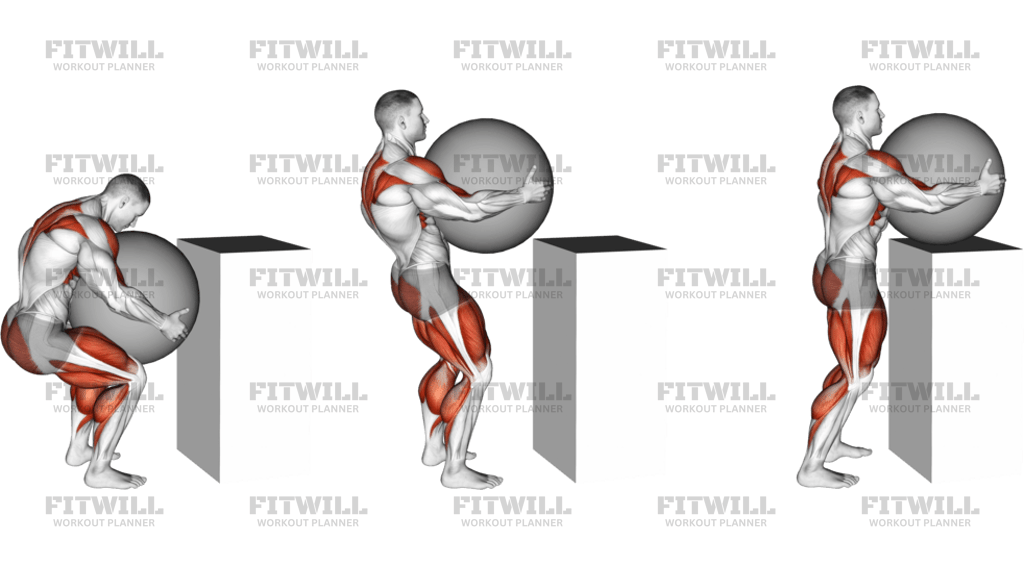
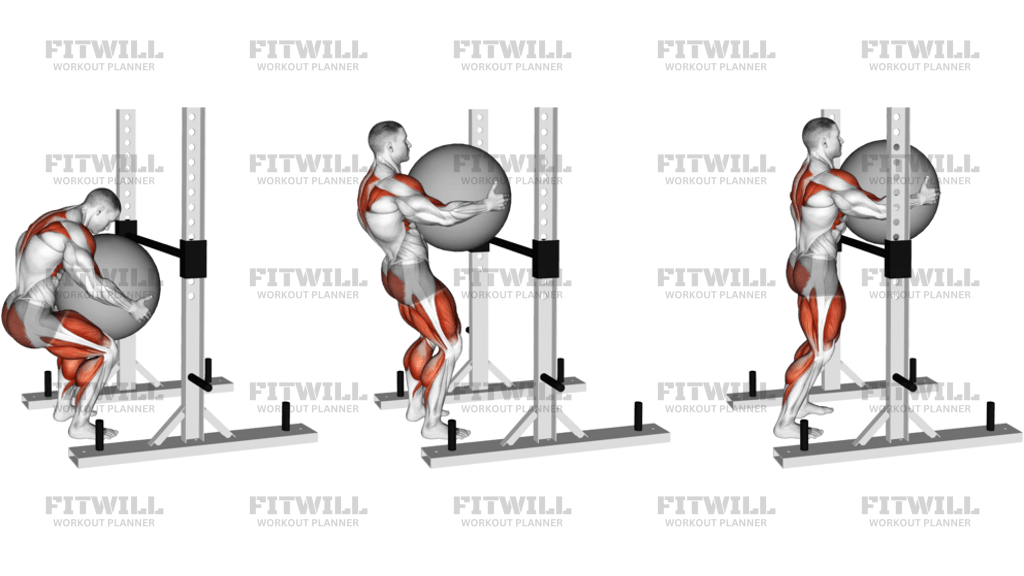
Strongman Atlas Stones is a classic strongman loading exercise where you lift a heavy spherical stone from the floor, pull it into your lap, then extend the hips and torso to place it onto a platform or loading block. It trains full-body strength in a very specific way: the legs and hips create the drive, the upper back and lats keep the stone pinned close, and the forearms and trunk fight to hold shape while the stone wants to roll away.
The lift looks simple at a distance, but the setup decides almost everything. The stone has no handle, so your stance, forearm position, and chest angle determine whether you can keep it tight enough to lap and stand without losing position. A good rep starts with the stone close to your shins, a stable base, and enough tension through the midsection that the first pull does not yank you forward.
Most of the movement happens in two phases. First, you drag the stone into the lap and settle it high against the thighs so you can reset your breath. Then you cinch it to the lower chest, stand by driving through the floor, and walk it to the lip of the platform before rolling it over the top. The work is not an overhead press or a curl; it is a controlled load with short, powerful extension and careful body contact the entire way.
Strongman Atlas Stones is useful for strongman training, posterior-chain development, core stiffness, upper-back endurance, and general loading strength. It also exposes weak points fast: poor lap position, weak bracing, loose arm contact, or a platform that is too high will turn the lift into a grind. Use a stone and height you can control cleanly, especially if you are learning the pattern, because once the stone starts slipping away from the body the risk to the low back and biceps rises quickly.
Treat each rep like a deliberate setup, not a rushed deadlift. If you can keep the stone hugged in close, breathe in the lap, and finish the roll without jumping or jerking, the exercise will stay productive and much safer.
[ Workout Log & Planner ]
Put your next workout in Fitwill
Keep your plan and training log ready when you are.


Instructions
- Place the stone on the floor a step in front of the platform so you can reach it without overextending.
- Stand with your feet slightly wider than hip-width, toes turned out a little, and crouch low with your chest over the stone.
- Wrap your forearms around the stone, keep it close to your shins, and pull it back toward your lap.
- Sit the stone deep into your lap and let it settle against your thighs before trying to stand.
- Take a breath, brace your trunk, and pull the stone tight against your lower chest and upper abdomen.
- Drive through your heels and extend the hips and knees until you are standing tall with the stone hugged to your body.
- Step in close to the platform, touch the stone to the edge, and use hip drive to roll it upward and over the lip.
- Guide the stone onto the platform without throwing it, then release and reset under control for the next rep.
- Lower the stone carefully between reps if you are working from the floor again.
Tips & Tricks
- Use chalk or tacky on your forearms and the stone itself so the load does not slide as you pull it into the lap.
- The lap is your reset point: if you try to stand from the floor without settling the stone first, the lift usually turns into a low-back grind.
- Keep the stone pinned high against the chest once you stand; if it drifts away, stop and re-cinch it before you finish the load.
- Let the legs and hips do the final drive onto the platform instead of trying to curl the stone with your arms.
- Pick a platform height you can clear with a clean roll; if it is too high, you will end up leaning back and losing contact.
- Keep your chin tucked and your neck neutral so you do not chase the stone with your head as it rises.
- Short, explosive reps are usually better than long grinders because the grip, forearms, and upper back fatigue quickly.
- If the stone starts slipping, reset before the final push rather than forcing a half-secure rep over the lip.
- A lighter stone that stays close is more useful than a heavier stone that forces you to twist or reach.
Frequently Asked Questions
What muscles do atlas stone loads train?
They hit the glutes, quads, hamstrings, spinal erectors, upper back, lats, forearms, and core at the same time.
Can beginners practice Strongman Atlas Stones safely?
Yes, but they should start with a light stone or sandbag and a low platform so they can learn the lap, brace, and roll without fighting the load.
Why do I have to lap the stone instead of lifting it straight to the platform?
The lap shortens the lever arm and gives you a chance to reset your breath before the final stand and roll.
What is the most common mistake when the stone reaches the chest?
Letting the stone drift away from the body. Once it separates from the torso, the low back and arms have to do too much work.
Should my back stay perfectly straight during the lift?
No. A controlled rounded upper back is normal in stone loading, but it should be deliberate and supported by a hard brace rather than a sudden collapse.
How high should the loading platform be?
High enough to challenge you, but not so high that you have to lean back or lose chest contact to clear it.
What should I do if the stone slips in my forearms?
Reset the set, add chalk or tacky, and practice squeezing the stone tighter in the lap before you stand again.
Is this the same as a deadlift or shoulder clean?
No. Atlas stones are a load-and-roll pattern: you pull the stone to the lap, stand with it hugged in, then roll it onto a platform.
How should I breathe during a stone load?
Take your biggest breath while the stone is settled in the lap or pinned to the chest, then brace hard before the final stand and roll.