Strongman Power Stairs
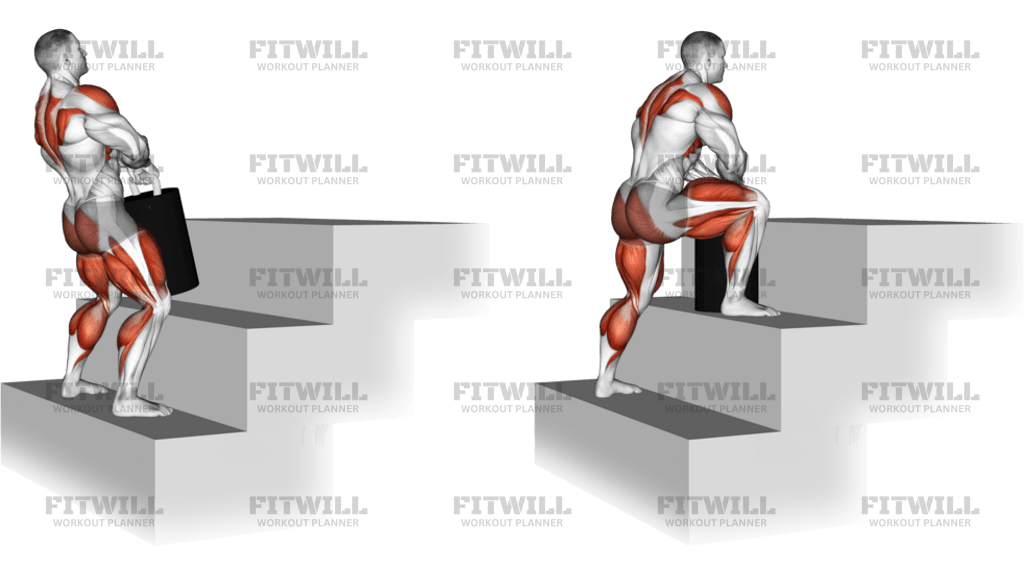
Strongman Power Stairs is a loaded stair-climbing drill where you drive a heavy implement up a set of steps one level at a time. The movement is built around leg drive, trunk stiffness, and clean foot placement, so it challenges more than just the quads. It also teaches you to keep the load close and organized while the lower body does the work.
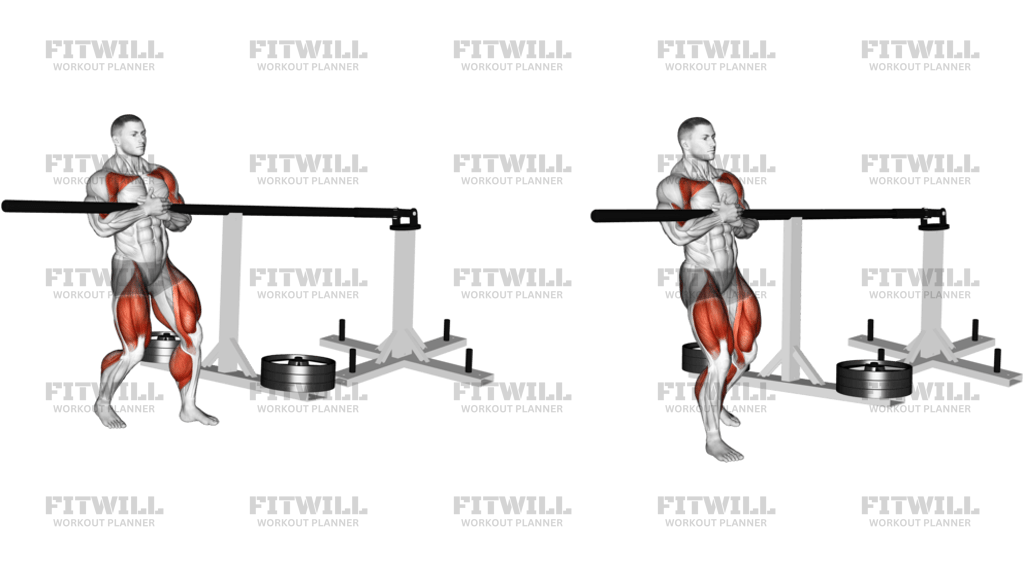
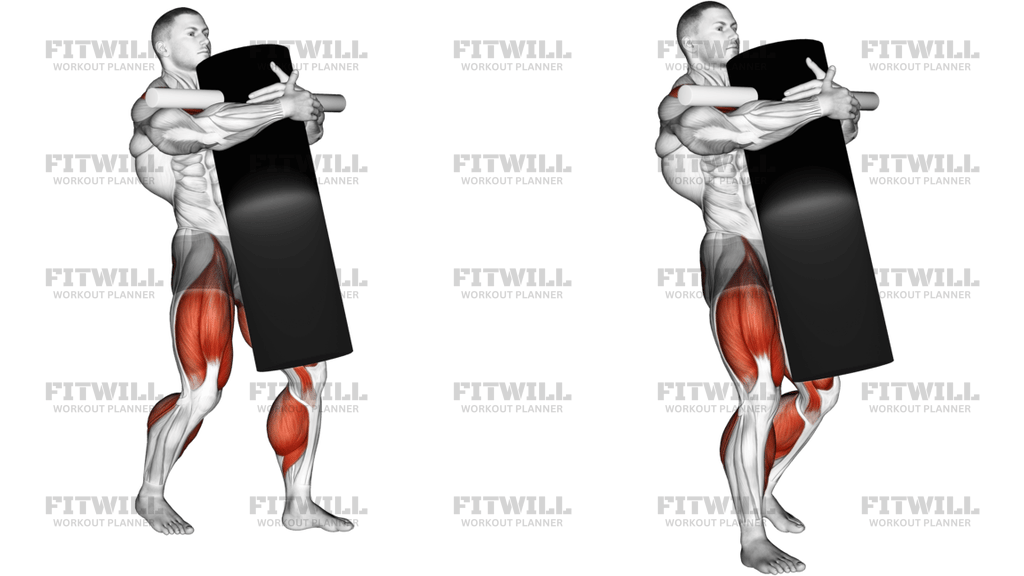
The exercise is especially useful when you want to train strength that carries over to real-world carrying, strongman events, and conditioning work that still demands good mechanics. The image shows the load held in front of the torso while the athlete steps up under control, which means balance and bracing matter as much as raw force. If the object drifts away from your body or your torso collapses forward, each step gets harder and the set turns into a scramble.
Good reps start with the first step. Plant the whole foot on the stair, keep your chest tall, and drive through the midfoot and heel to stand up onto the next level without bouncing off the trailing leg. The free leg should come up under control, not swing wildly, and the load should stay pinned close enough that your upper back and arms can keep it stable. That is what makes Strongman Power Stairs different from a fast stair run: every step should look deliberate and powerful.
Breathing and pacing matter because the exercise climbs quickly in difficulty as the steps rise. Short, controlled breaths between steps help you keep your brace without freezing up. Use a load that lets you finish the set with the same posture you had on the first step, not a weight that forces you to lean, twist, or rush the descent. If you are training for events, this exercise is a practical way to build step-up strength, grip endurance, and total-body resilience under load.
Strongman Power Stairs also has a clear safety side. The higher the step and the heavier the object, the more important it is to control the lowering phase and reset your feet before the next rep. That makes it a good choice for athletes who can keep their positions honest under fatigue, but it is not a movement to turn loose on with sloppy technique. The best sets look smooth, strong, and repeatable from bottom step to top step.
[ Workout Log & Planner ]
Put your next workout in Fitwill
Keep your plan and training log ready when you are.


Instructions
- Set the load at the base of the stairs and stand close enough that you can keep it pinned against your torso before the first step.
- Place one foot fully on the lowest step, keep the other foot on the floor, and square your hips toward the stairs.
- Wrap both hands around the handles or sides of the implement and pull it tight to your chest or upper abdomen.
- Brace your trunk, keep your ribs down, and fix your eyes on the next step rather than looking at the floor.
- Drive through the whole foot on the lead leg and stand up onto the step without bouncing off the trailing leg.
- Bring the back foot up under control, then reset your balance before stepping to the next level.
- Keep the load close as you climb so your torso stays tall and your upper back does not round forward.
- Use short breaths between steps or at the top of each stair if the load is heavy, then continue the climb with the same rhythm.
- At the top, lower the implement carefully, step down one level at a time, and reset your stance before the next rep or set.
Tips & Tricks
- If the object drifts away from your body, the stairs will feel much steeper; keep it pinned to the chest or upper abdomen.
- Do not let the front knee cave inward as you step up. Track it over the middle toes so the drive stays straight.
- Use a stair height you can own with clean foot placement. Too high a step turns the movement into a lunge-and-fall pattern.
- The trailing leg should help you balance, not launch you upward. The lead leg should do the work on every step.
- Hold the handles or sides tightly enough to prevent shifting, but do not shrug the shoulders to death while climbing.
- Keep your torso stacked over the hips. If your chest collapses forward, the load is too heavy or you are rushing the pace.
- A slower descent is useful for control and knee confidence, especially when the stairs are tall or the implement is awkward.
- Short sets usually work better than long grinders for Strongman Power Stairs because fatigue can make foot placement sloppy fast.
- If grip becomes the limiter before your legs do, reduce the load so the set still trains the climb instead of just the hands.
Frequently Asked Questions
What muscles does Strongman Power Stairs work?
It trains the glutes, quads, calves, upper back, grip, and core. The legs drive the climb, while the trunk and upper back keep the load from pulling you forward.
Is Strongman Power Stairs more of a strength or conditioning exercise?
It can be both, but the demand depends on the load and stair height. Heavy sets with full recovery are more strength-focused, while longer carries or faster turns become more conditioning-based.
How do I hold the implement during Strongman Power Stairs?
Keep it tight to the chest or upper abdomen with both hands so it cannot swing. The closer the load stays, the easier it is to stay upright on the stairs.
What is the biggest mistake on Strongman Power Stairs?
Leaning forward and letting the load pull the shoulders down is the most common problem. That usually means the weight is too heavy or the steps are too tall for clean reps.
Can beginners do Strongman Power Stairs?
Yes, if they start with a light implement and shallow stairs. The goal is to learn stable foot placement and a controlled climb before increasing speed or load.
Should I step one stair at a time or climb faster?
One stair at a time is the better way to learn the movement and keep the torso organized. Once that is solid, you can shorten the pause between steps without turning it into a run.
Do I need special equipment for Strongman Power Stairs?
You need a heavy, stable implement that can be held close to the body and a safe stair or step setup. A sandbag, stone, or other front-loaded object works better than something that swings.
How heavy should I make Strongman Power Stairs?
Choose a load that lets you keep your chest tall and your feet precise on every step. If you start twisting, rocking, or missing the step edge, the weight is too ambitious.