Barbell Split Squat Version 2
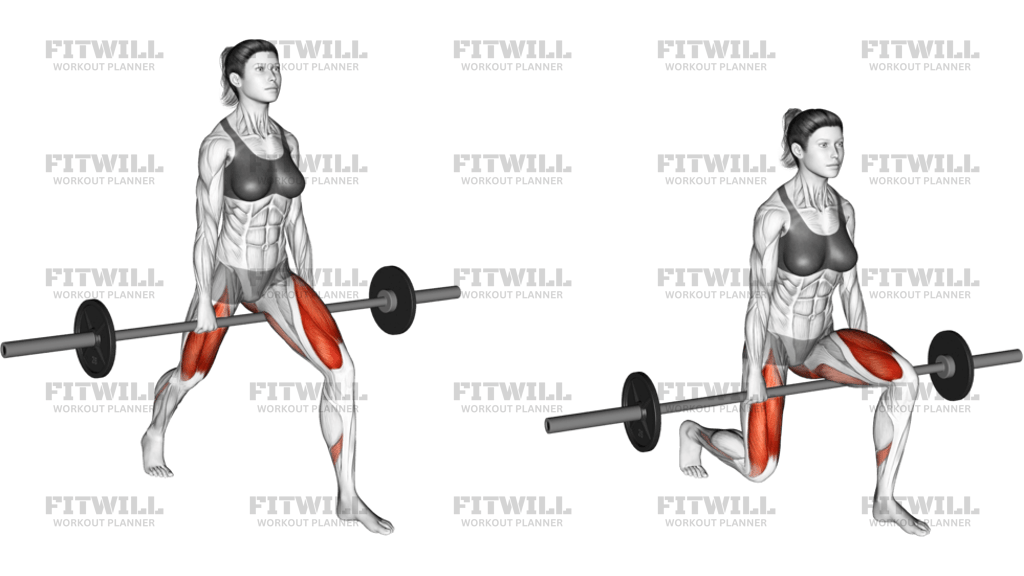
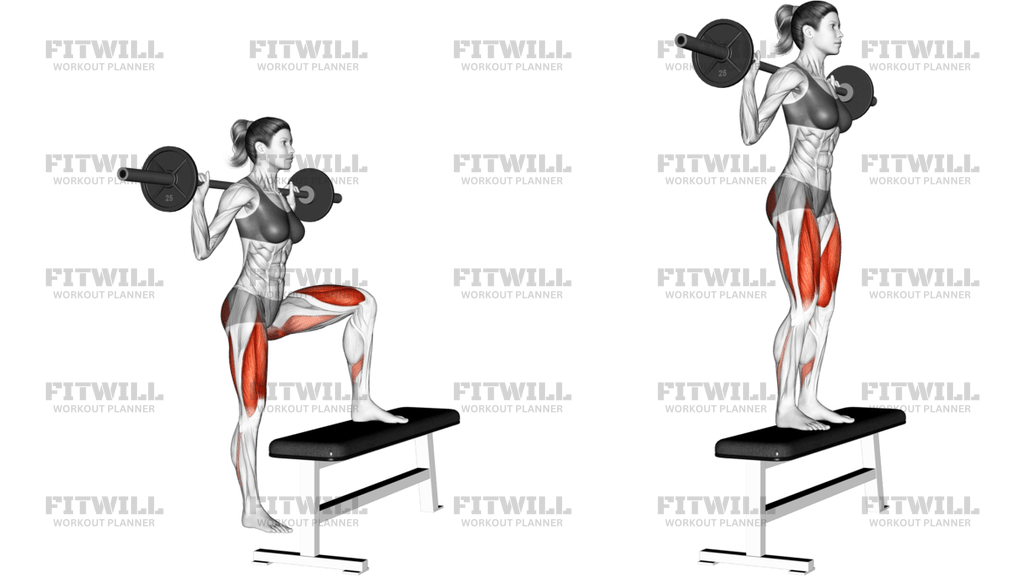
Barbell Split Squat Version 2 is a unilateral lower-body strength exercise built around a split stance with the barbell held across the upper back. It places the front leg under most of the load while the rear leg acts mainly as a balance point, making it a useful way to train quads, glutes, hips, and the trunk without needing a machine.
The split stance changes how the legs work compared with a normal squat. With one foot planted in front and the other set back, the front hip and knee have to absorb most of the descent and produce most of the ascent. That makes the exercise especially useful when you want to build leg strength side to side, clean up balance differences, or keep a strong training effect with less total spinal loading than a bilateral squat pattern.
Setup matters more here than with many barbell exercises. The bar should sit securely on the upper back, not on the neck, and the stance should be long enough that you can lower straight down without the front heel popping up or the rear foot taking over. A slight forward torso lean is normal, but the trunk should stay braced so the bar does not drift and the pelvis does not twist as you descend.
Each repetition should feel controlled from top to bottom. Lower under control until the front thigh reaches a comfortable depth and the rear knee approaches the floor, then drive through the front midfoot and heel to stand back up. The rear leg should help with balance, not push the body out of position. Smooth breathing and a steady torso make the rep cleaner and help you keep tension on the working leg.
This version fits well in strength blocks, unilateral accessory work, lower-body hypertrophy sessions, or athletic programs that need more single-leg strength and stability. It is also a practical option for lifters who want a harder leg stimulus without always adding more load to a standard squat. Keep the range pain-free, use a load you can stabilize, and stop the set if the front knee collapses inward, the bar shifts, or the split stance starts to shorten under fatigue.
[ Workout Log & Planner ]
Put your next workout in Fitwill
Keep your plan and training log ready when you are.


Instructions
- Place the barbell across your upper back and stand tall with one foot forward and the other foot back in a split stance.
- Set your front foot flat, keep most of your weight on the front leg, and line up the rear foot so it only helps with balance.
- Brace your torso, keep your chest proud, and tuck your ribs so the bar stays steady over the midline.
- Lower straight down by bending the front knee and hip while letting the rear knee travel toward the floor.
- Keep the front knee tracking over the toes and the front heel down as you descend.
- Stop when you reach a comfortable depth with control, usually when the rear knee is close to the floor.
- Drive through the front midfoot and heel to stand back up without bouncing off the bottom.
- Keep the torso quiet, the bar level, and the pelvis square as you rise.
- Reset your stance before the next rep and repeat for the planned number of reps, then switch legs.
Tips & Tricks
- Choose a split stance long enough that the front heel stays planted through the whole descent.
- If the front knee shoots too far forward or the heel lifts, move the front foot slightly farther away.
- Keep the rear foot light; if you are pushing hard through the back toes, the front leg is not doing enough work.
- A small forward lean is normal, but do not let the torso fold or the bar roll onto the neck.
- Descend slowly enough to keep the front hip and knee aligned, especially on the last few inches before the bottom.
- Use the front glute to finish the rep, but do not snap the hips through at the top.
- Stop the set when the back foot starts to chase balance or the front knee caves inward.
- Lower the load before you shorten the stance just to make the exercise feel easier.
Frequently Asked Questions
What muscle does Barbell Split Squat (VERSION 2) target most?
The front leg does most of the work, so the quads are the main target, with glutes and hips assisting strongly.
Can beginners perform this exercise?
Yes, but beginners should start with bodyweight or a very light barbell until they can keep the split stance stable and controlled.
How heavy should I train this movement?
Use a load that lets you keep the bar steady, the front heel down, and the torso braced through every rep.
What is a common mistake to avoid?
The most common mistake is letting the rear leg take over, which turns the split squat into a balance drill instead of a front-leg strength exercise.
Should my rear knee touch the floor?
It does not have to crash into the floor, but it should travel down close enough that the front leg gets a full, controlled range of motion.
Where should the bar sit?
The bar should rest on the upper back like a back squat, not on the neck or in a low-bar position.
Why is my front heel lifting?
That usually means the stance is too short or you are shifting too much weight forward; lengthen the split and keep pressure through the heel and midfoot.
Is a forward torso lean wrong?
No. A slight lean is normal in a split squat, but the trunk should stay braced and the bar should remain under control.