Barbell Full Zercher Squat
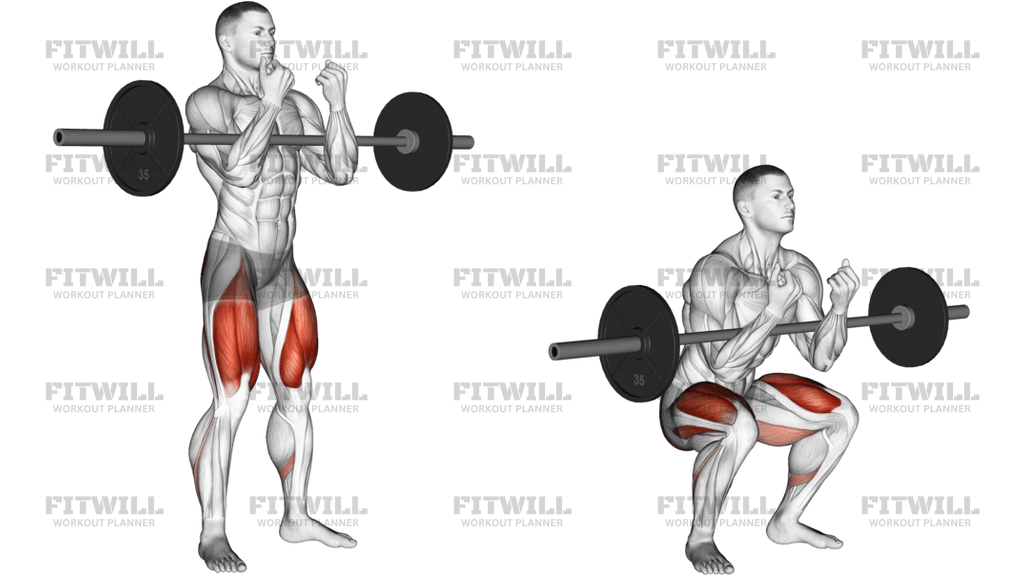
Barbell Full Zercher Squat is a front-loaded squat performed with the barbell cradled in the crooks of the elbows. That load position changes the feel of the squat immediately: the torso usually stays more upright, the quads are asked to work hard through deep knee bend, and the upper back and trunk have to keep the bar pinned to the body. It is a useful lower-body strength exercise when you want squat pattern training without relying on a back-rack or a front rack position.
The setup matters because the bar does not rest on the shoulders. The bar should sit deep in the elbow crease, with the hands close together and the forearms angled up so the bar cannot roll forward. Many lifters use a towel or pad on the bar to reduce arm discomfort, but the bar still needs to stay firmly against the torso. A stable stance, braced trunk, and tall chest help keep the load centered over the midfoot before the first descent starts.
During the rep, the goal is to sit down between the knees and then stand back up without letting the elbows drop or the chest collapse. The knees should track in line with the toes, the heels should stay rooted, and the torso should remain strong enough to hold the bar close as you sink to full squat depth. Because the bar sits in front of you, even a small loss of position is easy to feel, so control matters more than speed.
Barbell Full Zercher Squat is a good choice for building quad strength, glute drive, trunk stiffness, and squat confidence. It is also useful when wrist, shoulder, or front-rack mobility limits other squat variations. Start conservatively, because the arm position and upright posture make the movement feel more demanding than the load number suggests. Use a range of motion you can control without rounding the low back or losing balance at the bottom.
For most lifters, this exercise works best as a main lower-body lift or as a focused accessory after a primary squat pattern. If the elbows feel bruised or the bar drifts away from the torso, reduce the load and refine the setup rather than forcing extra reps. The best repetitions are deep, stable, and repeatable, with the bar staying locked into the elbow shelf from start to finish.
[ Workout Log & Planner ]
Put your next workout in Fitwill
Keep your plan and training log ready when you are.


Instructions
- Set the bar in a rack at about lower-chest height, step close, and cradle it deep in the crooks of your elbows.
- Bring your hands together in front of your chest, keep the wrists neutral, and lift the elbows so the bar stays pinned to your torso.
- Stand with feet about shoulder-width apart, toes slightly turned out, and the bar balanced over your midfoot.
- Take a breath, brace your trunk, and keep your chest tall before you start the descent.
- Unlock the hips and knees together and sit down between your legs instead of tipping forward.
- Let the knees travel in the direction of the toes while keeping the heels flat and the elbows lifted.
- Descend under control until you reach full squat depth that still allows a tight, neutral spine.
- Drive through the floor to stand up, keeping the bar close and exhaling as you pass the hardest part of the rep.
- Finish tall at the top, reset your breath, and repeat for the planned number of repetitions.
Tips & Tricks
- A towel or foam pad on the bar can reduce elbow pressure, but the bar still needs to sit firmly in the elbow crease.
- If the bar rolls forward, bring the hands closer together and lift the elbows higher before the next rep.
- Keep the chest proud, but do not overextend the lower back to fake an upright torso.
- Let the knees move forward naturally; this variation is meant to be a deep squat, not a hip hinge.
- Stay balanced over the midfoot so you do not rock onto the toes when the bottom position gets heavy.
- Choose lighter loads than you would for a back squat, because the front-loaded position makes the set feel much harder.
- If your forearms are doing all the work, the bar is too high or the elbows have dropped too low.
- Stop the set if the low back rounds or the bar starts sliding away from the body on the way down.
Frequently Asked Questions
What does Barbell Full Zercher Squat train best?
It strongly trains the quads and glutes, with a big demand on the trunk and upper back to keep the front-loaded bar in place.
Why is the bar held in the elbows instead of on the shoulders?
The Zercher position lets you squat with the bar supported in the elbow crease, which is useful when you want a front-loaded squat without a front rack.
How deep should I go on this squat?
Go as deep as you can while keeping the spine neutral, the heels down, and the bar locked into the torso. For the full version, that usually means below parallel.
Is this exercise beginner-friendly?
Yes, if you start light and practice the rack position first. The movement is simple, but the elbow carry position takes some getting used to.
What is the most common mistake with the Zercher position?
Letting the elbows drop and the bar drift away from the body. That usually makes the torso fold forward and turns the squat into a struggle.
Can I use a pad or towel on the bar?
Yes. A pad or towel can make the elbow position more comfortable, especially when you are learning, as long as the bar still stays stable in the crooks of the arms.
Do I need special mobility for this squat?
You need enough ankle, hip, and thoracic mobility to stay upright at depth, but you do not need the wrist or shoulder flexibility that a front rack usually demands.
Should I clean the bar from the floor or start from a rack?
A rack setup is usually safer and easier for most people. Cleaning the bar into the Zercher position is a separate skill and should only be used if you can do it cleanly.