Barbell Squat Hips WRONG-RIGHT
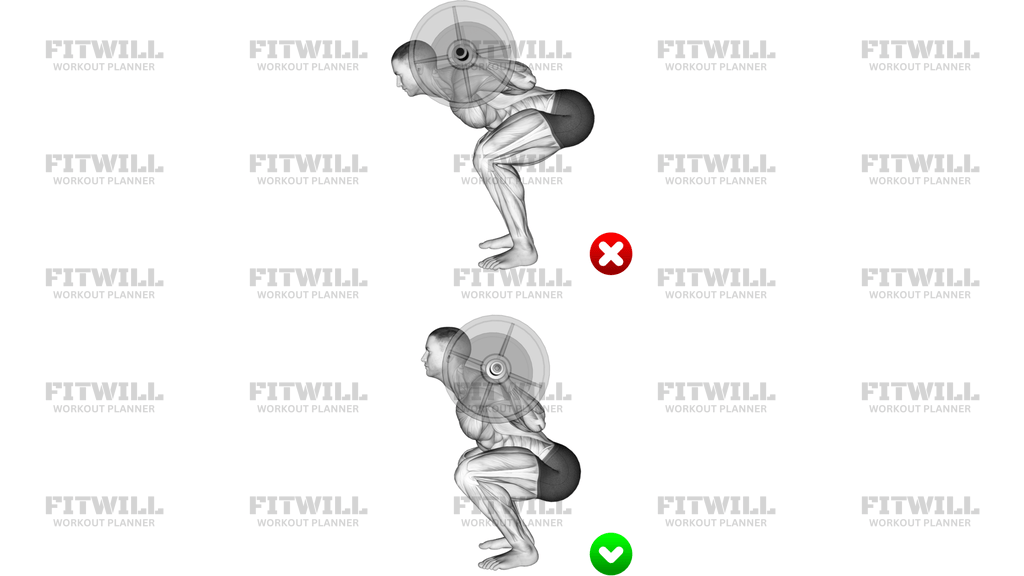
The barbell back squat shown here is a technique comparison: the top image shows the common error, with the torso folding forward and the hips drifting back too far, while the bottom image shows the corrected position with the chest stacked over the pelvis and the bar staying balanced over the midfoot. This is not just about depth. It is about keeping the bar path, torso angle, and foot pressure organized so the squat loads the legs and hips without turning into a sloppy hinge.
The main training value comes from building a strong, repeatable squat pattern that carries over to strength work, sports, and general lower-body training. Quads are the primary driver, but the glutes, adductors, upper back, and trunk all contribute when the rep is clean. In the corrected version, the hips and knees descend together, the knees track in line with the toes, and the torso stays braced instead of collapsing forward. That stack is what keeps the load where it belongs and makes the rep look controlled rather than forced.
Setup matters because a barbell squat gives you very little room to recover once the descent starts. A stable stance, firm tripod foot pressure, and a tight upper-back shelf under the bar help you start from a position you can actually control. If the stance is too narrow, the ankles and hips may run out of room too early; if it is too wide, the torso can tip and the knees may lose their line. The right setup lets you descend smoothly, keep the bar over the center of the foot, and reverse the rep without bouncing out of position.
The wrong-right image is especially useful as a coaching reference because the difference is not subtle. The error frame shows a lifter whose chest collapses and hips shoot back, which shifts the effort away from the legs and can stress the lower back. The corrected frame keeps the rib cage stacked over the pelvis, the heels down, and the bar path efficient. That is the version to copy when the goal is strength, muscle, or squat mechanics that hold up under load.
Use this exercise when you want a foundational barbell squat pattern, a lower-body strength movement, or a form check that teaches clean mechanics under resistance. Start light enough to own the bottom position, then earn load only when the bar stays steady, the knees track well, and the torso does not cave as you stand.
[ Workout Log & Planner ]
Put your next workout in Fitwill
Keep your plan and training log ready when you are.


Instructions
- Set the bar across your upper back, step under it in the rack, and take a shoulder-width stance with your feet flat and toes turned slightly out.
- Walk the bar out, brace your core, and set your rib cage over your pelvis before you start the descent.
- Plant your weight through the tripod of each foot so your heels, big toes, and little toes all stay connected to the floor.
- Unlock your hips and knees together and sit down between your legs, letting the knees travel in line with the toes.
- Keep your chest lifted enough that the bar stays balanced over the middle of your foot instead of drifting toward your toes.
- Lower until your thighs reach at least parallel or as deep as you can keep your spine and heels controlled.
- Drive up by pushing the floor away, keeping the knees from caving in and the hips from shooting up first.
- Stand tall at the top without leaning back, then take the next breath and repeat for the planned reps before reracking the bar.
Tips & Tricks
- If your chest drops before your hips, reduce the load and think about keeping the bar path vertical over the midfoot.
- The bar should feel anchored on the upper back, not rolled up toward the neck or slid too low onto the shoulders.
- Let the knees move forward enough to stay under the toes; stopping the knees too early usually forces the torso to fold.
- Keep pressure on the whole foot, not just the heels, so the squat does not tip backward at the bottom.
- A slightly wider stance often helps lifters stay more upright and keep the knees tracking cleanly.
- If the bottom position tucks your pelvis under hard, shorten the depth or use a small heel lift until mobility improves.
- Descend under control for at least two seconds so you can see whether the torso stays stacked before the rebound starts.
- The rep is finished only when the hips and shoulders rise together; if the hips race up first, the load is too heavy.
Frequently Asked Questions
What muscles does this barbell squat work most?
It primarily works the quads, with strong help from the glutes, adductors, core, and upper back.
What is the wrong-right image trying to show?
The wrong version shows the torso folding forward and the hips shooting back; the right version keeps the chest stacked and the bar balanced over the midfoot.
How deep should I squat in this movement?
Go as deep as you can while keeping the heels down, the knees tracking, and the lower back from rounding.
Why does my torso lean forward on the way up?
That usually means the load is too heavy, the stance is too narrow, or the chest is collapsing before the legs finish driving.
Should my knees go past my toes?
Yes, they usually will. The key is that they track over the toes and do not collapse inward.
Is this exercise beginner-friendly?
Yes, if you start light and treat it as a skill drill. Many beginners do best with a goblet squat first, then a light barbell squat.
What should I do if my heels come off the floor?
Shorten the depth, widen the stance slightly, or use a small heel lift so you can keep the foot planted.
How do I know the rep is clean?
The bar stays over the middle of the foot, the knees and hips rise together, and the torso does not collapse into a good-morning pattern.