Power Sled Rear Lunge
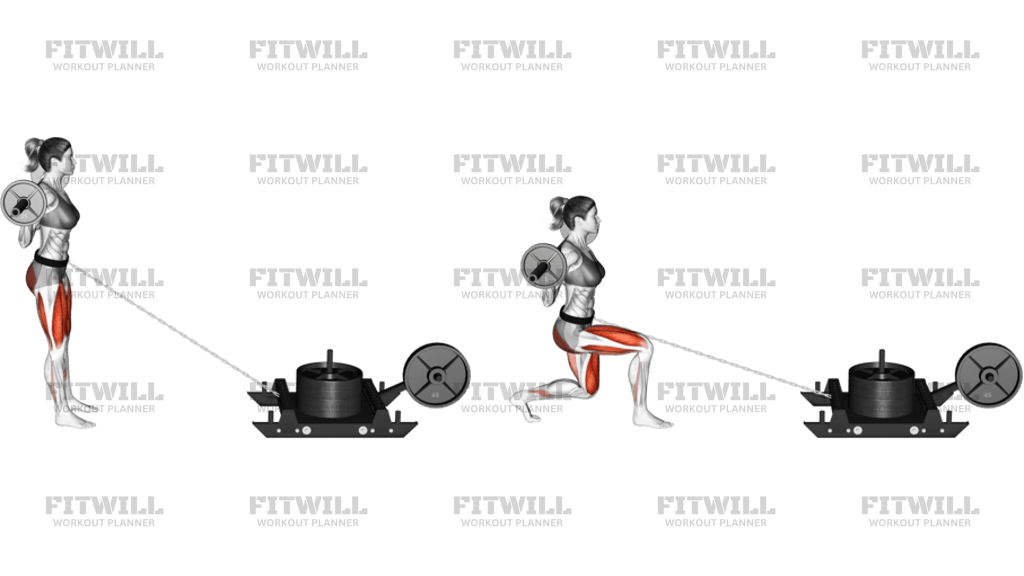
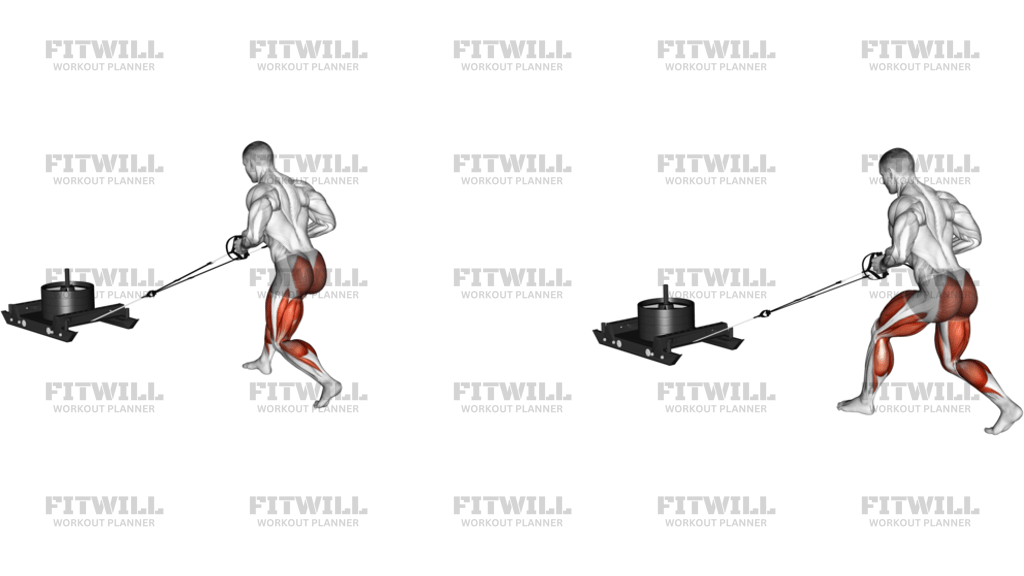
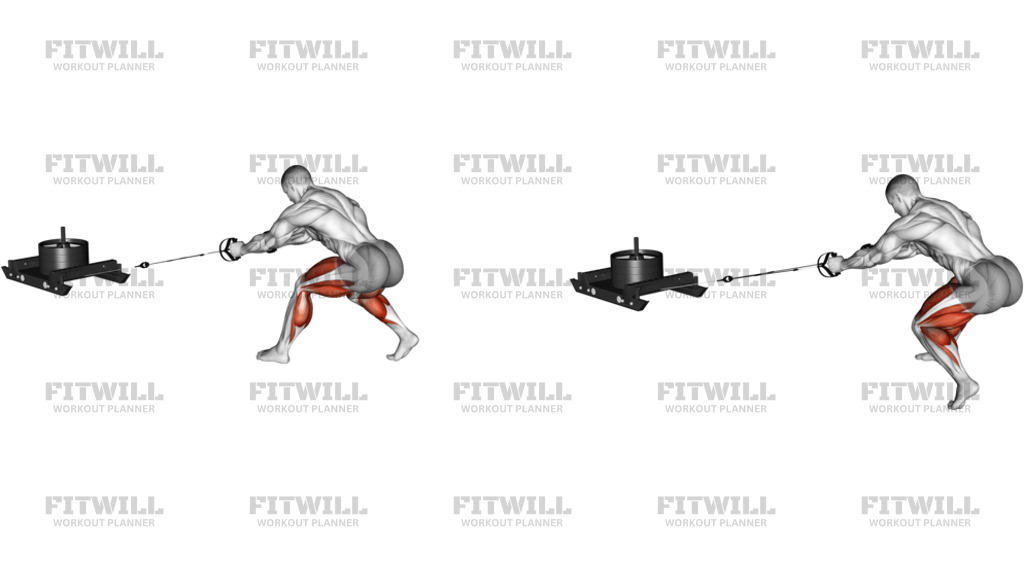
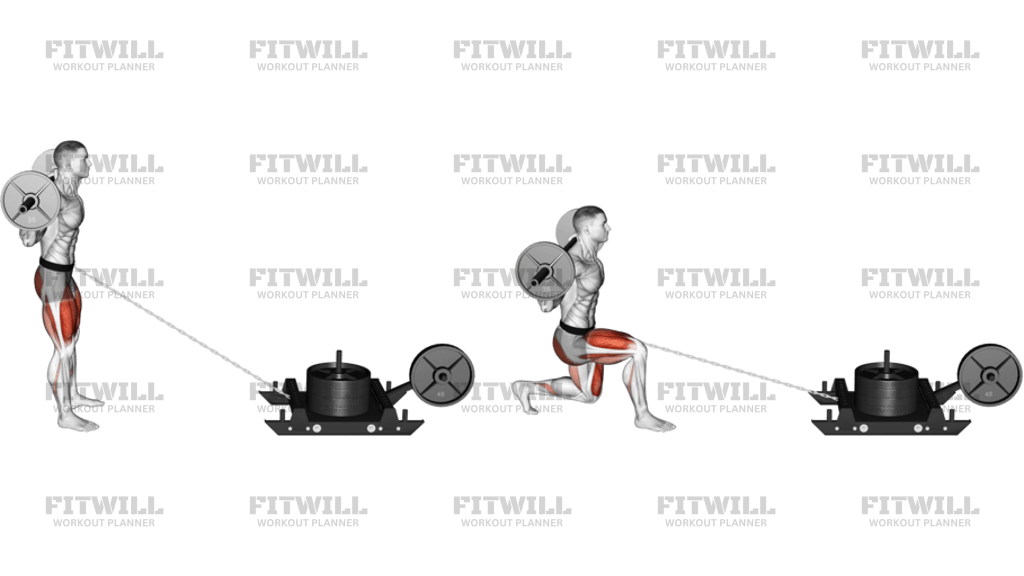
Power Sled Rear Lunge is a sled-resisted single-leg squat pattern that loads one leg at a time while the other leg steps back and lightly supports balance. The backward step and the sled tension make it useful for building quad drive, glute strength, adductor control, and the kind of pelvic and trunk stability that carries over to running, field work, and general lower-body training.
The setup matters because the sled, strap, and stance determine whether the resistance feels smooth or jerky. Stand tall with the strap or harness secure and the sled line tracking straight from your hips, then take a stance that lets you step back without losing your balance. If the step is too short, the front knee gets crowded; if it is too long, you turn the rep into a split squat with a stretched rear leg instead of a clean rear lunge.
During each rep, the front foot should stay rooted while the back leg travels behind you and the front knee bends over the middle toes. Lower under control until the rear knee approaches the floor, then drive through the front heel and midfoot to stand up and bring the rear leg back in. Keep the torso tall enough to stay organized, but allow a small forward lean if it helps you keep pressure through the front foot and keep the sled path smooth.
Power Sled Rear Lunge works well in strength blocks, conditioning sessions, and accessory work when you want unilateral leg training without the impact of jumping. It is especially useful when you want to train one side at a time while keeping continuous sled tension and a stable line of pull. Start with a light load that lets the sled glide without bouncing, and treat every rep as a controlled step rather than a hurried lunge.
The most common problems are letting the front heel pop up, drifting the knee inward, and taking a step that is too short for the sled setup. Those errors usually show up as a shaky torso or an uneven sled path. Keep the finish clean, reset your stance between reps if needed, and stop the set when the sled starts to jerk or your front leg can no longer control the descent.
[ Workout Log & Planner ]
Put your next workout in Fitwill
Keep your plan and training log ready when you are.


Instructions
- Clip the strap or harness to the power sled, stand tall with the line of pull coming from your hips, and take a stance about hip-width apart.
- Set one foot slightly ahead of the other so you can step straight back without crossing your feet or losing balance.
- Brace your trunk, keep your ribs stacked over your pelvis, and let the sled line stay taut before you descend.
- Step the rear leg back and lower into the lunge while the front foot stays flat and the front knee tracks over the middle toes.
- Keep most of your weight on the front leg as the rear knee travels toward the floor behind you.
- Lower until the front thigh is near parallel or the rear knee is just above the ground, whichever comes first with good control.
- Drive through the front heel and midfoot to stand up, letting the sled glide smoothly instead of snapping forward.
- Bring the rear leg back under your hips, reset your stance if needed, and repeat for the planned reps before safely stepping out of the strap.
Tips & Tricks
- Keep the sled line straight so the resistance does not pull you sideways during the descent.
- Use a long enough step back that the front shin can stay angled comfortably instead of collapsing forward.
- If the front heel lifts, shorten the step and reduce the load until you can keep the whole foot planted.
- Let the rear knee travel down, not forward, so the front leg does the actual work of standing up.
- A small forward torso lean is fine if it helps you keep pressure through the front heel and midfoot.
- Choose a load that makes the sled glide; if the strap jerks or bounces, the resistance is too heavy.
- Keep the front knee tracking over the second or third toe instead of caving inward at the bottom.
- Reset your stance between reps if the sled drifts or your feet start landing in different places each time.
Frequently Asked Questions
What muscle does Power Sled Rear Lunge target most?
Other is the primary target muscle group.
Can beginners perform this exercise?
Yes, beginners can use it with light resistance and controlled technique.
How heavy should I train this movement?
Choose a load that allows clean repetitions without compensating with momentum.
What is a common mistake to avoid?
The most common issue is rushing reps and losing control of posture and range.
How many repetitions are usually recommended?
Moderate to higher rep ranges are commonly used, depending on the training goal.
Should I feel this in supporting muscles too?
Some support-muscle involvement is normal, but the main effort should stay on the target area.
Can I include this in a full-body routine?
Yes, it can fit well as accessory work within full-body or split routines.
How can I progress this exercise over time?
Progress by increasing load gradually, improving control, and keeping execution quality high.