Spine Stretch Forward
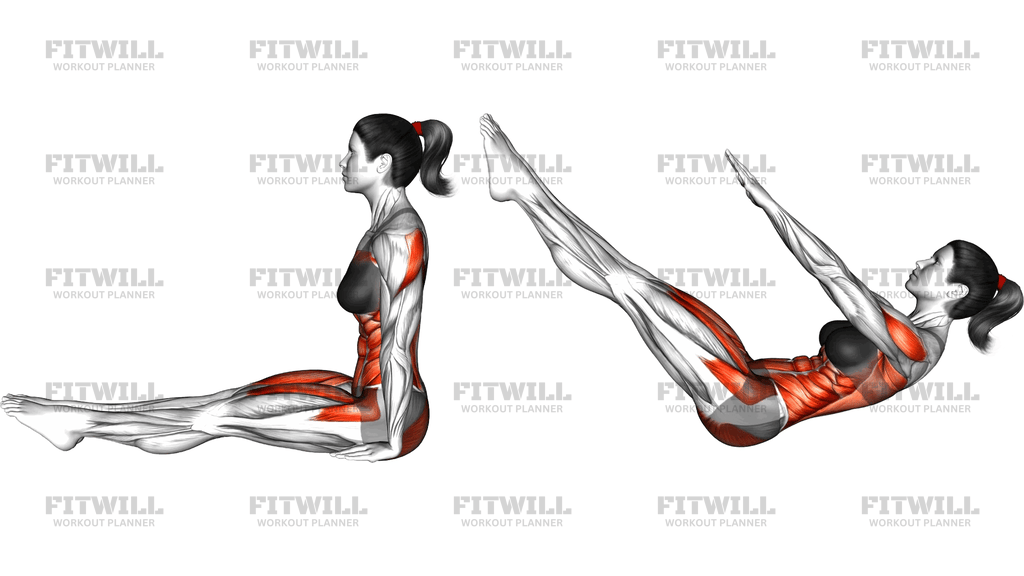
Spine Stretch Forward is a classic mat Pilates movement that teaches you to articulate the spine under control while keeping the pelvis grounded. It looks simple, but the quality of the rep depends on how well you can sit tall, breathe, and gradually peel the torso forward without turning it into a quick hamstring stretch.
The exercise is useful when you want better spinal mobility, better awareness of rib and pelvis position, and a cleaner rounded shape through the trunk. The deep abdominals work to guide the forward curve, while the back muscles lengthen and the hamstrings often limit how far you can reach. That makes Spine Stretch Forward a good check on posture control as well as flexibility.
Set up on an exercise mat with both legs extended in front of you, sit bones heavy, feet flexed, and arms reaching forward at shoulder height. The exact distance of the feet can vary slightly by body type, but the goal is the same: stay tall enough to start from an open chest, not a collapsed one. If your hamstrings are tight, sit on a folded towel or bend the knees a little so you can keep the pelvis upright.
As you move, think about curling the head forward first and then rounding the upper back, middle back, and low back in sequence. Reach the hands forward as the ribs draw back, and keep the shoulders soft instead of creeping them toward the ears. The best version of the exercise feels deliberate and segmented, not like a single hinge from the hips.
This movement fits well in a Pilates warm-up, mobility circuit, or control-focused core session because it asks for precision more than load. You should feel a lengthening line through the spine and back of the legs, but never a sharp pull or a forced end range. When the rep is done well, you finish feeling taller and more organized, not strained or compressed.
[ Workout Log & Planner ]
Put your next workout in Fitwill
Keep your plan and training log ready when you are.


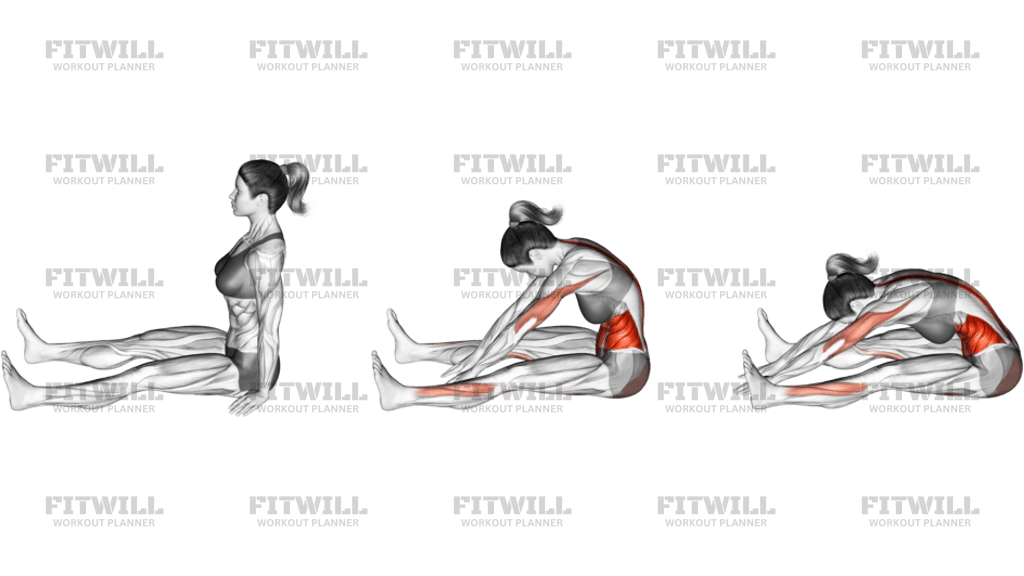
Instructions
- Sit on an exercise mat with both legs extended in front of you, feet flexed, sit bones grounded, and arms reaching forward at shoulder height.
- Lift through the crown of your head, stack your ribs over your pelvis, and keep the shoulders relaxed away from your ears.
- Take a breath to prepare, then keep the torso tall without leaning back or tucking the pelvis under.
- Exhale, nod the chin slightly, and begin rounding the upper back forward before the middle and lower back follow.
- Reach both hands forward as the spine curls, keeping the pelvis heavy and the feet active against the mat.
- Stop the forward reach when your lower back wants to collapse or your sit bones start to lift.
- Pause briefly in the rounded position, breathing into the back and side ribs without forcing a deeper fold.
- Inhale and stack back up one vertebra at a time until you are sitting tall again with the arms reaching forward.
- Reset your posture before the next repetition and keep the movement smooth on every rep.
Tips & Tricks
- If your pelvis keeps tipping backward, sit on a folded towel so you can start the rep with a taller spine.
- Keep the feet flexed hard so the legs stay active instead of collapsing into the floor.
- Think about curling the rib cage toward the thighs instead of folding only from the hips.
- Reach forward from the shoulders without shrugging; the hands should lengthen the line of the spine, not pull it down.
- Use a smaller range if your hamstrings grab early and make it hard to keep the sit bones heavy.
- Keep the chin gently tucked so the neck follows the spinal curve instead of jutting forward.
- Exhale through the rounding phase to help the abdominals control the shape of the torso.
- Do not bounce at the bottom; a smooth pause is more useful than forcing extra inches.
- If you feel the exercise mostly in the knees, bring the legs slightly closer together and keep the quadriceps active.
Frequently Asked Questions
What does Spine Stretch Forward train most?
It mainly trains spinal control and mobility through the trunk, with the deep abdominals and back muscles helping guide the fold.
Can beginners do Spine Stretch Forward on a mat?
Yes. Beginners usually do best with a smaller range, a taller starting posture, and slightly bent knees if the hamstrings pull the pelvis backward.
How should my legs and feet be set up for Spine Stretch Forward?
Sit with the legs long, feet flexed, and the sit bones rooted into the mat. If your lower back rounds immediately, move the feet a little closer or soften the knees.
Should I fold from the hips or round the spine?
Round the spine. The movement should travel through the head, ribs, and low back in sequence instead of turning into a flat hip hinge.
Why do my shoulders keep creeping up during Spine Stretch Forward?
Usually the reach is too aggressive. Keep the arms long, soften the shoulders, and let the torso curl forward instead of pulling the neck and traps into the work.
What if my hamstrings are too tight to sit tall?
Sit on a folded towel or bend the knees slightly. The goal is to keep the pelvis stable so the spine can articulate cleanly.
How far forward should I reach in Spine Stretch Forward?
Reach only until the sit bones want to lift or the lower back loses control. The best range is the one you can stack back up from smoothly.
Is Spine Stretch Forward more of a stretch or a core exercise?
It is both, but the core control matters most. The abdominals organize the fold while the hamstrings and back get a controlled lengthening.