Power Sled Rear Lunge Row
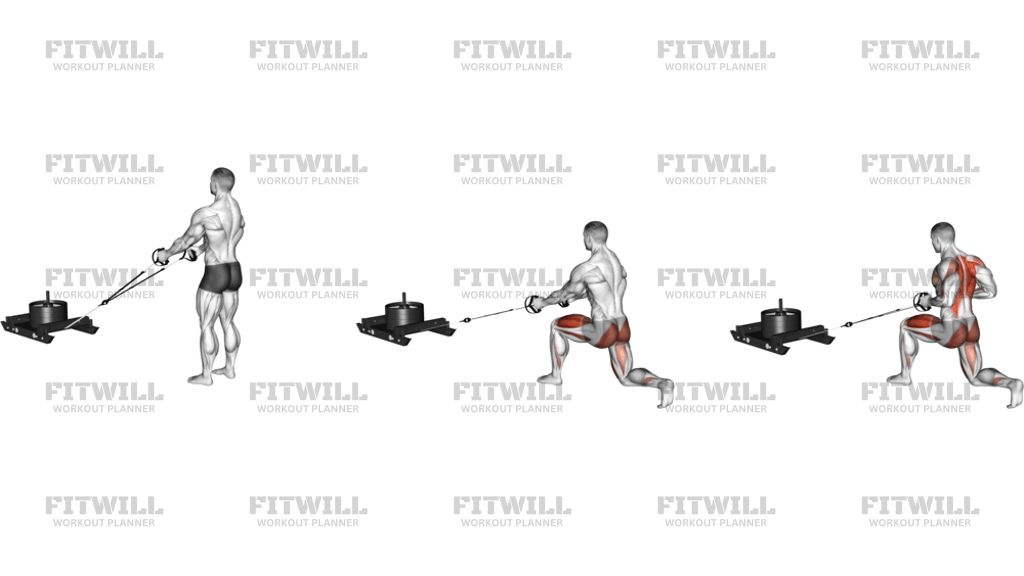
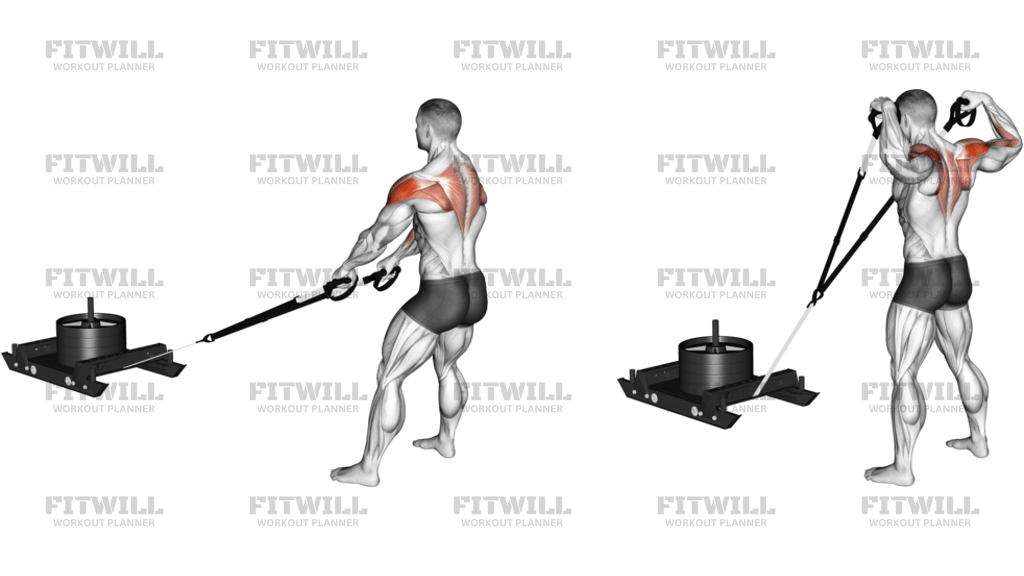
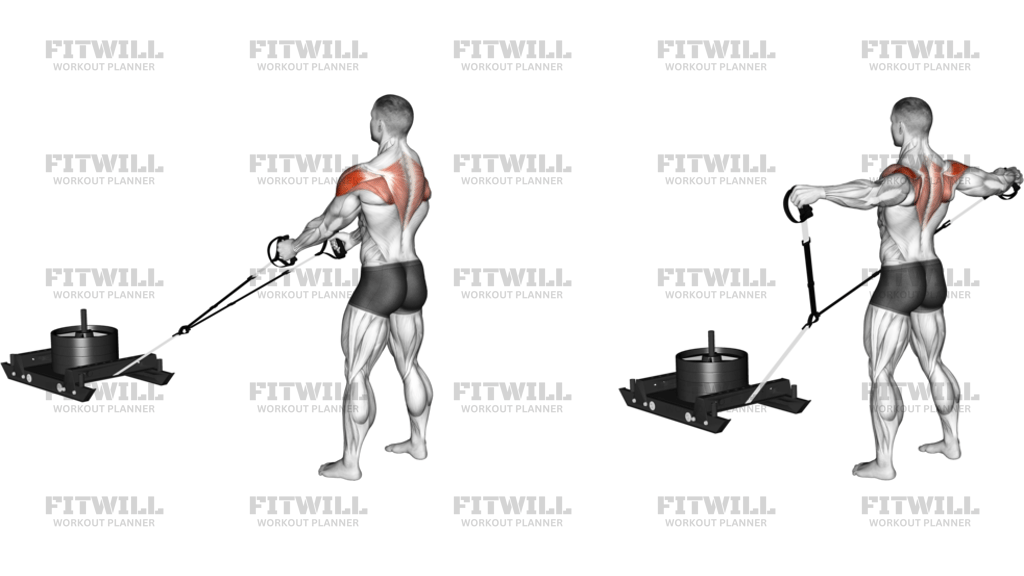
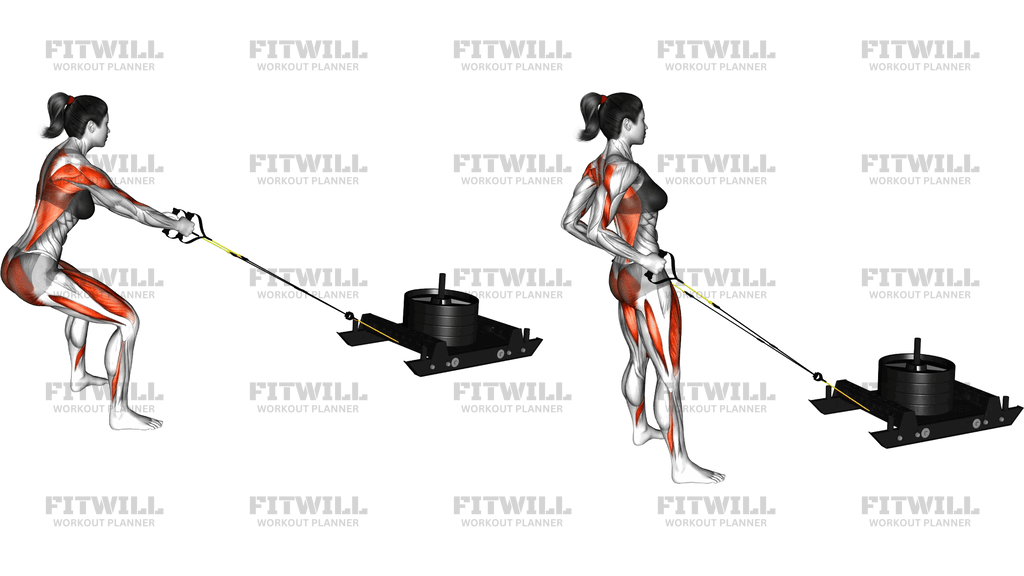
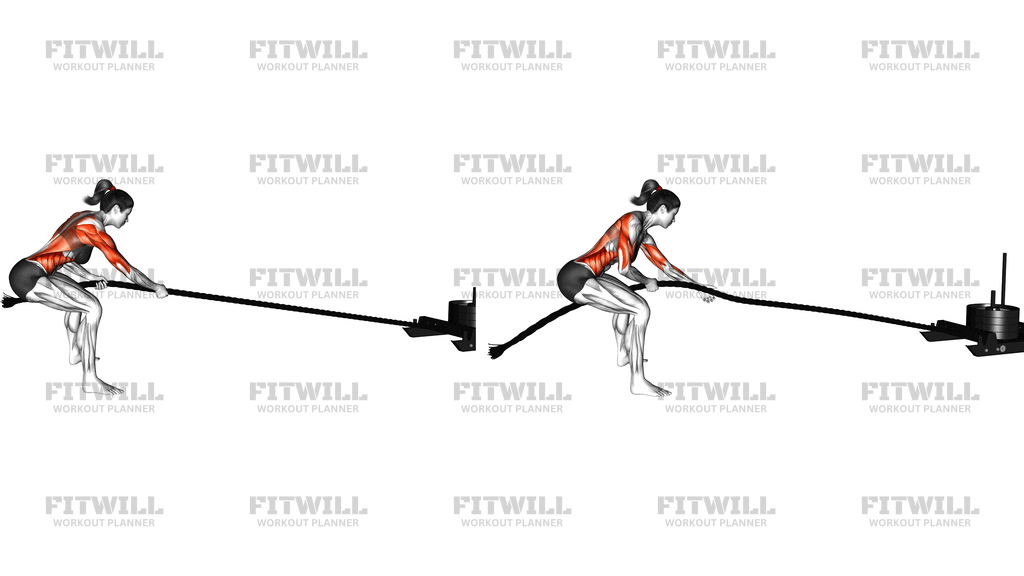
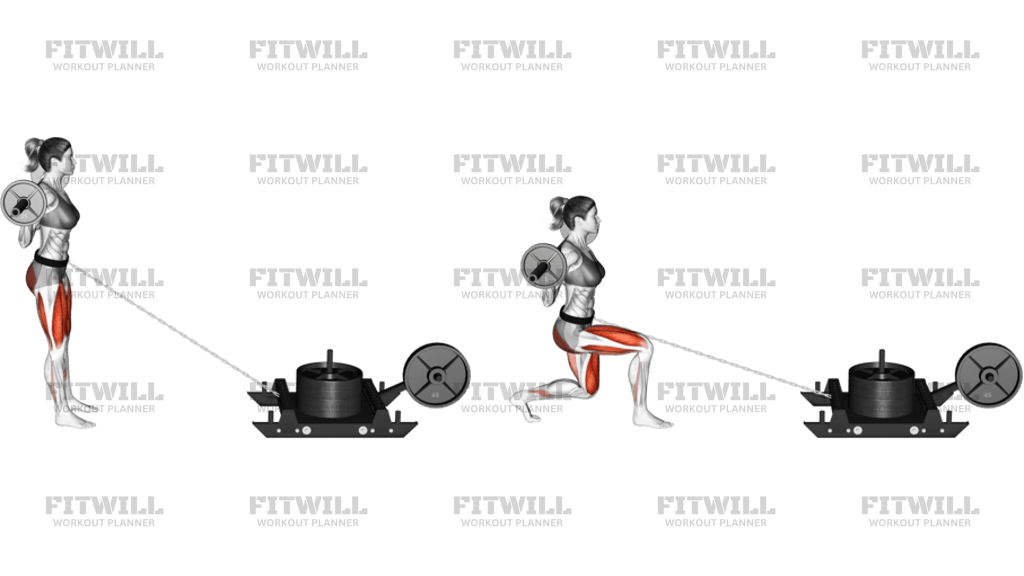
Power Sled Rear Lunge Row is a sled-based compound exercise that links a reverse lunge with a rowing pull. The setup is simple: hold the sled straps or handles, stand tall with the sled in front of you, then step one leg back into a rear lunge while you pull the sled handles toward your torso. The movement asks your legs, back, shoulders, arms, and trunk to coordinate at the same time, so it is useful when you want to train strength, balance, and body control in one pattern.
The exercise works best when the setup is deliberate. Start with enough strap tension that you can reach the handles without leaning hard into the sled, but not so much that the sled jerks forward before you are ready. As you step back, the front foot should stay planted and the torso should stay long, not folded over. The row and the lunge should feel linked, with the lower body lowering as the upper body finishes the pull rather than turning the rep into a bounce or a shrug.
Because the sled is guided by the floor, the exercise encourages a clean pulling path and a stable stance, but it can still get sloppy if you rush the return. Keep the back knee traveling down under control, bring the handles toward the lower ribs or waistline, and finish the rep by pressing through the front foot and bringing the rear leg back to the start. If the load is too heavy, the torso will twist, the shoulders will rise, and the lunge depth will shorten, so choose a resistance that lets both halves of the movement stay organized.
Use Power Sled Rear Lunge Row when you want an athletic accessory drill that combines lower-body strength with upper-body pulling work. It fits well in conditioning circuits, sled sessions, general strength blocks, or warmups for athletes who need coordinated leg drive and trunk control. Beginners can use it with a light sled and short stride while they learn the timing. More advanced lifters can add load, but the rep should still look smooth, balanced, and quiet rather than explosive and uncontrolled.
[ Workout Log & Planner ]
Put your next workout in Fitwill
Keep your plan and training log ready when you are.


Instructions
- Stand facing the power sled and hold the straps or handles with both hands, arms long and shoulders set down away from your ears.
- Walk back until the straps are under light tension and place your feet about hip-width apart with your chest tall and ribs stacked over your pelvis.
- Brace your torso, then step one leg straight back into a rear lunge as you begin to row the handles toward your lower ribs.
- Keep the front foot flat and the front knee tracking over the toes while the back knee drops toward the floor.
- Finish the row with your elbows close to your sides and your shoulder blades gently squeezed without shrugging.
- Pause briefly at the bottom when the lunge is stable and the handles are close to your torso.
- Press through the front foot to rise, return the rear leg to the start, and let the arms extend back to the sled in a controlled way.
- Reset your posture and repeat on the same side or alternate sides for the planned reps.
Tips & Tricks
- Start with light strap tension so the sled stays connected to you, not yanked forward by the first step.
- Keep the chest tall enough that the row comes from the upper back, not from folding the spine toward the sled.
- Let the front leg do most of the work on the way up; if you are pushing off the back leg, the lunge depth is probably too shallow or the load is too heavy.
- Think about pulling the handles to the lower ribs, not to the chin, so the elbows track naturally and the shoulders stay out of your neck.
- Use a shorter rear step if balance is the limiting factor and a longer step if you want more glute and hip work from the lunge.
- Keep the sled path smooth; if the straps go slack and then snap tight, the rep is usually too fast.
- Exhale as you row and stand, then inhale as you return the handles forward and prepare for the next lunge.
- Stop the set when your torso starts rotating toward one side or the front heel begins to peel up.
Frequently Asked Questions
What does the Power Sled Rear Lunge Row work?
It blends a reverse lunge with a horizontal row, so it trains the legs, glutes, back, shoulders, arms, and trunk together.
Is this mainly a lower-body or upper-body exercise?
It is both. The rear lunge challenges the legs and hips, while the row targets the upper back and arms.
How far should I step back into the lunge?
Step back far enough that your front knee can bend without your heel lifting or your torso collapsing forward. A slightly shorter step is fine if it helps you keep balance.
Where should the handles travel during the row?
Pull them toward your lower ribs or waistline. If the handles rise toward your shoulders, the shrug usually takes over.
Can I alternate legs each rep?
Yes. Alternating sides works well for conditioning and coordination, while staying on one side can help you focus on balance and cleaner timing.
What is the biggest form mistake on this exercise?
Rushing the rep so the sled jerks, the torso twists, or the rear lunge turns into a shallow step instead of a controlled drop.
Is this exercise good for beginners?
Yes, if the sled is very light and the stride is short at first. Beginners should focus on timing the row and lunge together before adding load.
How should I breathe during each rep?
Exhale as you row and stand, then inhale as the straps come forward and you set up the next rear lunge.