EZ Bar Lying Bent Arms Pullover
EZ Bar Lying Bent Arms Pullover is a bench-based pullover variation that trains the lats through a long, controlled arc while the elbows stay bent. With your upper back and head supported on a flat bench, the bar starts above the chest and travels behind the head, then returns along the same path. That setup makes the exercise feel very different from a standing pull or row: the bench removes most lower-body cheating, while the fixed arm angle shifts the work toward shoulder extension and lat engagement.
The movement is a good fit when you want direct back work without needing a cable station or pullover machine. The primary target is the latissimus dorsi, with the upper back, biceps, and forearms helping to stabilize the bar and keep the elbow angle steady. Because the shoulders move through a large range, the exercise also asks for control from the ribcage and core. If the torso arches hard or the elbows drift all over the place, the load is usually too heavy or the range is too deep.
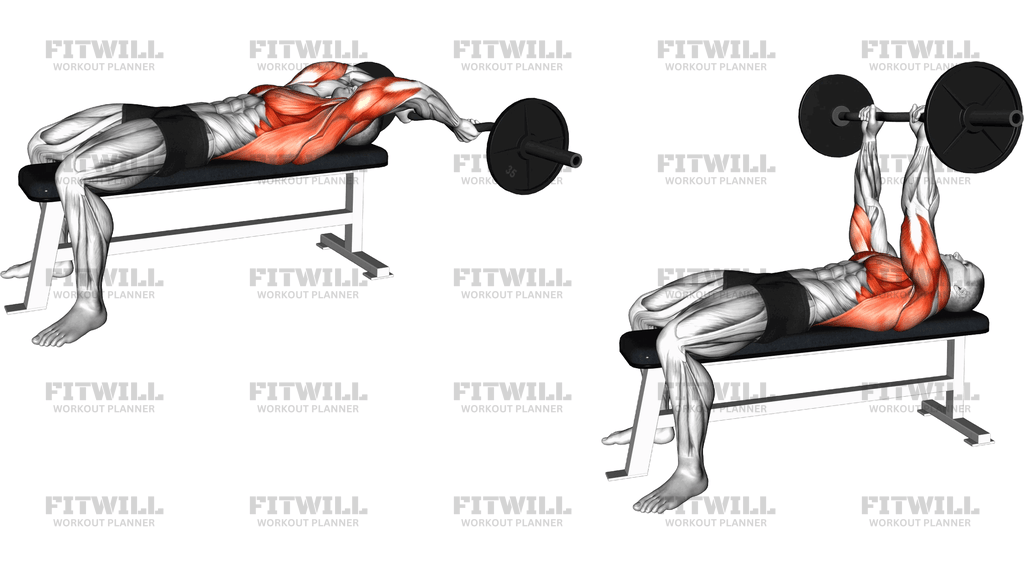
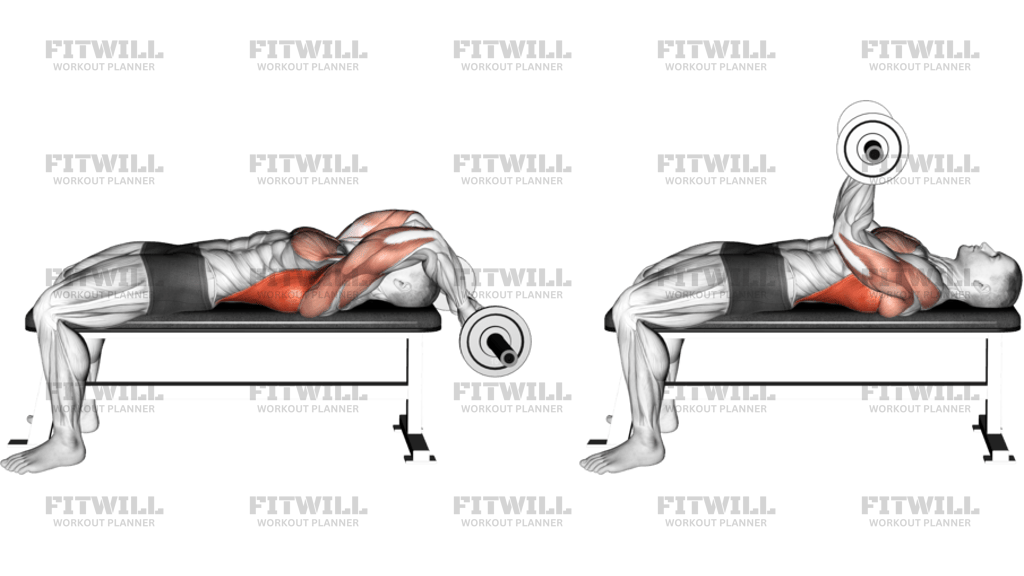
The image shows the lifter lying flat with the feet planted, the bar held over the chest with bent elbows, and the bar lowered in a smooth arc toward the floor behind the head before being brought back up. That is the key pattern to preserve: keep the elbows slightly bent, let the shoulders open under control, and avoid turning the rep into a triceps press or a chest press. The best reps feel like the upper arms are being guided back by the lats rather than pushed by momentum.
Use a bench position that lets the head, shoulders, and feet stay stable, and keep the neck relaxed against the pad. The lower back should stay natural, not aggressively arched. Lower the bar only as far as the shoulders can tolerate without pinching, and stop the descent before the elbows lock out. On the way up, bring the bar back over the chest with the same elbow angle and a steady exhale so the ribcage does not flare and steal the work.
This is a strong accessory exercise for back-focused sessions, lat hypertrophy work, or as a technical finisher after your main pulls. It is most useful when performed with moderate to light loads, a slow lowering phase, and consistent range from rep to rep. If the shoulders feel uncomfortable, shorten the arc, reduce the load, or switch to a cable pullover that lets you fine-tune the path more easily.
Fitwill
Log Workouts, Track Progress & Build Strength.
Achieve more with Fitwill: explore over 9600 exercises with images and videos, access built-in and custom workouts, perfect for both gym and home sessions, and see real results.
Start your journey. Download today!




Instructions
- Lie flat on a bench with your head, upper back, and hips supported, and plant your feet firmly on the floor.
- Hold the EZ bar above your chest with a shoulder-width grip and bend your elbows slightly so the arms stay fixed.
- Set your shoulder blades gently back and down, and keep your ribcage from flaring hard off the bench.
- Inhale, then lower the bar in a smooth arc behind your head by letting the shoulders open, not by straightening the elbows.
- Keep the bend in your elbows nearly the same as the bar moves, and stop the descent when you feel a strong lat stretch without shoulder pain.
- Exhale as you pull the bar back along the same arc until it is again over your chest.
- Pause briefly at the top without bouncing the bar or losing tension in the lats.
- Repeat for the planned reps, then place the bar down carefully before sitting up.
Tips & Tricks
- Keep the elbow bend consistent; turning the rep into a triceps extension usually means the bar is too heavy.
- Think about moving the upper arms from above the chest toward the floor behind you, not about pressing the bar up and down.
- A narrow or very wide grip can change shoulder comfort quickly, so adjust the EZ bar hand position until the wrists and elbows feel natural.
- Lower the bar only until the shoulders still feel organized; going deeper is not better if the front of the shoulder pinches.
- Keep the lower ribs from popping up off the bench, because that usually shifts work away from the lats and into the low back.
- Use a slow lowering phase to load the stretched position, then bring the bar back up smoothly without swinging.
- If your forearms take over, lighten the load and keep the wrists stacked so the bar stays controlled in the hands.
- Stop the set before the elbows start drifting or the bar path gets crooked behind your head.
Frequently Asked Questions
What muscle does EZ Bar Lying Bent Arms Pullover target most?
The lats are the main target, with the upper back, biceps, and forearms helping stabilize the bar.
Can beginners perform this exercise?
Yes, if they start with a light EZ bar and a short, comfortable range of motion.
How should the bar move during the rep?
It should travel in a smooth arc from above the chest to behind the head and then back over the chest.
Should my elbows stay bent the whole time?
Yes. Keep a slight bend and hold that angle steady so the shoulders do the work instead of the elbows straightening.
Why use an EZ bar instead of a straight bar?
The angled grip can feel easier on the wrists and elbows while still letting you load the pullover pattern.
How deep should I lower the bar behind my head?
Lower it only as far as your shoulders stay comfortable and you can keep the ribcage and elbows controlled.
What is a common mistake on this exercise?
The biggest mistake is turning it into a big chest-bridge or letting the elbows drift so the bar path gets sloppy.
Where does this fit in a workout?
It works well as accessory lat work after your main rows, pull-ups, or pulldowns, or as a controlled finisher.