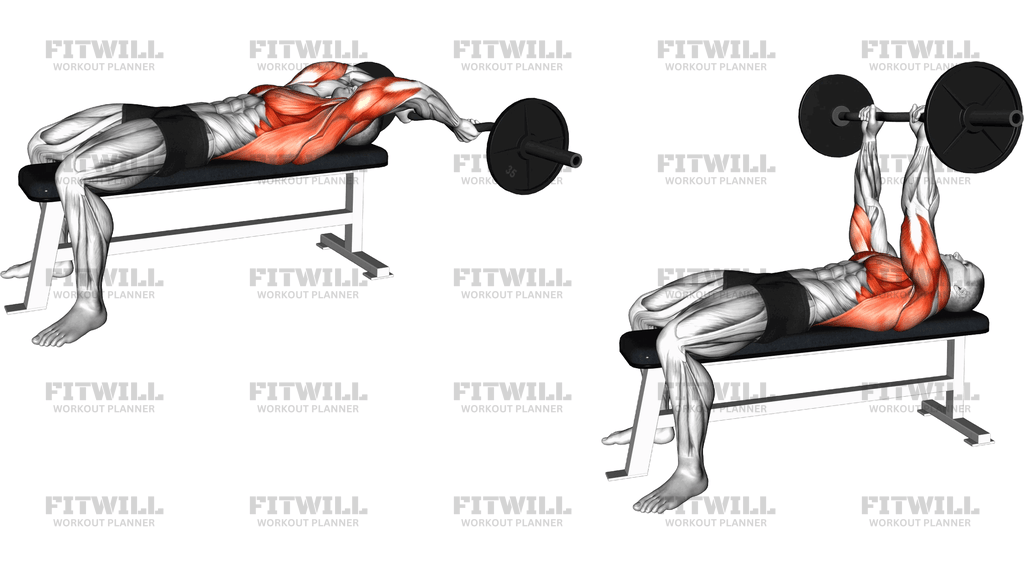
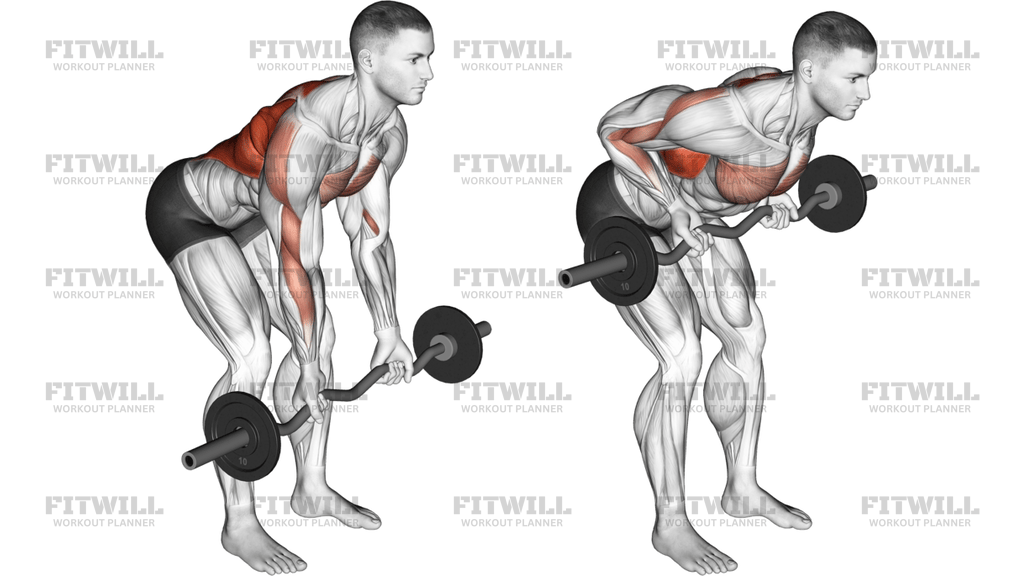
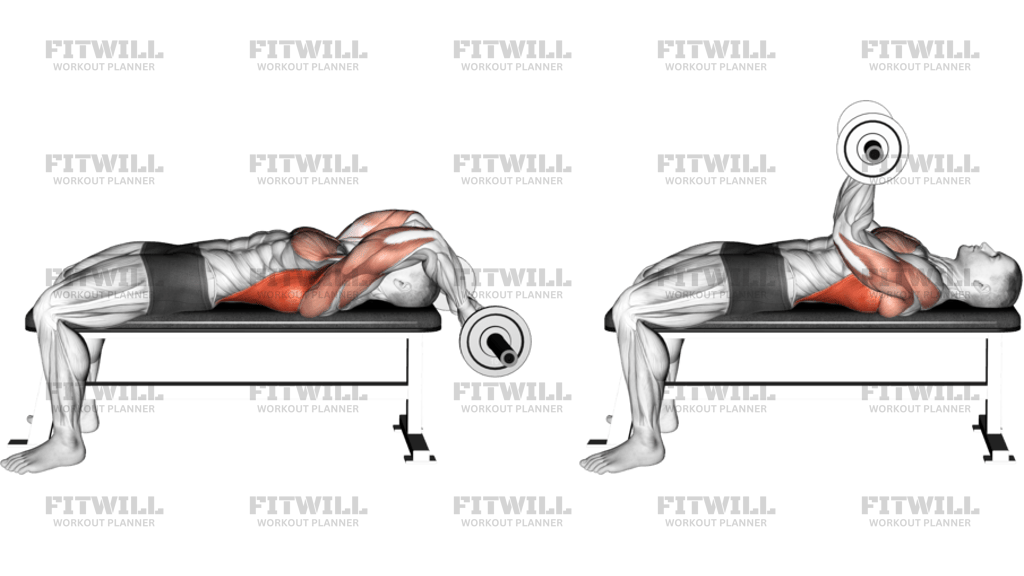
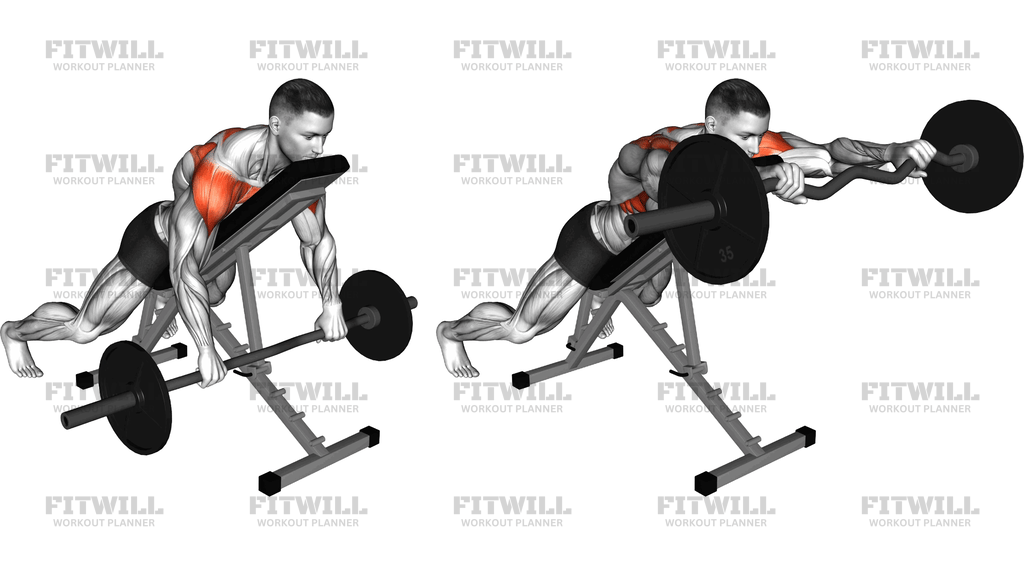
Cambered Bar Lying Row
Cambered Bar Lying Row is a chest-supported rowing exercise for building the lats, upper back, and arm flexors with a very controlled torso position. Lying face down on a flat bench removes most of the body English that can creep into bent-over rows, so the back has to do the work instead of the hips or lower back. The cambered bar also gives your hands a more natural angle, which often makes the pull feel smoother through the shoulders and wrists.
This movement is useful when you want a strict horizontal row that keeps the chest anchored and the spine quiet. The main target is the latissimus dorsi, with the rhomboids, mid traps, rear shoulders, biceps, and forearms helping to control the pull and the descent. Because the bench supports your torso, you can focus on shoulder-blade motion, elbow path, and a clean squeeze at the top without having to fight for balance.
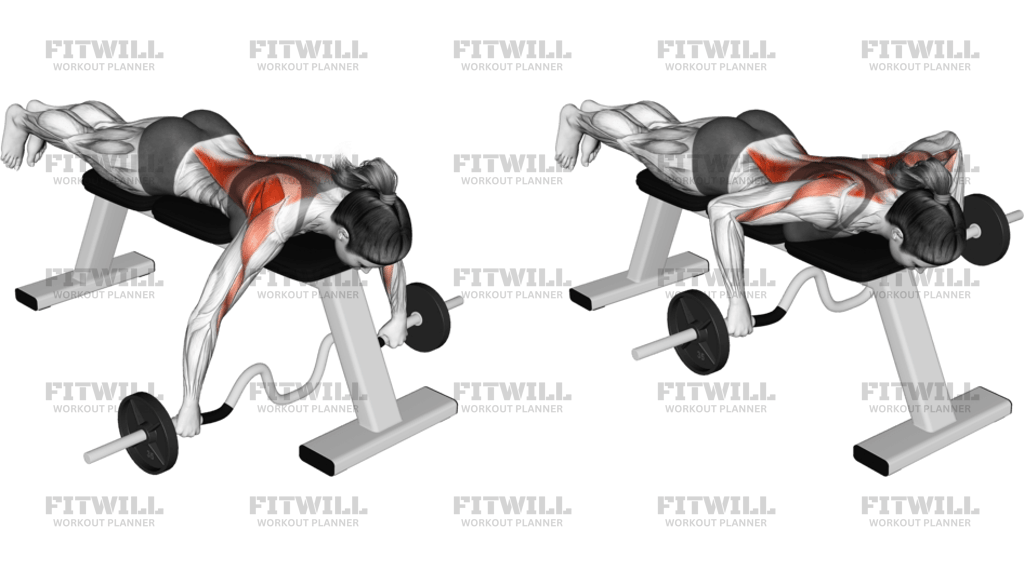
The setup matters as much as the pull itself. Lie flat on the bench with your chest pressed into the pad, reach down to the cambered handles, and start with the shoulders long and the arms extended. From there, row the bar toward your lower ribs or upper abdomen while keeping the chest glued to the bench and the neck neutral. If you lift the chest, shrug hard, or yank the bar, the movement stops feeling like a lying row and turns into a loose shrugging pull.
Cambered Bar Lying Row is a good choice for lifters who want back work without loading the lower back, and for anyone who needs a stricter rowing pattern after heavy deadlifts or hinge work. It can also be a smart accessory lift when you want more time under tension for the lats and upper back without turning the set into a full-body heave. Use a load that lets every rep start from a dead-hanging arm position and finish with a clear squeeze, not a bounce off the bench.
On each repetition, keep the pull honest and the return controlled. Think about driving the elbows back rather than curling the bar with the hands, then lower until the arms are long again and the shoulders can reach a comfortable stretch. That combination of chest support, neutral hand angle, and deliberate range makes Cambered Bar Lying Row effective for building back strength, posture, and pulling control while keeping the movement easy to repeat cleanly.
Fitwill
Log Workouts, Track Progress & Build Strength.
Achieve more with Fitwill: explore over 9600 exercises with images and videos, access built-in and custom workouts, perfect for both gym and home sessions, and see real results.
Start your journey. Download today!




Instructions
- Set a flat bench over the cambered bar and lie face down with your chest supported, feet planted or hanging free behind the bench, and your head in a neutral line.
- Reach down to the angled handles with a neutral grip, keeping your shoulders relaxed and your wrists stacked over the handles.
- Let the bar hang straight down under the bench until your arms are fully extended and your shoulder blades can spread naturally.
- Brace your abs lightly against the bench and keep your ribs down so your torso stays still before the first pull.
- Row the bar toward your lower ribs or upper abdomen by driving your elbows back and slightly out, not by curling the bar with your hands.
- Squeeze your shoulder blades together at the top for a brief pause without lifting your chest off the bench.
- Lower the bar slowly until your arms are long again and you feel the lats and upper back lengthen under control.
- Keep breathing smooth through each rep, then guide the bar down to the floor or rack it safely after the final repetition.
Tips & Tricks
- If the bar or plates will not clear the floor, use smaller plates or a higher bench setup so every rep starts from a clean hang.
- Keep your chest glued to the pad; if your sternum lifts, the pull turns into a body swing instead of a strict row.
- Think elbows back for more lat work and elbows slightly wider for more upper-back emphasis.
- Do not shrug the handles toward your ears; the shoulders should stay away from the neck as you row.
- Use the cambered grip to keep the wrists neutral instead of bending them back around a straight bar.
- Lower the bar under control until the arms are fully extended, but do not let the weight yank your shoulders forward.
- Choose a load that lets you pause briefly at the top without bouncing the bar off the bottom position.
- If your lower back feels involved, reduce the load and tighten your midsection so the bench, not your spine, keeps you stable.
Frequently Asked Questions
What muscles does Cambered Bar Lying Row work most?
It mainly trains the lats and upper back, with the rhomboids, rear shoulders, biceps, and forearms helping with the pull and hold.
Is Cambered Bar Lying Row good for beginners?
Yes. The chest support makes it easier to learn than a free-standing row, as long as the load is light enough to keep the torso glued to the bench.
Why use a cambered bar instead of a straight bar?
The angled handles usually give the wrists and shoulders a friendlier position, and they can make it easier to row with a natural elbow path.
Where should the bar touch on Cambered Bar Lying Row?
Most reps should finish around the lower ribs or upper abdomen. If the bar is hitting much higher or lower, your bench position or elbow path is probably off.
Should my chest stay on the bench the whole time?
Yes. The bench should stay in contact with your chest so the row stays strict and the movement does not turn into a hip-driven cheat rep.
What is the biggest mistake in Cambered Bar Lying Row?
Shrugging and jerking the bar usually take over the set. Keep the neck long, pull with the elbows, and pause before lowering.
What if the bar hits the floor before my arms fully straighten?
Use smaller plates or raise the bench setup so you can reach full extension without forcing the shoulders into an awkward bottom position.
Can I substitute another exercise for Cambered Bar Lying Row?
A chest-supported dumbbell row or a seal row are the closest substitutes if you want the same torso support and strict pulling pattern.