Bench Pull-Ups
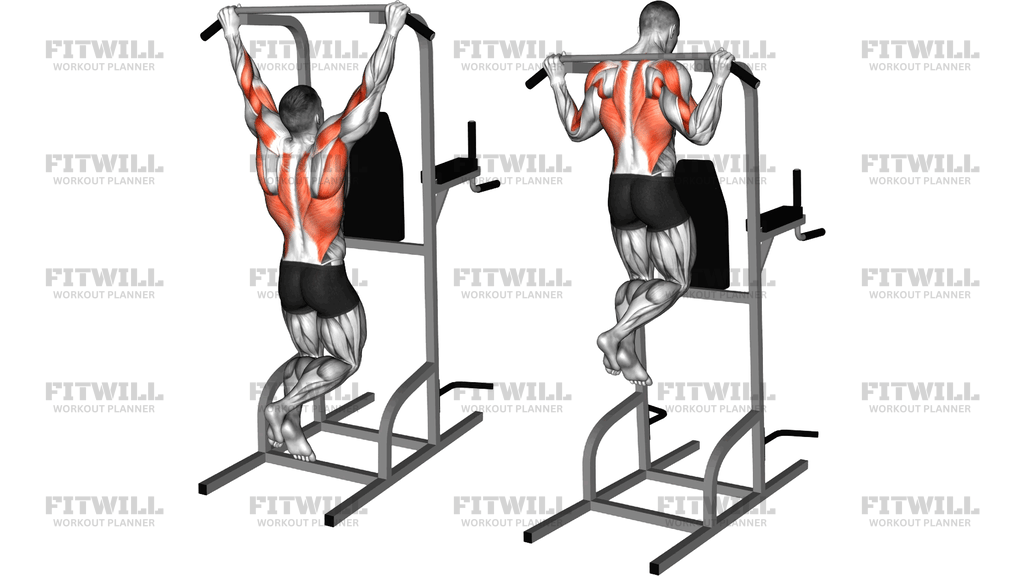
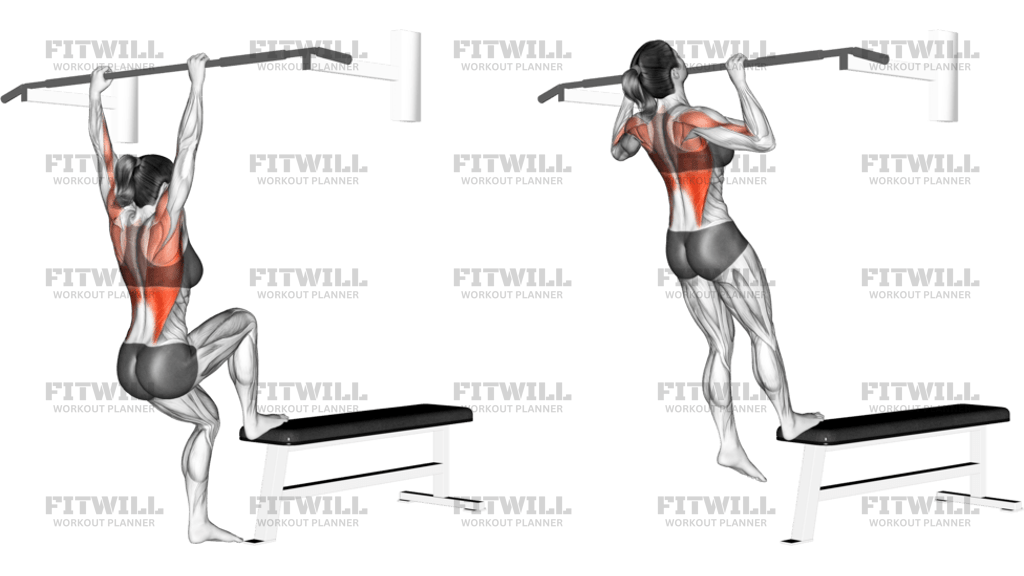
Bench Pull-Ups is a bench-assisted pull-up variation used to train vertical pulling strength while reducing some of the load with one foot on a bench. The setup lets you practice a real pull-up path with better control, making it useful for building lats, upper-back strength, arm contribution, and hanging control without needing full unassisted reps from the first set.
The bench changes the exercise from a pure bodyweight pull-up into a supported version, so the position of the bench, the grip on the bar, and the amount of help from the working leg all matter. When the bench is placed too far forward or the foot drives too hard, the movement turns into a push or a jump instead of a pull. When the support is light and steady, the torso stays organized and the back muscles can do the main work.
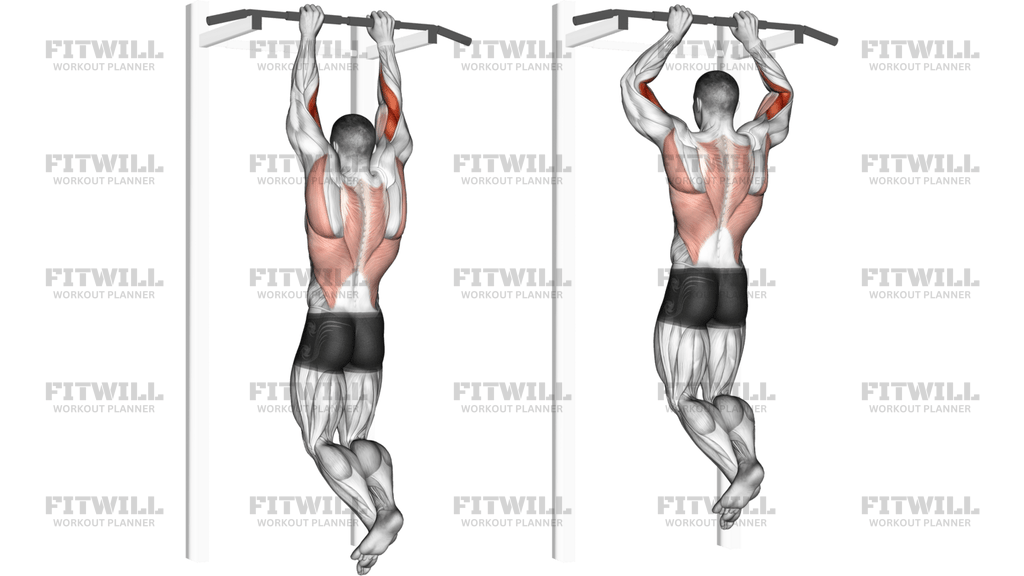
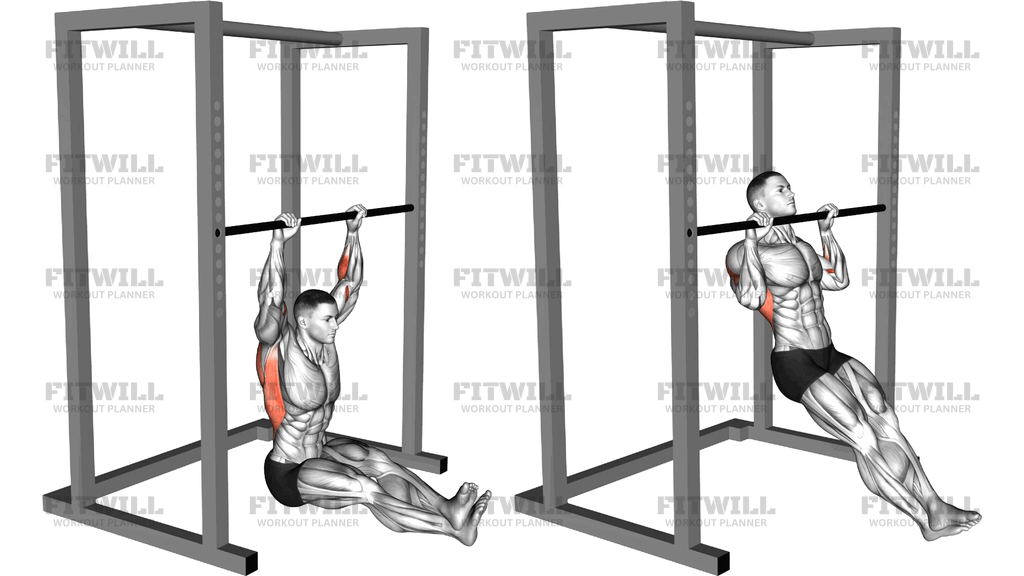
From the start, hang long enough to feel the shoulders open, then keep the ribs stacked and the neck relaxed as you pull. The elbows should travel down and back while the chest rises toward the bar. The bench foot is only there to reduce the effective bodyweight; it should not launch the rep or swing the hips. Lower under control to regain the full stretch and repeat with the same path each time.
This exercise is a practical option for beginners learning how to pull their body upward, for lifters adding volume after strict pull-ups, or for anyone who wants a controlled back-focused accessory movement. It is also useful when you want to keep the movement pattern strict and reduce cheating through momentum. If the shoulders feel pinched or the body starts twisting, shorten the range, reduce the assistance from the bench, or stop the set before the form breaks down.
Bench Pull-Ups reward clean repetition quality. A smooth set should look and feel the same from rep to rep: stable foot contact on the bench, controlled ascent, brief top position, and a deliberate lowering phase. That consistency is what makes the movement valuable for strength, technique practice, and upper-body pulling capacity.
[ Workout Log & Planner ]
Put your next workout in Fitwill
Keep your plan and training log ready when you are.


Instructions
- Place a bench directly under the pull-up bar and stand on it so one foot can rest securely on the bench while you reach the bar with an overhand grip.
- Grip the bar slightly wider than shoulder width, let the free leg hang, and keep the support foot light and stable rather than driving hard through the bench.
- Set your shoulders down away from your ears, stack your ribs over your pelvis, and brace before the first pull.
- Start from a long hang with the elbows straight and the body quiet, then begin the rep without kicking or swinging.
- Pull your elbows down and back as you bring your chest and chin toward the bar, using the bench foot only to reduce the load.
- Keep the neck neutral and the torso steady while the upper back and lats lift you to the top position.
- Pause briefly when the chin reaches the bar or the upper chest approaches it, then squeeze the back without shrugging.
- Lower slowly until the arms are straight again and the shoulders are under control, then reset the foot and repeat for the planned reps.
Tips & Tricks
- Choose a bench height that lets the working foot stay planted without forcing your knee to lock out at the bottom.
- Keep the assistance leg light; if you are pushing the bench hard enough to stand up, the set has become too easy or too assisted.
- Use an overhand grip that lets your elbows travel down beside your ribs instead of flaring wide behind you.
- Keep your chest lifted without over-arching your lower back, especially as you pass the midpoint of the pull.
- Let the shoulders open at the bottom, but do not drop into a loose hang if your shoulder feels unstable.
- Move the body as one unit; twisting through the hips usually means the bench foot is helping unevenly.
- Exhale as you pull up and inhale on the way down so the torso stays braced instead of collapsing.
- Stop the set when you need a hop from the bench or a neck crane to finish the rep.
Frequently Asked Questions
What muscles do Bench Pull-Ups work most?
They mainly train the lats, with the upper back, biceps, and forearms helping through the pull.
Why is there a bench under the bar?
The bench lets one foot assist the pull so you can practice the pull-up path with less bodyweight to move.
Should my foot push hard into the bench?
No. The foot should provide light assistance only; if it turns into a push or a jump, the set is no longer a strict pull.
What grip should I use on the bar?
The image shows an overhand grip slightly wider than shoulder width, which is a good default for this variation.
Can beginners use Bench Pull-Ups?
Yes. The bench support makes them a practical stepping stone for building toward full unassisted pull-ups.
What is the most common form mistake?
Using too much leg drive from the bench or swinging the hips to finish the rep.
How do I make the exercise harder over time?
Use less assistance from the bench, slow the lowering phase, and keep each rep identical without momentum.
Where should I feel the top of the rep?
You should feel the lats and upper back working as the chest rises toward the bar, not a shrug in the neck.