Cable Seated High Row V-Bar
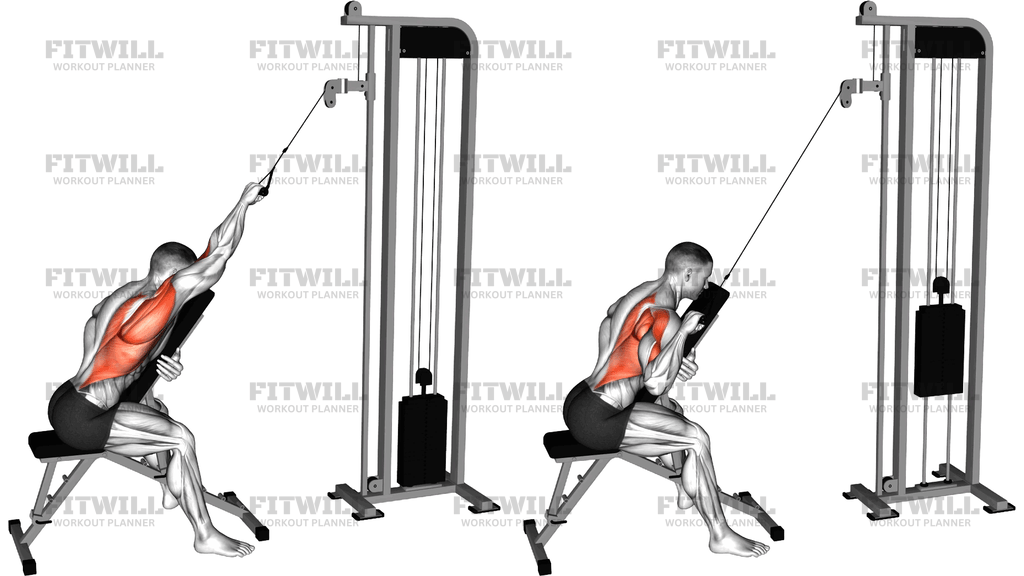
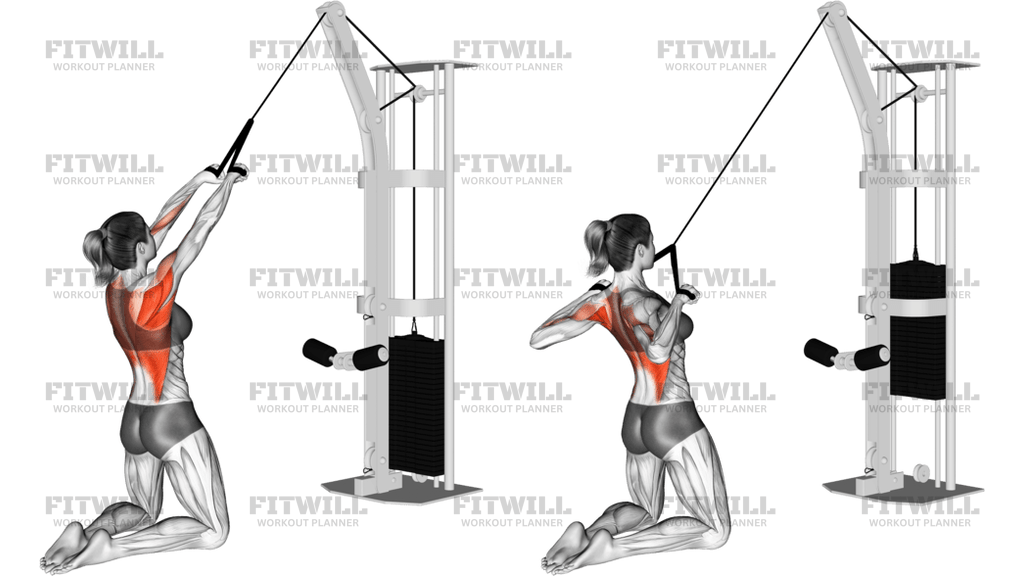
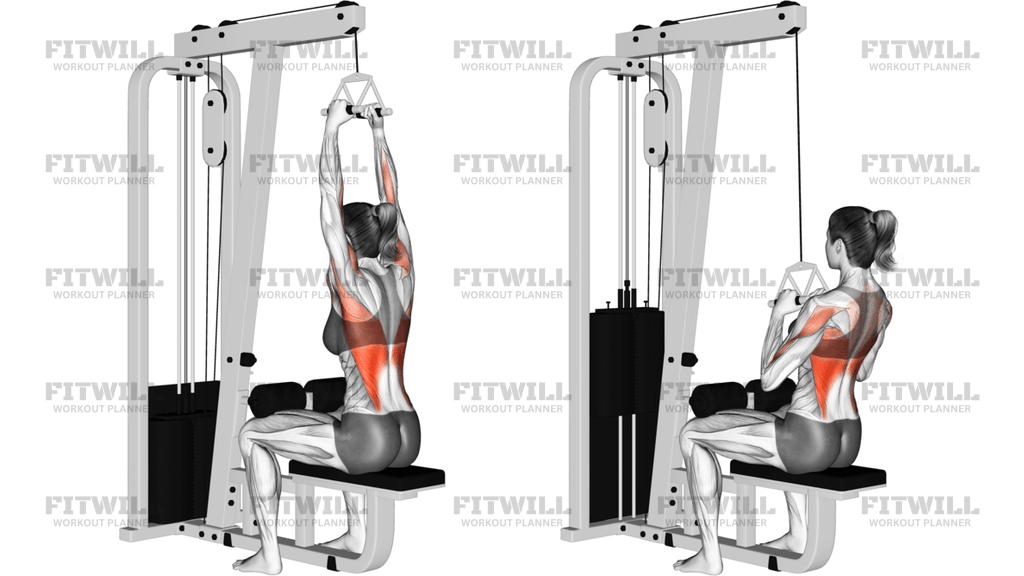
Cable Seated High Row V-Bar is a seated cable pulling exercise that trains the upper back, lats, rear delts, and elbow flexors through a close neutral grip. The image shows the handle starting high and moving down toward the upper chest, which makes this variation feel more like a high row than a low cable row. That higher line of pull matters, because it changes how the shoulder blades move and keeps the elbows driving down and back instead of flaring wide.
Cable Seated High Row V-Bar is useful when you want a controlled pulling pattern with more back work than body English. Sitting upright on the bench gives you a stable base, but it also means your torso position has to stay disciplined: if you overlean or swing, the stack turns the set into momentum work. A neutral grip usually feels friendly on the wrists and lets you keep the forearms lined up with the cable as you pull.
The setup determines the quality of every rep. Sit far enough from the stack that the cable stays smooth at the top, plant both feet, and start with the ribs stacked over the pelvis rather than flared up. From there, pull the V-handle toward the upper chest or collarbone line while keeping the neck long and the shoulders away from the ears. The best reps finish with the elbows tucked slightly behind the torso and the shoulder blades squeezed and depressed, not jammed upward.
Use the return phase to build the exercise, not just to get back to the top. Let the arms travel overhead under control until the back and lats are fully lengthened without losing your seated position or shrugging into the ears. That slower return is what keeps tension on the target muscles and helps the movement work well for hypertrophy, accessory back work, or warm-up sets before heavier rowing and pulldown variations.
This exercise is most effective when the load lets you keep the chest tall, the wrists straight, and the handle path consistent from rep to rep. If you feel it mostly in the neck or lower back, the usual fix is a lighter stack, a shorter pull, or a better bench distance from the machine. Used well, Cable Seated High Row V-Bar is a simple, joint-friendly way to train pulling strength with clear feedback from the cable path and the V-handle.
[ Workout Log & Planner ]
Put your next workout in Fitwill
Keep your plan and training log ready when you are.


Instructions
- Sit on the bench facing the cable stack and take a neutral grip on the V-handle with your palms facing each other.
- Plant both feet flat, keep your knees bent, and scoot back until the cable runs cleanly from the top pulley to your hands.
- Sit tall with your ribs stacked over your pelvis, then set your shoulders down away from your ears before you start the pull.
- Begin with your arms extended overhead and your elbows soft, keeping your wrists straight instead of bent back.
- Pull the V-handle down toward your upper chest or collarbone by driving your elbows down and slightly back.
- Keep your torso mostly still as the handle travels, only allowing a small natural lean if needed to finish the pull cleanly.
- Pause briefly when the handle reaches your upper chest and your shoulder blades feel squeezed and depressed.
- Return the handle slowly to the start until your arms are long again, letting the cable stay under control without letting the stack slam.
- Exhale as you pull, inhale on the way back up, and reset your posture before the next repetition.
Tips & Tricks
- Keep the grip neutral and the wrists stacked so the V-handle does not fold your hands backward at the top.
- Pull the elbows, not the hands; that cue usually keeps the lats and upper back doing the work instead of the biceps alone.
- If your shoulders rise toward your ears, shorten the pull and think about sliding the blades down your back before you row.
- A slight lean back is fine, but if your ribcage pops up, the set has turned into a swing.
- Touch the upper chest only if the shoulders stay packed; otherwise stop the pull a few inches earlier.
- Use a slower lowering phase so the lats stay loaded as the arms travel overhead.
- If the stack jerks at the top, move the bench or seat so the cable path lines up smoothly with the V-handle.
- Keep your neck long and avoid craning your chin forward to chase the handle.
- Choose a load that lets you pause at the finish without losing the elbow path or twisting your torso.
Frequently Asked Questions
What muscles does Cable Seated High Row V-Bar work?
It mainly trains the lats, mid-back, rear delts, and biceps, with the shoulder blades doing a lot of stabilizing as the handle comes down.
How is Cable Seated High Row V-Bar different from a low seated row?
This version pulls from a higher angle, so the elbows drive down and back toward the upper chest instead of traveling close to the waist. That usually shifts more emphasis to the upper back and lats.
Where should the V-bar travel at the finish?
Aim the handle toward the upper chest or collarbone line while keeping the shoulders down. If you have to shrug to reach that point, stop a little earlier.
Should I lean back during Cable Seated High Row V-Bar?
A small lean is fine, but the bench should not turn into a swing. If your ribs flare and your torso rocks, the load is too heavy or the cable is set too far forward.
Is Cable Seated High Row V-Bar beginner friendly?
Yes, as long as the stack is light enough to keep the pull smooth and the torso still. Beginners usually benefit from a slower return and a shorter range if they cannot keep the shoulders packed.
Why do my traps take over on this exercise?
Usually the shoulders are shrugging at the top or the load is too heavy. Keep the neck long, pull the elbows down, and finish with the shoulder blades set rather than lifted.
What grip should I use on the V-bar?
Use the neutral grip the handle gives you, with the wrists straight and the palms facing each other. That keeps the forearms lined up with the cable and usually feels easier on the elbows and wrists.
Can I use Cable Seated High Row V-Bar as a back accessory after heavy pulling?
Yes. It works well after heavier rows or pulldowns because the seated position makes it easier to keep the target muscles under tension without needing a lot of body movement.