Resistance Band Seated Biceps Curl
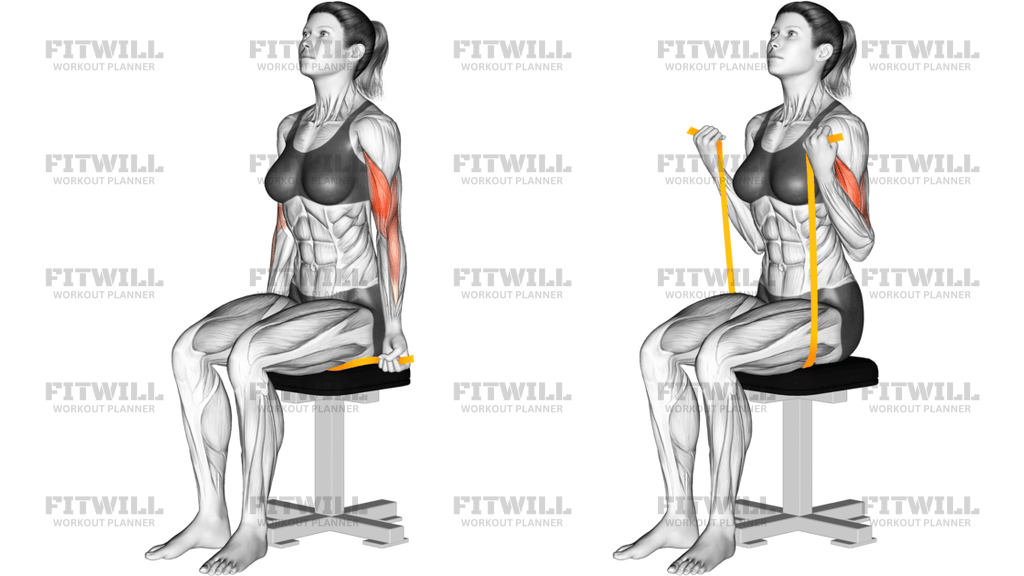
Resistance Band Seated Biceps Curl is a strict arm exercise that keeps your torso supported while the elbows do the work. Sitting down removes most of the leg drive and back swing that can creep into standing curls, so it is a good choice when you want the biceps to stay honest from the first rep to the last. It also works well in a home setup, a light accessory block, or any session where you want constant band tension instead of heavy external loading.
The main target is the biceps brachii, with the brachialis, brachioradialis, and forearm flexors helping control the curl and stabilize the wrist. In a seated position, that assistance matters because the band tries to pull the hands back down as you lower, and the forearms have to keep the grip and wrist position clean. The exercise is simple in appearance, but the quality of the setup decides whether the rep feels smooth or shaky.
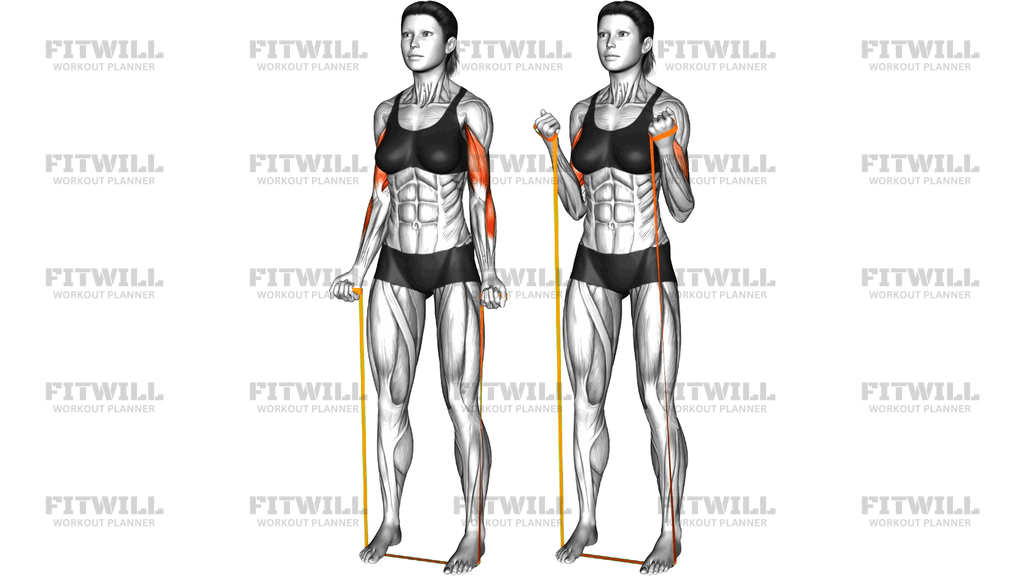
Set up on the edge of a bench with both feet planted and the band secured low under your feet or another stable anchor point. Hold the ends with palms facing up, let your arms hang by your sides, and keep your shoulders stacked over your hips. That low anchor creates tension right away, which is useful because the curl should begin from a controlled start rather than a loose, slack band.
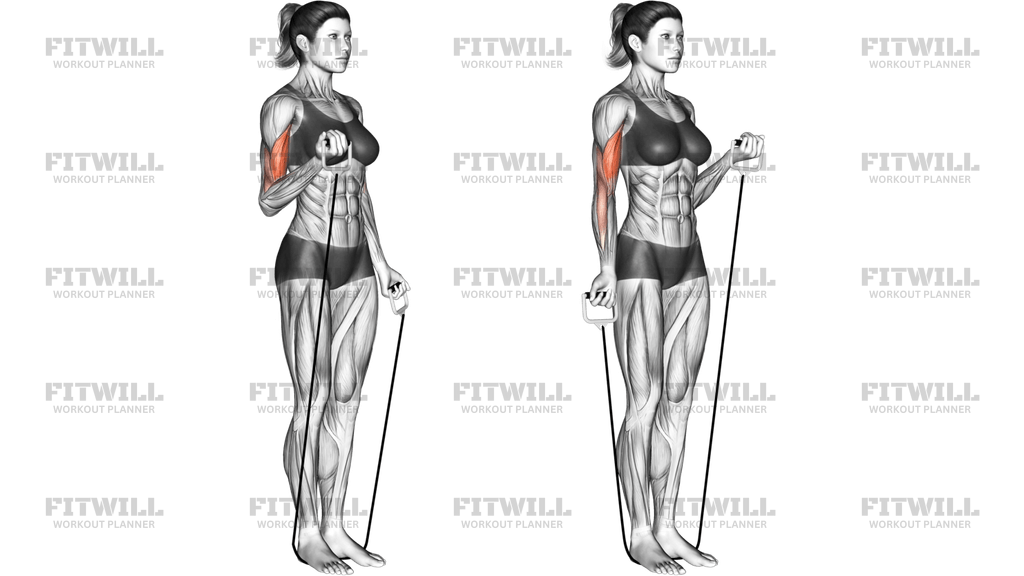
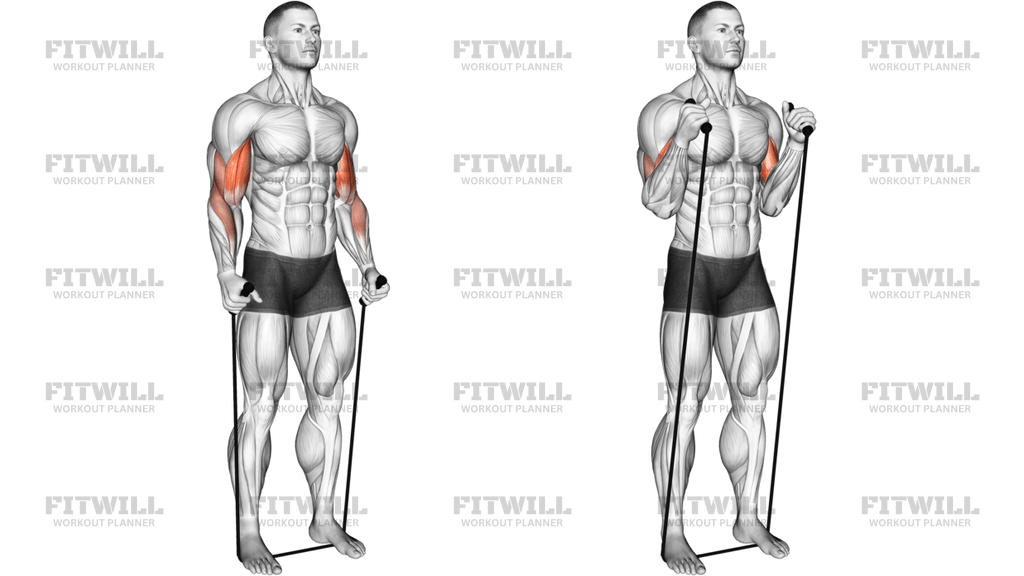
Each rep should be a pure elbow flexion. Keep the upper arms quiet beside your ribs, curl the band toward shoulder height, and stop before your shoulders roll forward or your torso leans back to finish the rep. The top of the curl should feel like a short squeeze, not a shrug. On the way down, lower slowly until your arms are nearly straight and the band is still under tension, then reset without letting the band snap you forward.
Resistance Band Seated Biceps Curl is especially useful as accessory work after presses, rows, or pull-ups because it adds direct arm volume without needing much space or equipment. It is also a good option when you want to practice clean arm mechanics with lighter resistance or when dumbbells and cables are not available. Done well, it builds repeatable tension, teaches control through the whole range, and gives the arms a reliable finisher without turning the set into a bodyweight cheat curl.
[ Workout Log & Planner ]
Put your next workout in Fitwill
Keep your plan and training log ready when you are.


Instructions
- Sit on the edge of a bench with both feet flat and secure the band under your feet or another low anchor point in front of you.
- Hold the band ends with palms facing up and let your arms hang straight by your sides.
- Set your shoulders down and back slightly, stack your chest over your hips, and keep your torso tall.
- Pin your elbows close to your ribs before you start the first curl.
- Curl the band by bending at the elbows until your hands reach shoulder height or the highest point you can control.
- Keep your upper arms still and your wrists straight as you lift.
- Squeeze the biceps briefly at the top, then lower the band slowly until your elbows are nearly straight.
- Keep tension on the band through the descent, then reset your posture before the next rep.
Tips & Tricks
- Sit far enough from the anchor that the band stays taut at the bottom; slack turns the first half of the curl into a dead start.
- If your wrists bend back, shorten the grip slightly or wrap the band deeper in the palm so the line of pull stays straight.
- Keep the elbows almost glued to your sides; if they drift forward early, the front shoulders start stealing the rep.
- Use a slower lowering phase than lifting phase because the band loses tension fast if you drop it back too quickly.
- Stop the curl before your shoulders roll forward to squeeze out extra reps; that last bit should come from the elbow, not a torso lean.
- If one arm finishes higher than the other, switch to alternating curls or a lighter band so both sides stay honest.
- Keep both feet planted and the bench stable so the band does not slide out from under you mid-set.
- Choose a band that lets you finish near technical failure without shrugging, rocking, or bending the wrists.
Frequently Asked Questions
What muscle does Resistance Band Seated Biceps Curl target most?
Resistance Band Seated Biceps Curl primarily trains the biceps brachii, with help from the brachialis and brachioradialis.
Can beginners perform this exercise?
Yes. It is beginner-friendly because the seated position limits cheating, and you can start with a light band and short, strict reps.
Where should I anchor the band for Resistance Band Seated Biceps Curl?
Place it low under both feet or under a stable anchor point near the bench so the band stays secure and tension starts at the bottom.
How high should I curl the band?
Curl until your hands are near shoulder height or until the band tension stops you from keeping your shoulders down and your elbows close.
Why do my shoulders take over during Resistance Band Seated Biceps Curl?
Usually the band is too light or you are letting the elbows drift forward. Sit taller, keep the upper arms by your sides, and stop before the shoulders roll.
Can I do Resistance Band Seated Biceps Curl one arm at a time?
Yes. Single-arm curls can help you spot side-to-side differences and keep each elbow path cleaner if both arms do not match well.
What if the band feels too easy at the bottom?
Move farther from the anchor, use a thicker band, or sit on the band a little higher so there is useful tension before the curl starts.
What is the biggest mistake in Resistance Band Seated Biceps Curl?
Leaning back and turning the set into a seated swing is the main problem. Keep your torso still and let the elbow flexion do the work.