Band Assisted Pull-Up
Band Assisted Pull-Up is a vertical pulling exercise that lets you practice pull-up mechanics with built-in assistance from a resistance band. It develops the lats, upper back, biceps, and forearms while also teaching you how to keep the shoulders organized as you move from a dead hang into a strong top position.
The band changes the difficulty of the lift, so setup matters as much as the pull itself. A band that is too light can make you swing, kick, or lose the line of the rep. A band that is too strong can turn the exercise into a very easy partial range, so choose enough assistance to help you get clean reps without turning them into a jump.
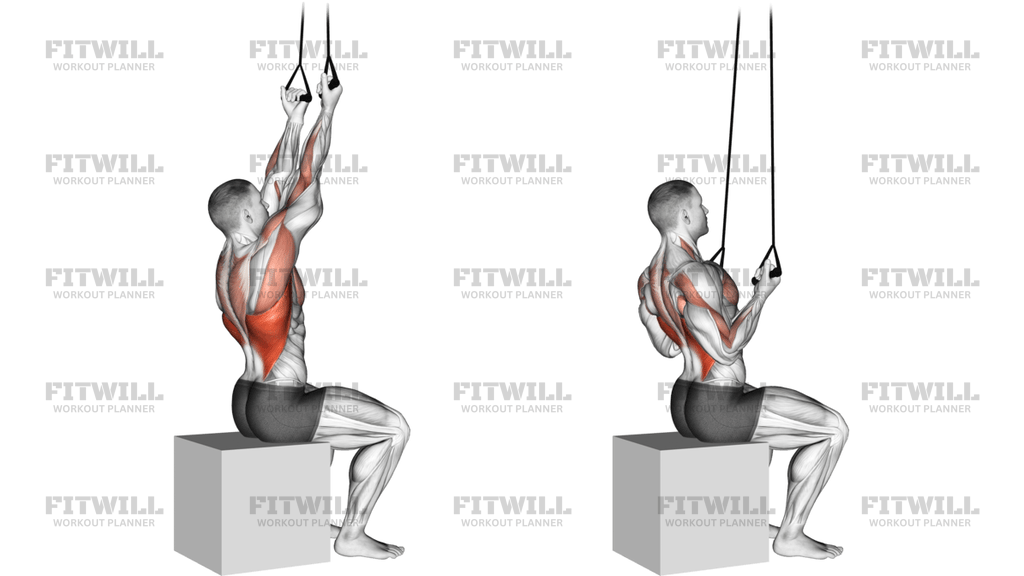
Start by looping the band over the bar, then place one foot or knee into the lower loop so your body weight is supported in a straight line under the bar. Grip the bar slightly wider than shoulder width, set the shoulders down away from the ears, and brace the trunk before the first pull. A quiet body makes the back do the work instead of momentum.
From the bottom, drive the elbows down and back while keeping the chest tall and the ribs stacked. Pull until the chin clears the bar or your upper chest gets close, depending on your grip and mobility, then lower under control until the arms are straight again. The best reps look smooth on the way up and even smoother on the way down.
Band Assisted Pull-Up is useful for building pull-up strength, accumulating quality volume, or returning to vertical pulling after a break. It also works well as a skill exercise before heavier back work. Stop the set when you have to kick, twist, or shrug hard to finish the rep, because the goal is clean pulling mechanics, not surviving the last repetition.
[ Workout Log & Planner ]
Put your next workout in Fitwill
Keep your plan and training log ready when you are.


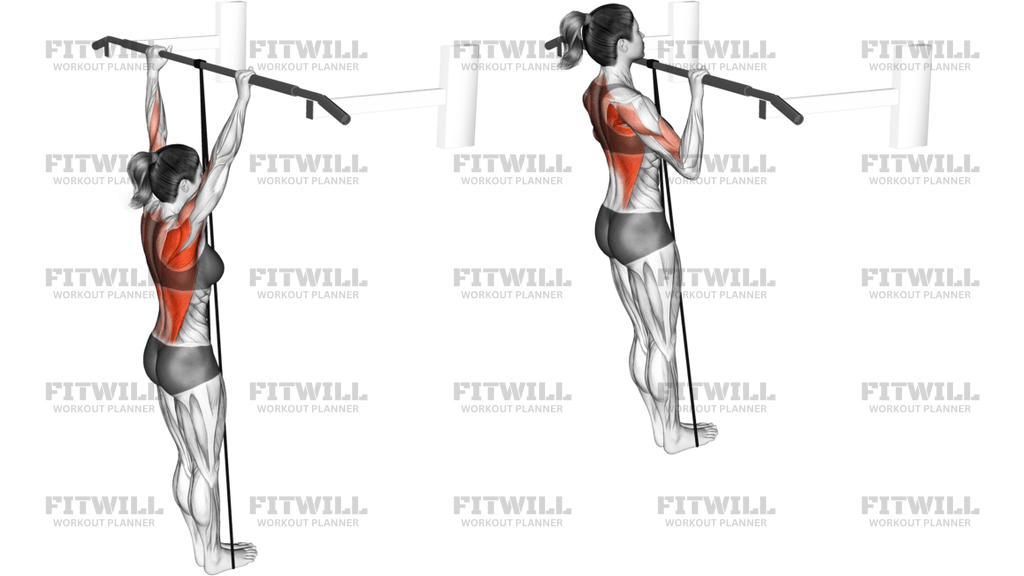
Instructions
- Loop a resistance band over the pull-up bar and place one foot or knee into the lower loop so the band hangs straight under your body.
- Grip the bar with an overhand hold slightly wider than shoulder width, then let your arms straighten fully.
- Hang tall under the bar with your shoulders set down away from your ears and your legs kept quiet.
- Brace your abs and glutes before you pull so your torso stays still instead of swinging.
- Drive your elbows down and back, pulling your chest up toward the bar instead of yanking with your hands.
- Keep pulling until your chin clears the bar or your upper chest reaches the bar line without kicking your legs.
- Lower yourself in a controlled path until your elbows are straight and the band is still supporting you cleanly.
- Reset your shoulders at the bottom, breathe, and start the next rep only when the body is still.
- Step out of the band carefully after the set and avoid dropping out of the bottom position.
Tips & Tricks
- Choose a band that lets you reach the bar without a jump; if you have to kip to finish, the assistance is too light.
- Keep the band centered under the same foot or knee every rep so the body does not twist to one side.
- Start each rep by setting the shoulders down before the elbows bend; shrugging early shifts work into the neck and upper traps.
- Think about driving the elbows toward your back pockets, which keeps the pull focused on the lats and upper back.
- Lower slowly enough that the band does not yank you into the bottom position.
- If your legs swing, cross them slightly in front of you and keep the ribs stacked over the pelvis.
- Use a grip just outside shoulder width; going too wide usually shortens the range and stresses the shoulders.
- Stop the set as soon as the chin stops clearing the bar without extra kick or half reps.
Frequently Asked Questions
What muscles does Band Assisted Pull-Up work most?
The main emphasis is on the lats, with the upper back, biceps, and forearms helping to control the pull and the lowering phase.
Is Band Assisted Pull-Up good for beginners?
Yes. It is one of the best ways to learn pull-up mechanics before you can do strict bodyweight reps, as long as the band gives enough help to keep the motion clean.
Should I step into the band with a foot or knee?
Either can work if the band hangs straight under you and stays centered. Use the setup that feels most stable and lets you keep your torso square to the bar.
How high should I pull on Band Assisted Pull-Up?
Aim for your chin to clear the bar, or pull your upper chest close to the bar if your mobility and grip allow it. The rep should still look smooth, not forced.
Why do I swing when I do Band Assisted Pull-Up?
Swinging usually means the band is too light, the shoulders are not set before the pull, or the legs are drifting. Tighten the body and use more assistance if needed.
Can I use Band Assisted Pull-Up instead of strict pull-ups?
Yes. It is a practical regression for building enough strength and control to move toward unassisted pull-ups over time.
What grip should I use on Band Assisted Pull-Up?
A slightly wider-than-shoulder overhand grip is the most common choice. It keeps the pull vertical and usually lines up well with the movement shown in the setup.
How do I make the exercise harder?
Use a lighter band, reduce the amount of assistance, or keep the same band and build cleaner reps with less leg movement and slower lowering.