Chin Tuck
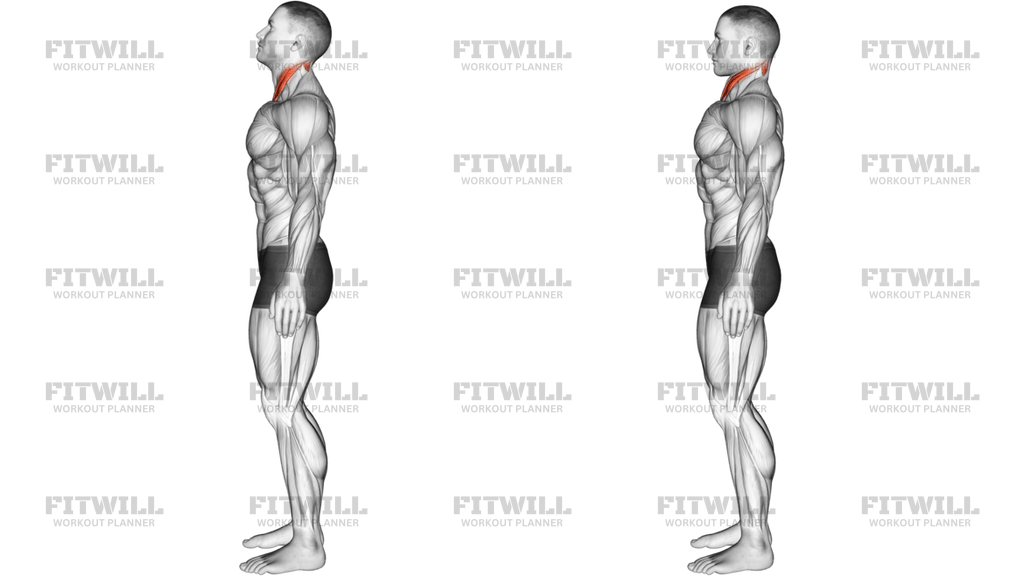
Chin Tuck is a simple neck control exercise built around a small, precise retraction of the head rather than a big visible movement. It is commonly used to train deep neck flexor activation, improve head-and-neck alignment, and teach the body how to keep the cervical spine stacked over the shoulders without drifting into forward head posture.
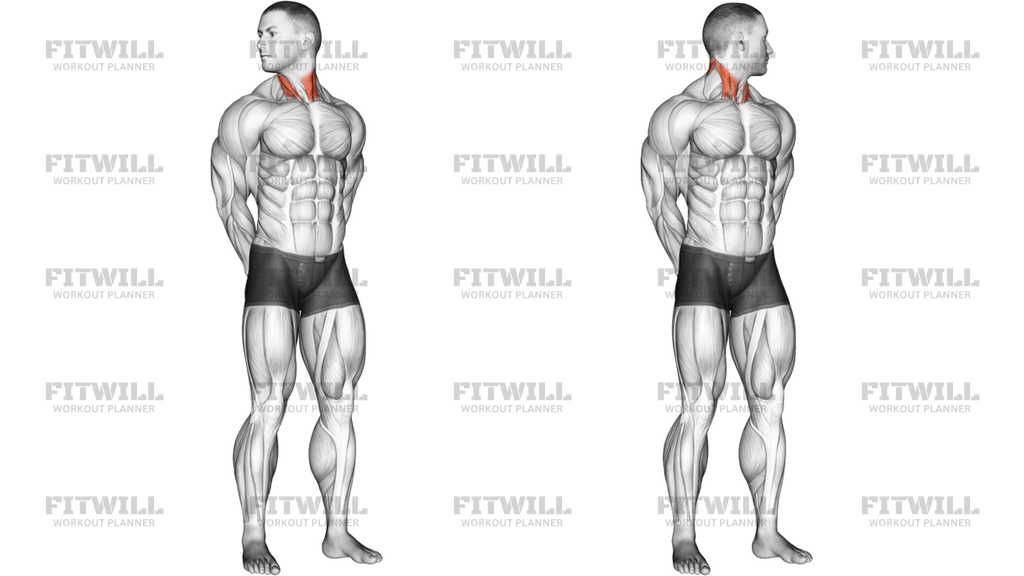
The small image shows a standing posture with the torso tall and the neck highlighted, which fits a bodyweight chin tuck performed with no external load. The point is not to crunch the chin toward the chest. Instead, the head glides straight back so the back of the neck stays long and the jaw remains relaxed. That subtle path matters because it keeps the work in the front and side of the neck instead of turning the drill into a shrug, a nod, or a full-body compensation.
This movement is useful in warm-ups, posture drills, rehab-style conditioning, and any session where the goal is better neck awareness and cleaner alignment. Because the range is small, quality matters more than repetition count. A good chin tuck feels controlled and almost understated: the ribs stay down, the shoulders stay quiet, and the head returns to neutral without snapping forward. If the motion causes pain, dizziness, or a pinching sensation, the range should be reduced or the exercise stopped.
Use Chin Tuck as a technique drill, not a strength test. Start with a tall stance, smooth breathing, and a slow tempo so you can feel the head move backward in a straight line. When it is done well, the exercise teaches the neck to support the head with less strain and helps carry that posture into lifting, sitting, walking, and overhead work.
[ Workout Log & Planner ]
Put your next workout in Fitwill
Keep your plan and training log ready when you are.


Instructions
- Stand tall with your feet about hip-width apart, chest relaxed, and eyes looking straight ahead.
- Keep your shoulders down and let your arms hang naturally at your sides.
- Draw your chin straight back to make a small double-chin shape without looking down.
- Keep the back of your neck long and avoid pushing your head forward or up.
- Hold the tucked position for a brief pause while breathing normally.
- Return your head to neutral under control, without letting it snap forward.
- Repeat the same small motion for each rep instead of chasing a larger range.
- Stop if you feel sharp pain, dizziness, or numbness, and reset before continuing.
Tips & Tricks
- Think about sliding the head straight back, not tipping the chin down toward the chest.
- Keep the jaw loose so you do not clench through the face and neck.
- The range should be small; a good chin tuck is usually only a few centimeters of movement.
- Keep the shoulders quiet so the neck does the work instead of a shrug.
- Use a mirror or wall cue if you tend to poke the chin forward during the return.
- Move slowly enough that you can feel the deep neck muscles working through the hold.
- If the front of the neck cramps, reduce the hold time and shorten the range.
- Breathe softly through the rep instead of bracing hard like a heavy lift.
Frequently Asked Questions
What does a Chin Tuck train most?
It primarily trains the deep neck flexors and the ability to keep the head stacked over the shoulders.
Is a Chin Tuck the same as lowering my chin?
No. The head should glide straight back to create a double-chin shape, not just drop forward toward the chest.
Do I need equipment for this exercise?
No. The standing version shown here is a bodyweight drill, so the main focus is posture and neck control.
Where should I feel the effort during a Chin Tuck?
You should feel a gentle effort in the front and sides of the neck, not pain in the jaw, upper traps, or lower back.
Can I do Chin Tucks against a wall?
Yes. A wall can help you keep the head moving straight back and make forward-head compensation easier to notice.
What is the most common mistake with this movement?
Most people either jut the chin forward, look down too much, or shrug their shoulders instead of moving the head straight back.
How long should I hold each rep?
A short hold of one to three seconds is enough for most drills as long as the neck stays relaxed and controlled.
Is Chin Tuck okay if I sit at a desk all day?
It can be useful as a posture reset, especially when you want to counter forward-head position, but it should stay pain-free and controlled.