Rotating Neck Stretch
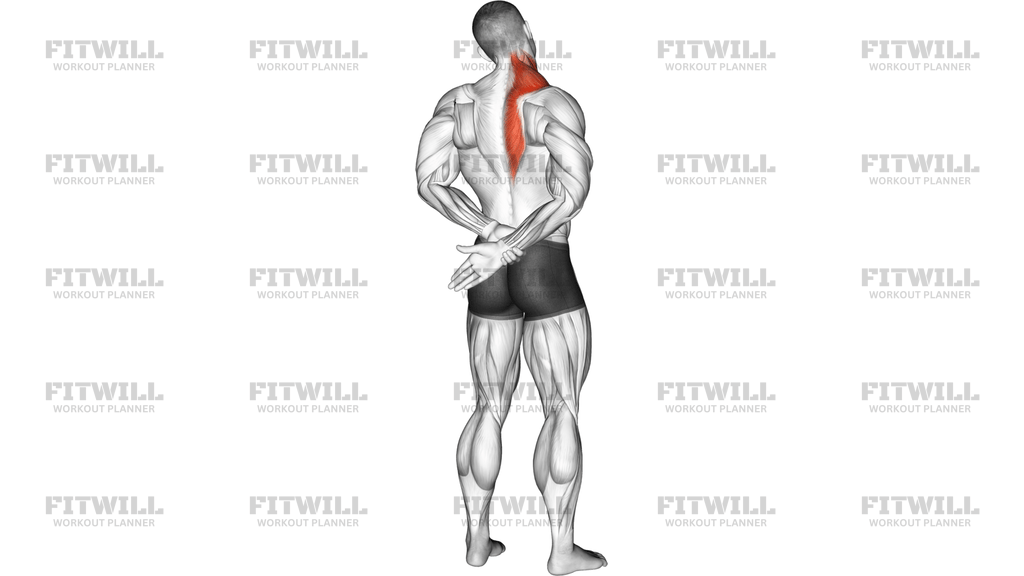
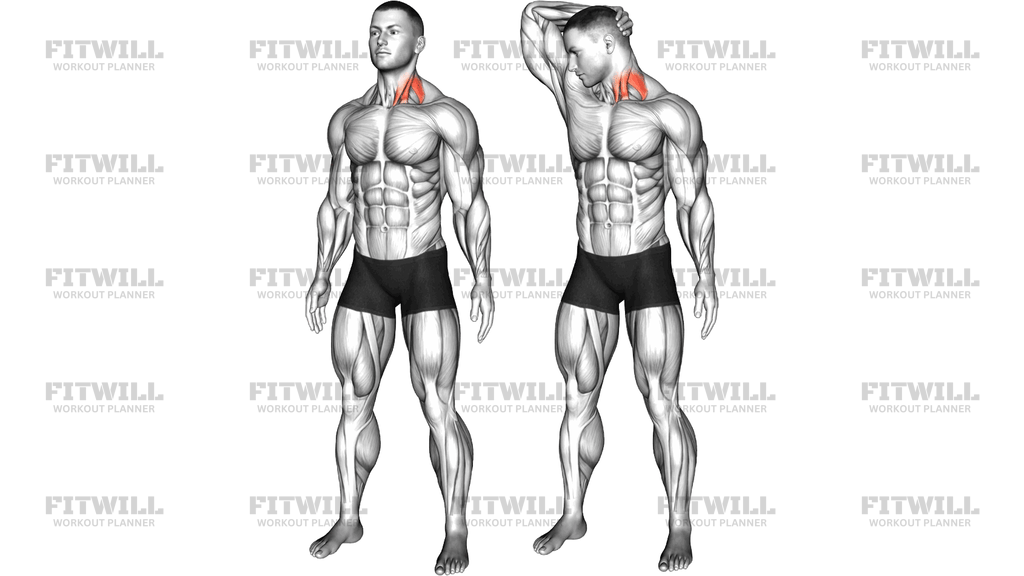
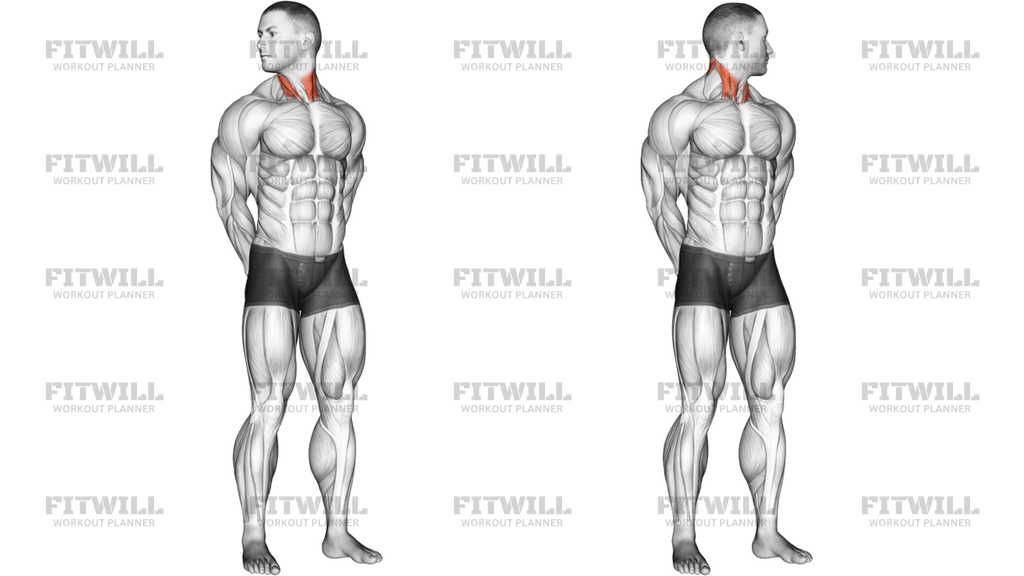
Rotating Neck Stretch is a standing mobility exercise for the neck that uses body weight to gently rotate the head from side to side. The image shows the torso staying tall while the chin turns toward one shoulder and then the other, which makes this a cervical rotation stretch rather than a full-body twist. The goal is not to chase a big range; it is to move the neck smoothly enough that the stretch stays controlled and comfortable.
This drill mainly targets the muscles around the cervical spine, especially the areas that tighten with desk posture, driving, or heavy upper-body training. The sternocleidomastoid, upper trapezius, levator scapulae, and nearby neck stabilizers all contribute to the feeling of restriction. Because the head is moving on top of a stable torso, the quality of the setup matters more than speed. Standing tall with the shoulders quiet helps the stretch stay in the neck instead of spreading into the upper back.
Use the rotation to check and restore comfortable side-to-side neck motion. Turn only until you feel a mild stretch, pause briefly, and then come back through center before repeating to the other side. The movement should look calm and deliberate, with the chest open, the rib cage still, and the jaw relaxed. If you let the shoulders chase the head, the stretch turns into a torso twist and the neck stops doing the work.
This is a useful warm-up or cooldown option when you want to ease stiffness without loading the neck. It is also a practical reset between long sitting blocks or upper-body sessions, as long as you keep the motion pain-free. Treat it as a mobility drill: smooth rotation, light tension, controlled breathing, and no forcing through a hard stop. If one side feels significantly tighter, do not yank farther on that side; stay even and work gradually.
[ Workout Log & Planner ]
Put your next workout in Fitwill
Keep your plan and training log ready when you are.


Instructions
- Stand tall with your feet about hip-width apart and your shoulders stacked over your hips.
- Set your hands behind your lower back or keep them relaxed at your sides so the upper body stays quiet.
- Lengthen through the back of your neck and keep your chin level before you begin the rotation.
- Slowly turn your head to one side until you feel a mild stretch along the neck and upper shoulder.
- Pause for a brief moment at the end of the turn without pushing through pain or shaking.
- Bring your head back through center under control and keep your torso from following the movement.
- Rotate to the opposite side with the same smooth path and the same easy range of motion.
- Continue alternating sides for the planned reps, breathing out as you turn and breathing in as you return to center.
Tips & Tricks
- Keep the chin level as you rotate; do not tip the head back to fake extra range.
- Let the turn come from the neck itself, not from twisting the rib cage or hips.
- Relax the jaw and tongue so you do not add unnecessary tension through the face and throat.
- Move slowly enough that you can stop exactly where the stretch first appears.
- Use only a mild stretch feeling; a sharp pull in the neck is too much.
- Keep the shoulders down and away from the ears so the upper traps do not take over.
- Exhale as you turn deeper into the stretch to help the neck soften.
- If one side is tighter, spend the same time on both sides and let the range improve gradually.
Frequently Asked Questions
What does Rotating Neck Stretch target?
It mainly targets the muscles that control and limit neck rotation, including the sternocleidomastoid, upper trapezius, levator scapulae, and nearby cervical stabilizers.
Should my shoulders move when I turn my head?
No. Keep the shoulders stacked and quiet so the stretch stays in the neck instead of turning into a torso twist.
How far should I rotate my neck?
Only far enough to feel a gentle stretch. If the range starts to feel pinchy, forced, or unstable, back off a little.
Is it normal to feel the stretch on one side more than the other?
Yes. One side is often tighter, especially if you sit a lot or sleep in one position, but both sides should stay pain-free.
Is Rotating Neck Stretch good before upper-body training?
Yes, as a gentle mobility drill. Keep the range easy and avoid aggressive end-range holds right before heavy pressing or pulling.
Can I do this if I feel a lot of desk stiffness?
Usually yes, as long as the movement is smooth and pain-free. It can be a useful reset after long periods of sitting.
What is the most common form mistake?
People usually rush the turn or let the torso rotate with the head, which reduces the neck stretch and makes the drill less effective.
Should this ever cause sharp pain or dizziness?
No. Stop immediately if you feel sharp pain, dizziness, numbness, or tingling, and do not push through those symptoms.