Chin Tuck
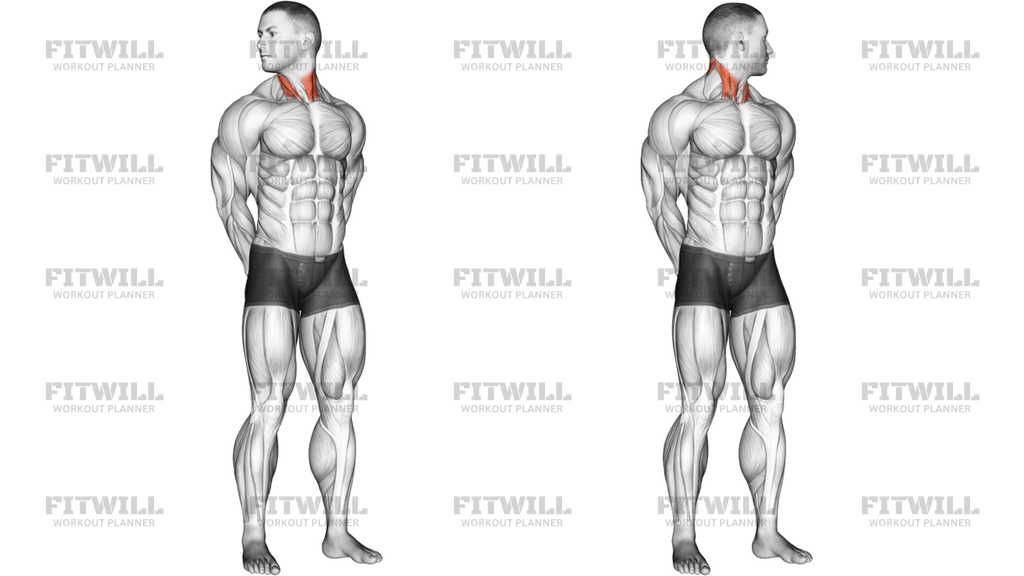
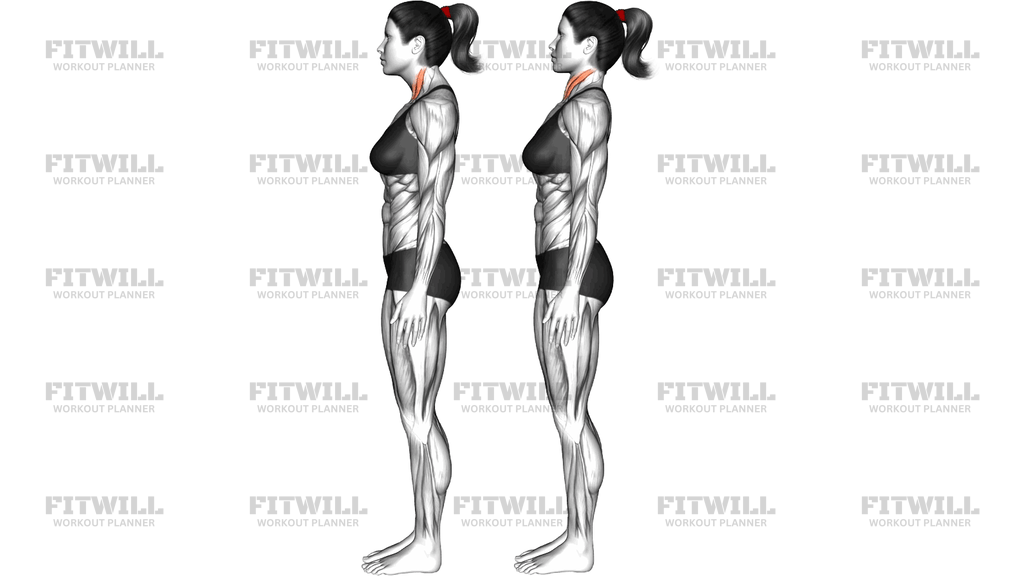
Chin Tuck is a standing neck-control drill that uses body weight only. The purpose is not to crunch the neck forward, but to glide the head straight back so the chin gently tucks and the back of the neck lengthens. When it is done well, the torso stays stacked, the shoulders stay relaxed, and the motion comes from a small, controlled cervical retraction instead of from the upper back or jaw.
This exercise is commonly used to improve head-and-neck posture after long periods of sitting, looking down, or working at a screen. It also teaches the deep neck flexors to support the head without overusing the big superficial neck muscles. Because the range is small, the quality of the setup matters more than the size of the movement. A clean rep should feel precise, calm, and repeatable, not forceful.
Start from an upright stance with the feet planted and the ribs stacked over the pelvis. Keep the arms relaxed at the sides, the shoulders away from the ears, and the gaze level. From that position, draw the head straight back as if you were making a small double chin, while keeping the nose and eyes facing forward. The chin should travel back more than down, and the back of the neck should feel long rather than jammed.
At the end of each rep, hold the tucked position briefly without clenching the jaw or pushing the head into flexion. Then return to neutral with the same control you used to tuck, letting the head come back to a balanced position instead of jutting forward. Breathing should stay smooth throughout the set. If you have to strain, shorten the range and slow the tempo until the neck stays quiet and organized.
Chin Tuck works well as a warm-up, posture reset, or accessory drill when you want better neck awareness and less forward-head drift. It is also a practical option in rehab-style training because the load is low and the movement is easy to dose. The key safety rule is to keep the action small and symptom-free: stop if the motion produces sharp pain, dizziness, tingling, or a pinching sensation, and use the smallest effective range rather than chasing a bigger tuck.
[ Workout Log & Planner ]
Put your next workout in Fitwill
Keep your plan and training log ready when you are.


Instructions
- Stand tall with your feet about hip-width apart, knees soft, arms hanging naturally at your sides.
- Stack your ribs over your pelvis and let your shoulders settle down instead of bracing hard through the upper traps.
- Keep your eyes level and your jaw relaxed so the neck can move without the face or shoulders helping.
- Draw the head straight back to create a small double chin, as if you were sliding the back of your head toward a wall behind you.
- Keep the chin moving back more than down; do not look at the floor or lift the chest to fake the motion.
- Pause for a second in the tucked position and feel the front of the neck work while the back of the neck stays long.
- Return to neutral under control without letting the chin poke forward or the head drift upward.
- Breathe quietly through the rep and repeat for the planned number of reps.
Tips & Tricks
- Think "back, not down" so the tuck stays a retraction instead of turning into a neck nod.
- Keep the movement small; a good chin tuck is usually only a few centimeters of travel.
- Relax the jaw and lips so you do not clamp down and recruit the front of the throat.
- If the shoulders creep up, reset and let them drop before the next rep.
- A mirror helps confirm that the nose stays level and the head does not tilt.
- Use a slower return than tuck if you tend to snap the head forward between reps.
- Stop at the first sign of pinching, dizziness, or radiating symptoms rather than forcing range.
- For posture work, aim for crisp reps with brief holds instead of long, fatiguing holds.
Frequently Asked Questions
What does Chin Tuck train?
It primarily trains the deep neck flexors and the small postural muscles that keep the head stacked over the torso.
Should the chin move down or back?
Back is the main cue. The chin should tuck slightly, but the head should glide straight back without turning into a forward nod.
Can I do this seated instead of standing?
Yes, but standing makes it easier to check whether your ribs, shoulders, and head stay stacked while you move.
Why do my upper traps or shoulders tense up?
That usually means you are bracing too hard or trying to make the movement bigger than it needs to be. Reset and use a smaller tuck.
How long should I hold each rep?
A brief 1 to 3 second hold is usually enough. The goal is control and awareness, not max effort.
Is it normal to feel a gentle stretch at the back of the neck?
Yes, a mild lengthening sensation at the back of the neck is normal. It should never feel sharp, compressed, or dizzying.
When is Chin Tuck most useful?
It fits well in warm-ups, posture resets, and rehab-style sessions, especially when you have been sitting or looking down a lot.
What should I do if the rep feels jerky?
Slow the tempo, reduce the range, and make sure the head is moving straight back instead of thrusting forward and then correcting.