Assisted Chin Tuck
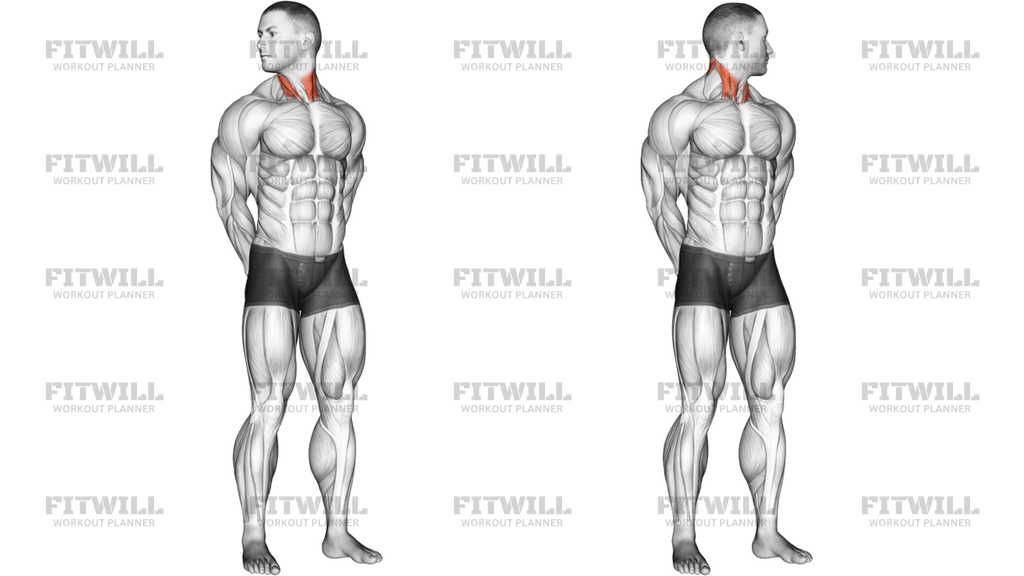
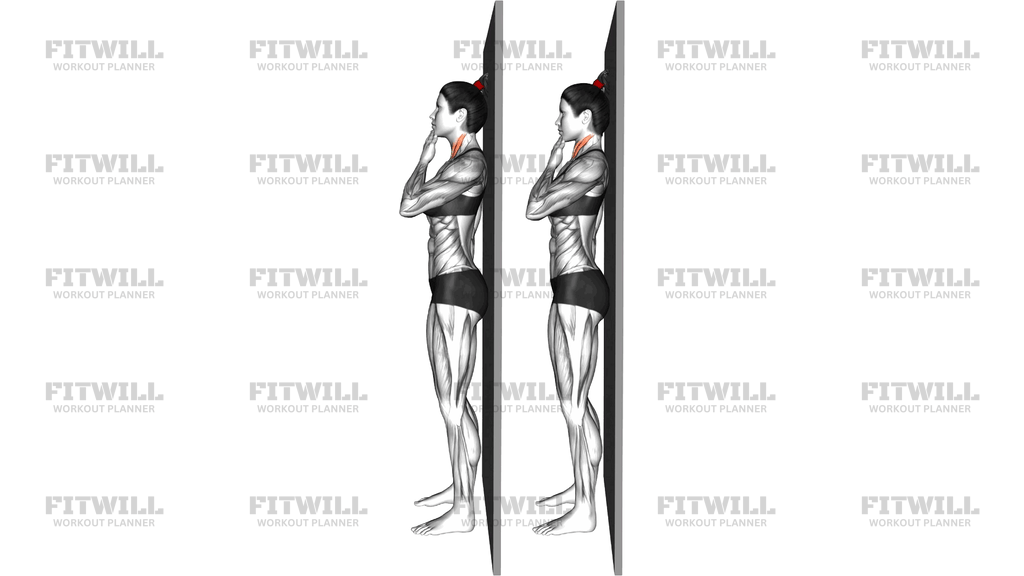
Assisted Chin Tuck is a wall-based neck control drill that teaches you to draw the head straight back and slightly nod the chin without craning the neck or jutting the jaw forward. In the image, the body is upright beside a wall and the neck is the focus, which makes this a positional exercise first and a strength exercise second. The purpose is not to create a big visible movement; it is to build precise control in the cervical spine so the head, ribcage, and upper back stay stacked.
This drill is usually used to strengthen and coordinate the deep neck flexors while reducing the habit of living in a forward-head posture. The front of the neck should do most of the work, with the upper traps, jaw, and lower back staying quiet. When performed well, the movement looks small and deliberate: the skull glides back, the chin makes a gentle tuck, and the throat stays soft. That control matters more than range, because forcing the head back too far turns the drill into a neck strain instead of a posture exercise.
The setup is important. Stand tall with your feet under you and position yourself so the wall can give you feedback through the back of the head and upper body. Keep the chest relaxed, ribs stacked, and shoulders down. From there, lightly slide the head straight back as if making a double chin, then let the chin settle a little downward without collapsing the chest or tilting the head. If you use your fingers under the chin for assistance, they should guide the motion, not pull the head into place.
Use this movement as a warm-up, rehab-style accessory, or postural reset when neck position tends to drift forward during the day. It is especially useful for people who sit at a desk, train pressing movements, or notice tension at the base of the skull. Stay within a pain-free range, breathe steadily, and stop any rep that triggers pinching, headache, jaw clenching, or a hard brace in the upper traps. Clean reps with a tiny range are the goal here.
[ Workout Log & Planner ]
Put your next workout in Fitwill
Keep your plan and training log ready when you are.


Instructions
- Stand tall beside or against the wall with your feet planted, ribs stacked over your pelvis, and your head in a neutral line.
- Keep the back of the head lightly near the wall and relax the shoulders down away from the ears.
- Place one or two fingertips under the chin if you need a cue, but do not pull the jaw forward.
- Exhale and slide the head straight back, as if making a small double chin.
- Let the chin tip slightly downward only after the head has retracted; do not look down or poke the chin forward.
- Keep the chest quiet and the neck long while you hold the tucked position for a brief pause.
- Inhale and return to the start slowly without losing the stacked posture or shrugging the shoulders.
- Repeat for smooth, controlled reps and stop if you feel pain, dizziness, or a headache.
Tips & Tricks
- Think about moving the head straight back first; the chin only follows after the retraction starts.
- Keep the jaw loose so the assistance comes from the neck, not from clenching your teeth.
- If the back of the head cannot touch the wall, stay a little farther away rather than cranking the neck back.
- Do not arch the lower back to fake a better posture; keep the ribs stacked over the pelvis.
- A small, exact tuck is better than a big range that makes the neck shake or the shoulders shrug.
- Use the fingertips as a reminder of direction, not as a lever that drags the head around.
- Exhale during the tuck so the ribcage stays quiet and the front of the neck can work cleanly.
- Stop each set before the base of the skull starts to feel compressed or irritated.
Frequently Asked Questions
What does Assisted Chin Tuck train?
It mainly trains cervical control, especially the deep neck flexors that help keep the head stacked over the torso.
Do I need the wall for the chin tuck?
The wall is a useful cue because it shows you when the head starts drifting forward or the lower back starts arching, but the movement can also be practiced away from the wall once you understand it.
Should I press my head hard into the wall?
No. Light contact is enough; the goal is a controlled glide straight back, not a hard push.
Why do my fingers assist under the chin?
They help you find the correct direction of travel and prevent the chin from jutting forward while you tuck.
Where should I feel this exercise?
You should feel a gentle effort along the front of the neck. You should not feel sharp pain, jaw strain, or a pinched sensation at the base of the skull.
Is this exercise good for beginners?
Yes. Beginners usually do best with a very small range, slow breathing, and light fingertip assistance.
What is the most common mistake with a chin tuck?
People usually push the chin down or arch the lower back instead of sliding the head straight back with the ribs still stacked.
When should I use Assisted Chin Tuck?
It works well as a warm-up, a posture reset between heavier lifts, or a light accessory drill when neck position tends to drift forward.