Scissor Jumps
Scissor Jumps is a bodyweight plyometric drill that alternates between split-stance landings. The movement is also commonly called a jump lunge or split jump. Each repetition trains leg drive, coordination, and landing control by moving quickly from one staggered stance to the other while keeping the torso organized and the landings quiet.
This exercise emphasizes the lower body, especially the quads, glutes, hamstrings, calves, and hip stabilizers, with the core helping keep the pelvis square as the legs switch positions. The setup matters because overstriding, leaning too far forward, or collapsing the front knee inward turns a sharp athletic drill into a sloppy hop. A clean scissor jump starts with an even split stance, upright posture, and enough space to jump and land without clipping the feet.
The goal on each rep is to load one leg, explode upward, switch the legs in the air, and land softly in the opposite split stance. The movement should feel springy but controlled. The front foot should land under the body, the back knee should bend naturally, and the torso should stay tall rather than folding over the front thigh. Arms can swing in a natural running pattern to help create rhythm and balance.
Scissor Jumps are useful in warm-ups, athletic conditioning, lower-body plyometric work, or circuits where you want speed and power without equipment. They are not ideal when you are already too fatigued to land well, because sloppy landings increase stress on the knees, hips, and Achilles tendon. Start with a shallow jump, keep the reps crisp, and stop the set as soon as the cadence turns heavy or the landings get noisy.
For most people, the best version is the one that keeps the switch quick and the impact low. You do not need a huge jump height; you need a repeatable change of legs, stable trunk position, and consistent soft contact on the floor. If you cannot keep the front knee tracking cleanly over the toes or you lose balance every other rep, reduce speed and range before adding more volume.
Fitwill
Log Workouts, Track Progress & Build Strength.
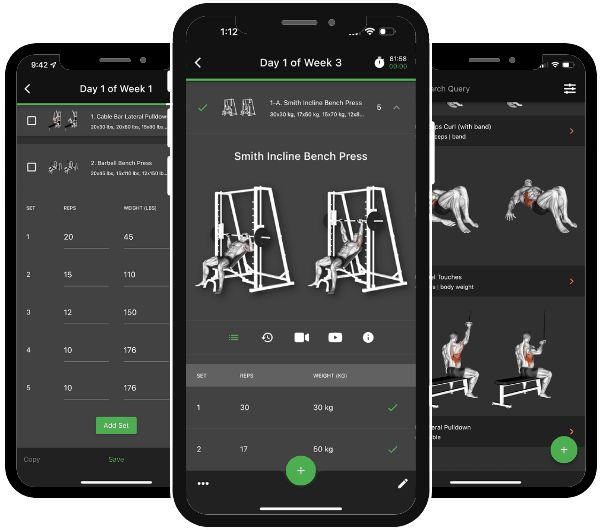
Achieve more with Fitwill: explore over 5000 exercises with images and videos, access built-in and custom workouts, perfect for both gym and home sessions, and see real results.
Start your journey. Download today!


Instructions
- Stand in a staggered split stance with one foot forward and the other foot back, feet about hip-width apart side to side.
- Keep your torso tall, ribs stacked over your hips, and arms relaxed at your sides or slightly forward for balance.
- Lower into a shallow split squat by bending both knees and loading most of your weight through the front foot.
- Swing your arms naturally and drive through both legs to jump straight up, not forward.
- Switch the legs in the air so the back foot lands forward and the front foot lands back.
- Land softly in the opposite split stance with bent knees, a quiet foot strike, and your front knee tracking over the toes.
- Absorb the landing through the hips and legs, then immediately rebound into the next jump if you can keep control.
- Keep alternating sides for the planned number of reps or time, then step to a stable stance before ending the set.
Tips & Tricks
- Keep the jump low and quick; a small clean switch is better than a high, uncontrolled hop.
- Land on the balls of the feet first, then let the heel settle so the impact spreads through the whole leg.
- If the front knee caves inward on landing, shorten the stance and slow the cadence before doing more reps.
- Use your arms to help rhythm, but do not throw the chest forward just to get higher.
- Keep the torso stacked over the hips so the work stays in the legs instead of turning into a forward fold.
- Make each landing quiet; loud contacts usually mean you are dropping from too high or bracing too late.
- Stop the set when the switch becomes delayed or your feet start crossing awkwardly in the air.
- Choose a floor with enough grip and a little cushioning so the ankle and knee can absorb force cleanly.
Frequently Asked Questions
What does Scissor Jumps work most?
It mainly trains the quads, glutes, hamstrings, calves, and hip stabilizers, with the core helping keep the torso steady.
Is this the same as a split jump or jump lunge?
Yes. Scissor jumps are the alternating jump version of a split stance lunge pattern.
How deep should the knee bend be?
Only as deep as you can control. A shallow athletic split squat is enough if it lets you land cleanly and switch quickly.
Should my feet land in the same place every rep?
They should land in a consistent staggered stance, but not so wide that you lose balance or so narrow that the feet collide.
Can beginners do this exercise?
Yes, but beginners should start with slow split squats or tiny switch jumps before moving to full-speed scissor jumps.
What is the biggest form mistake?
The most common mistake is jumping too high and landing hard, which usually makes the front knee cave and the torso tip forward.
Do I need to swing my arms?
A natural arm swing helps timing and balance, but the jump should still come from the legs, not from throwing the upper body around.
How can I make Scissor Jumps easier?
Reduce the jump height, slow the pace, and use a shorter split stance. If needed, practice alternating split squats before adding airtime.