Feet And Ankles Rotation Stretch
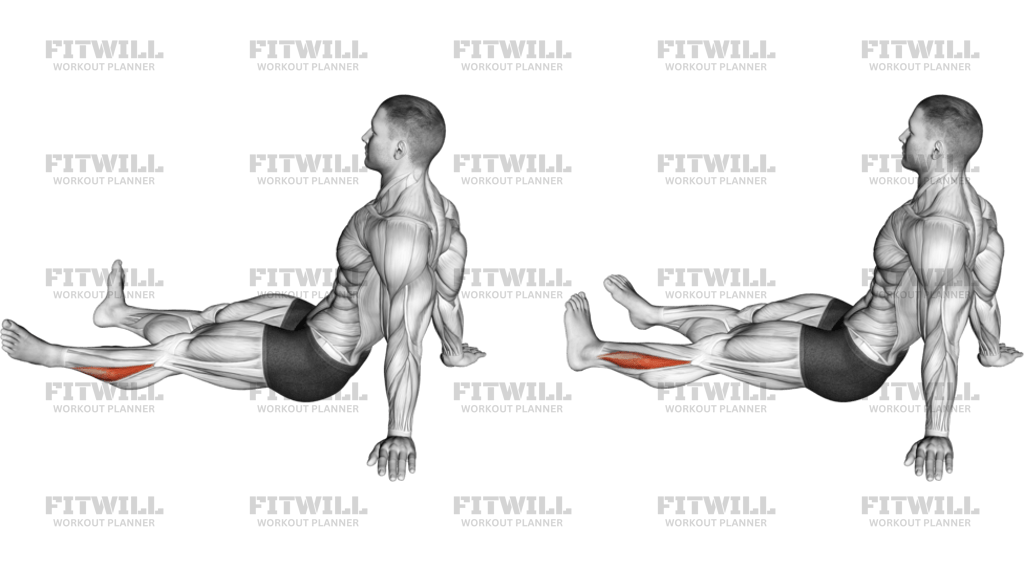
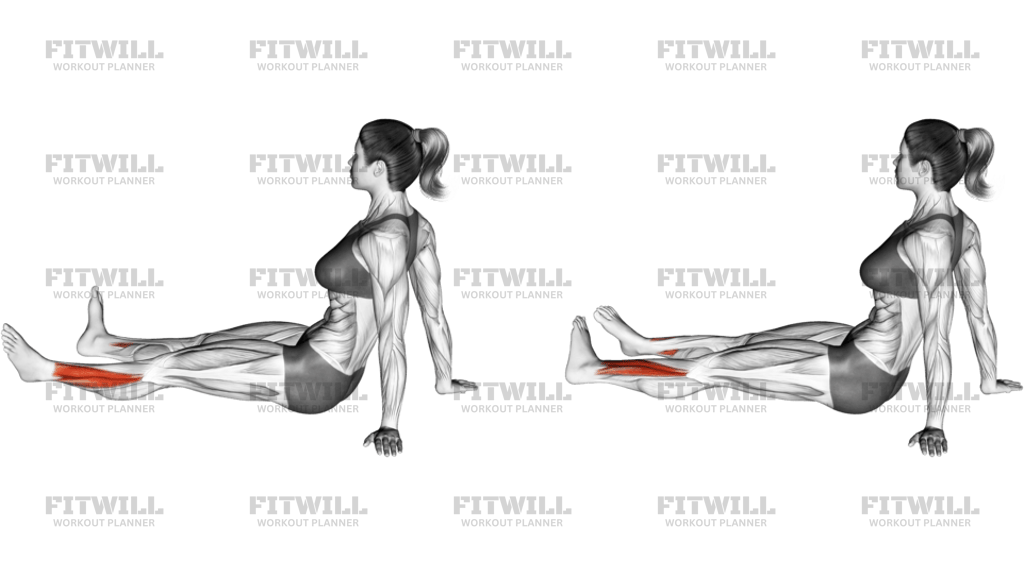
Feet And Ankles Rotation Stretch is a seated ankle mobility drill performed on a mat with your hands behind you for support and both legs extended in front. The movement asks the ankle and foot to trace slow circles and rotational sweeps while the shin stays mostly quiet, which makes it useful for warming up stiff calves, ankles, and the smaller muscles that control foot position.
Because the exercise is done from a supported seated position, setup matters more than load. Sit tall, brace lightly through the trunk, and keep the hips square so the rotation comes from the ankle instead of the knee or hip. The extended-leg position lengthens the calf while the foot moves, giving you a controlled stretch through the back of the lower leg without having to force the range.
The best version of this drill looks smooth and deliberate. Each circle should be small enough to control at first, then gradually expand as the ankle loosens. You should feel the foot travel through flexion, extension, and side-to-side rotation without the rest of the leg wobbling. If the shin twists or the knee starts chasing the foot, the circle is too big or too fast.
This movement is most useful before squats, lunges, running, jumping, or any session where ankle mobility affects depth, balance, and landing control. It can also help restore motion after long periods of sitting or when the calves feel tight from training volume. The goal is not to crank the foot into a forced stretch; the goal is to make the joint move cleanly through a pain-free range and gradually improve that range over time.
Use steady breathing and relaxed shoulders so the lower leg can stay soft while the ankle does the work. If you feel pinching at the front of the ankle or sharp pulling in the Achilles, reduce the circle size or switch directions. This is a light, technique-driven mobility exercise, so the rep quality matters more than the number of circles you finish.
Fitwill
Log Workouts, Track Progress & Build Strength.
Achieve more with Fitwill: explore over 9600 exercises with images and videos, access built-in and custom workouts, perfect for both gym and home sessions, and see real results.
Start your journey. Download today!




Instructions
- Sit on a mat with both legs extended straight in front of you and place your hands behind your hips for support.
- Keep your chest lifted, your shoulders down, and your hips square so the lower leg can move without you slumping back.
- Point one foot slightly off the floor or keep it lightly unloaded, then begin tracing a small circle from the ankle.
- Let the foot travel slowly through dorsiflexion, plantar flexion, and side-to-side rotation while the knee stays mostly still.
- Make the circle larger only if the movement stays smooth and pain-free, and reverse direction after the chosen reps.
- Keep the non-working leg long and quiet so you do not twist through the hips to fake more range.
- Breathe out as you move through the tightest part of the circle and breathe in as you return to center.
- Switch sides and repeat the same number of controlled circles in the opposite direction.
- Finish with both feet relaxed and a gentle point-and-flex reset if the ankles feel stiff.
Tips & Tricks
- Think about drawing the circle with the ankle joint, not rolling the whole leg from the knee.
- Smaller circles are better at first because they let you feel the true path of the foot without cheating through the hip.
- If the calf starts cramping, reduce the size of the circle and pause briefly in a neutral foot position.
- Keep the heel and toes moving together instead of letting the forefoot whip while the heel stays rigid.
- Use the hands behind you to stay tall; collapsing backward usually turns the drill into a passive slump.
- Match clockwise and counterclockwise work so neither direction gets neglected.
- Straighten the knee enough to feel the calf, but do not lock it hard enough to create tension at the joint.
- Stop short of pinching on the front of the ankle or a sharp tug at the Achilles tendon.
- Use this as a warm-up drill, not as a max-stretch test at the end of a hard workout.
Frequently Asked Questions
What does Feet And Ankles Rotation Stretch actually train?
It trains ankle mobility and control while giving the calves a gentle moving stretch.
Should I be moving my ankle or my whole leg?
The ankle and foot should do most of the work. The knee and hip should stay mostly quiet.
Do I need to keep my heel on the mat?
No. The foot can stay lightly unloaded as long as the circle still comes from the ankle and not the knee.
What is the most common mistake with this drill?
People usually make the circle too big and start rotating through the knee, hip, or lower back.
Is this exercise better before or after training?
It is usually most useful before lower-body training, running, jumping, or any session that needs ankle mobility.
What should I feel in the working leg?
You should feel a controlled stretch through the calves and a smooth movement around the ankle joint, not sharp pain.
Can beginners use Feet And Ankles Rotation Stretch?
Yes. Beginners should start with very small circles and keep the torso supported with the hands behind the body.
What should I do if the front of my ankle pinches?
Shorten the circle, slow the tempo, or switch directions. If pinching continues, stop and use a simpler point-and-flex drill.