Knee Raise
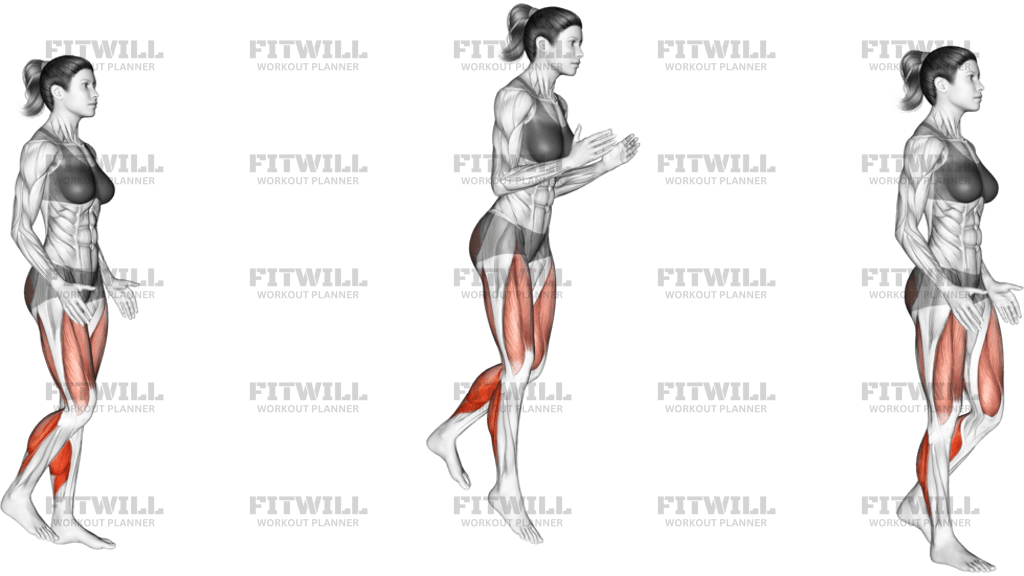
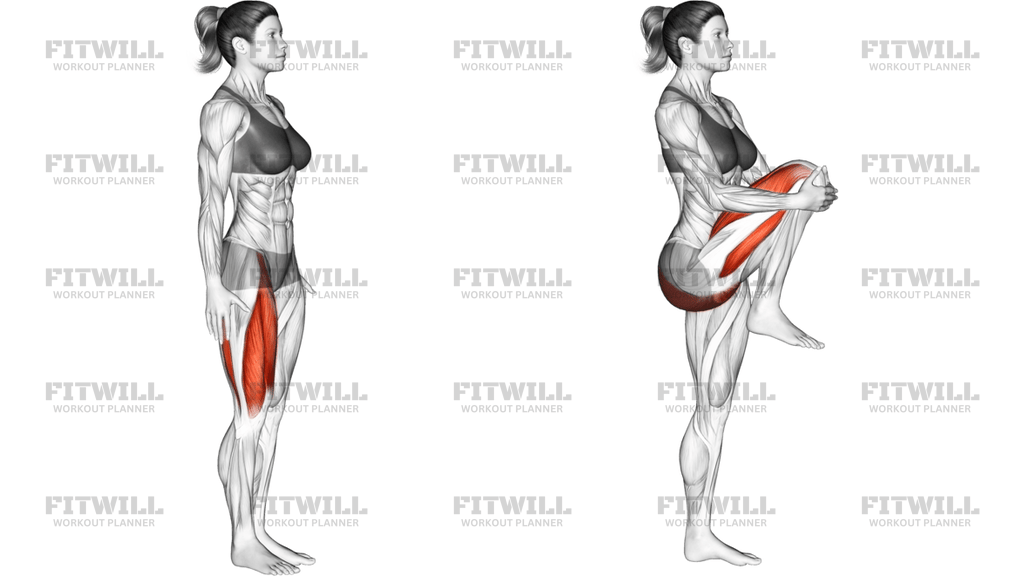
The Knee Raise is a standing bodyweight drill that trains hip flexion, trunk control, and single-leg balance at the same time. In the version shown here, you stand on one leg and drive the other knee upward toward your chest while keeping the torso tall. That makes it useful as a warm-up, a running prep drill, or a simple accessory movement when you want cleaner control through the hips and midsection.
The setup matters because the exercise only works well when the standing side stays organized. Keep your supporting foot flat, your pelvis level, and your ribs stacked over your hips before you lift the working knee. If you lean backward or twist toward the raised leg, the movement turns into a balance scramble instead of a controlled knee drive.
At the top of the rep, bring the thigh up under control rather than kicking the leg forward. A light hand hold around the shin or knee is fine if it helps you steady the top position, but do not yank the leg higher or collapse the chest to meet it. The goal is to keep the lift smooth, the pause deliberate, and the lowering phase slow enough that you can own the return to the floor.
Knee Raise is a good choice when you want to groove hip mechanics before faster training or when you need a low-load way to practice one-sided stability. It can fit in a warm-up circuit, a core-focused session, or a mobility block, but it should still look crisp. Clean reps matter more than height: if the pelvis tips, the low back arches, or the standing foot starts wobbling, shorten the range and slow the tempo.
Beginners can use this movement as written because the load is just body weight, but the challenge comes from balance and control rather than strength alone. If one side feels unstable, use a wall, rack, or bench for a light touch while you learn the pattern. Stop the set if the front of the hip pinches or the torso has to swing to finish each rep, then rebuild the movement with a smaller knee lift and more control.
Fitwill
Log Workouts, Track Progress & Build Strength.
Achieve more with Fitwill: explore over 9600 exercises with images and videos, access built-in and custom workouts, perfect for both gym and home sessions, and see real results.
Start your journey. Download today!




Instructions
- Stand tall on one foot with the other foot a few inches off the floor and your weight centered over the middle of the standing foot.
- Keep your chest lifted, ribs stacked over your pelvis, and your gaze straight ahead so you do not lean back before the lift.
- Set your shoulders down and let your arms hang naturally or reach forward to help you balance without twisting.
- Drive the free knee upward toward your chest while keeping the lifted foot relaxed and the standing knee softly unlocked.
- Bring the thigh up under control rather than swinging the leg or kicking the knee forward.
- If you use your hands, guide the knee lightly at the top without pulling the torso toward the leg.
- Pause briefly at the top with the standing hip level and the trunk still.
- Lower the leg slowly back to the floor, reset your balance, and repeat for the planned reps before switching sides.
Tips & Tricks
- Keep the standing foot tripod active so the arch, big toe, and little toe all stay rooted.
- A smaller knee drive is better than a bigger one if your low back starts arching.
- Do not let the lifted knee drift across the body; bring it straight up so the pelvis stays square.
- Use a wall, rack, or bench fingertip touch if balance is the main limiter, not hip strength.
- Exhale as the knee rises and inhale as you lower it to keep the torso from bracing too hard.
- Slow the lowering phase to make the standing hip and trunk work harder.
- Keep the shoulders level instead of shrugging toward the ears when you reach for the knee.
- If the front of the hip pinches, reduce the height of the lift and keep the pelvis more neutral.
Frequently Asked Questions
What muscles does Knee Raise work most?
It mainly targets the hip flexors and lower abdominals, while the standing glute, quads, and foot stabilizers help keep you upright.
Is Knee Raise a good beginner exercise?
Yes. It is bodyweight and easy to scale, especially if you use a wall or rack for a light balance touch.
Should I hold my knee or shin at the top?
A light hand contact is fine if it helps you balance, but do not pull hard or collapse your chest to get a higher lift.
How high should the raised knee go?
Raise it as high as you can without leaning back or twisting. Hip height is plenty if that lets you keep the torso stacked.
What is the most common mistake in Knee Raise?
People usually swing the leg or arch the lower back to make the knee look higher. Keep the rep slow and let the hip do the work.
Can I use support while doing Knee Raise?
Yes. A fingertip on a wall, rack, or sturdy post is a good way to keep the balance demand from taking over the exercise.
Where should I feel Knee Raise?
You should feel the working hip in front and the standing side of the core and glute working to keep you steady.
Is Knee Raise better as a warm-up or a strength exercise?
It works well as both, but most people use it as a warm-up or accessory drill because control and balance matter more than load.