Human Flag
Human Flag is a high-skill bodyweight isometric performed on a vertical pole or stall bar. The body is held almost horizontal while one arm pulls from above and the other arm presses from below, creating a full-body lever that demands shoulder stability, lat strength, oblique tension, grip strength, and serious trunk control.
The setup matters because the leverage changes immediately with hand height, shoulder position, and how tightly you lock the torso. In the classic flag, the upper hand reaches high on the pole and the lower hand sits below chest level. The legs stay together, the toes point, and the pelvis stays controlled so the body does not fold at the hips or twist away from the pole.
This is not a flowing repetition in the usual sense. It is a hard anti-rotation hold where the upper side of the body pulls the torso upward while the lower side pushes it away from the pole. Clean execution means keeping the elbows organized, the shoulders packed down, the ribs from flaring, and the line from shoulders to ankles as long and level as you can manage.
Human Flag is commonly used in advanced calisthenics training, core work, and skill practice. It is often built through tucked versions, band-assisted holds, and slow negatives before a full flag is attempted. The safest version is the one you can hold without pain, shrugging, or losing the line through the trunk.
Because the exercise exposes weak points quickly, it is easy to cheat with swinging, bent knees, or an overarched lower back. Treat each attempt as a short technical hold, then step down under control and reset. That approach builds the strength, timing, and body tension needed for longer holds without turning the movement into a desperate swing around the pole.
[ Workout Log & Planner ]
Put your next workout in Fitwill
Keep your plan and training log ready when you are.


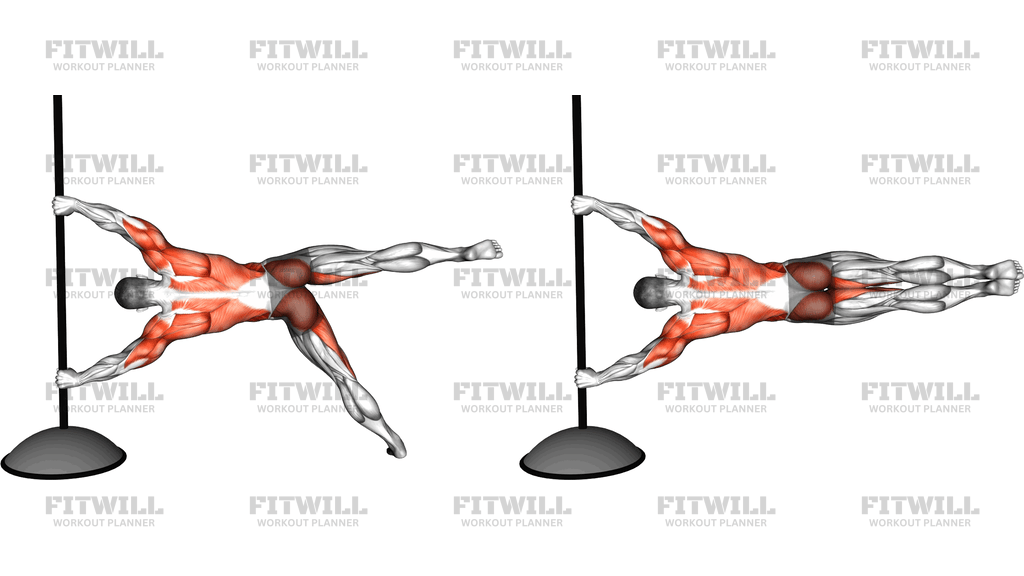
Instructions
- Stand beside a sturdy vertical pole or stall bar and place the upper hand high overhead, then set the lower hand well below it around chest to hip height.
- Grip the pole hard with both hands, keep the upper arm long, and position the lower hand so it can press away from the pole.
- Set the shoulders down and away from the ears, lock the torso, and bring the legs together before you leave the floor.
- Lift into the hold by pulling with the upper hand and pressing with the lower hand until the body is nearly horizontal.
- Keep the ribs tucked, squeeze the glutes, and hold the pelvis from opening as the legs stay straight and together.
- Aim to keep the body in one long line from the top hand through the ankles instead of breaking at the hips or knees.
- Take small controlled breaths while holding the flag, but do not lose trunk tension or shoulder position.
- Lower yourself slowly, step down under control, and reset before switching sides or starting the next attempt.
Tips & Tricks
- Start with a tucked-knee flag, band assistance, or a one-leg variation if the full horizontal line is not yet there.
- If the top shoulder rises toward your ear, shorten the hold and reset with more scapular depression before trying again.
- Keep the lower hand close enough to create a strong press; if the grip spacing is too wide, the leverage becomes much harder to control.
- Squeeze the glutes and inner thighs to stop the lower back from arching when the legs are lifted.
- Point the toes and keep the knees locked or softly tucked in the same shape on every attempt.
- Use chalk on the pole or bar if the grip feels like the first thing to fail.
- Train short holds and slow negatives before you chase longer times; quality leverage matters more than duration.
- Rest fully between sides so the second side is not limited by shoulder fatigue or grip loss.
Frequently Asked Questions
What muscles does the human flag work most?
It strongly trains the lats, obliques, shoulders, serratus, glutes, and grip, with the whole trunk working to stop rotation.
Is the full human flag appropriate for beginners?
Not usually. Most people should start with tucked holds, assisted versions, or controlled negatives before trying the full horizontal hold.
What does each hand do on the pole?
The upper hand pulls the body upward while the lower hand presses away from the pole to keep the torso from collapsing.
Why do my hips drop when I try to flag?
Usually the trunk and glutes are not creating enough tension. Keep the ribs down, squeeze the glutes, and reduce the lever with a tuck or assisted version.
Should my knees stay straight in the human flag?
For the full version, yes. If the straight-body version is too hard, tuck the knees first and build strength from there.
Can I do a human flag on any pole or bar?
Use a very sturdy vertical pole or stall bar that will not slip or flex. A secure surface matters more than anything else in this exercise.
How long should I hold the flag?
Short holds of a few seconds are enough for skill work. Stop the set as soon as the body line, shoulder position, or grip starts to degrade.
What is the safest way to progress it?
Use tucked holds, assisted holds, and slow negatives first, then gradually lengthen the body line and the hold time as control improves.