Dumbbell Seated Alternate Biceps Curl
Dumbbell Seated Alternate Biceps Curl is a seated arm-building exercise that uses one dumbbell at a time to train elbow flexion with a strict, controlled tempo. Sitting on a bench removes much of the body swing you can get from standing curls, so the biceps have to do more of the work while the shoulders, forearms, and trunk stay organized.
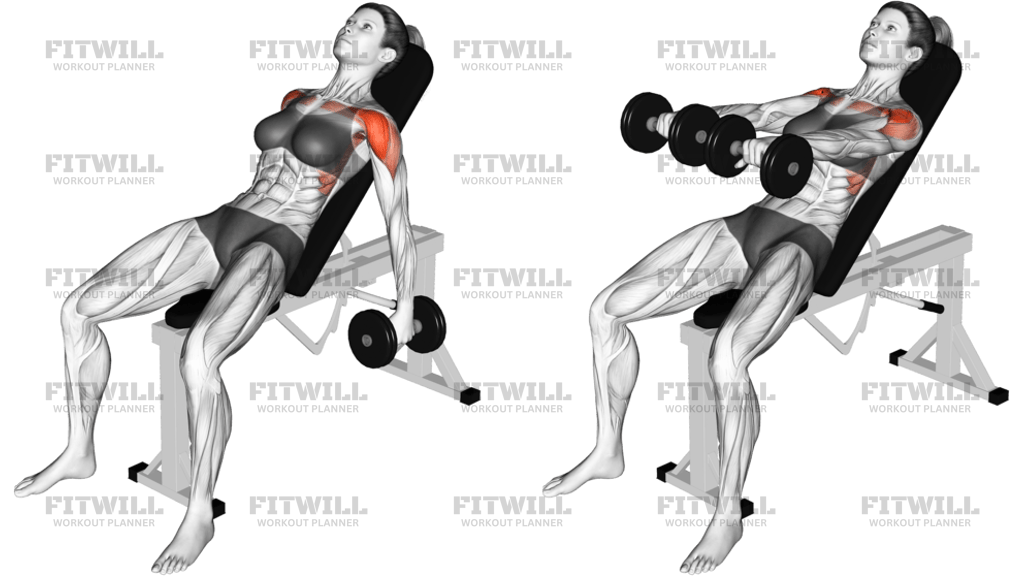
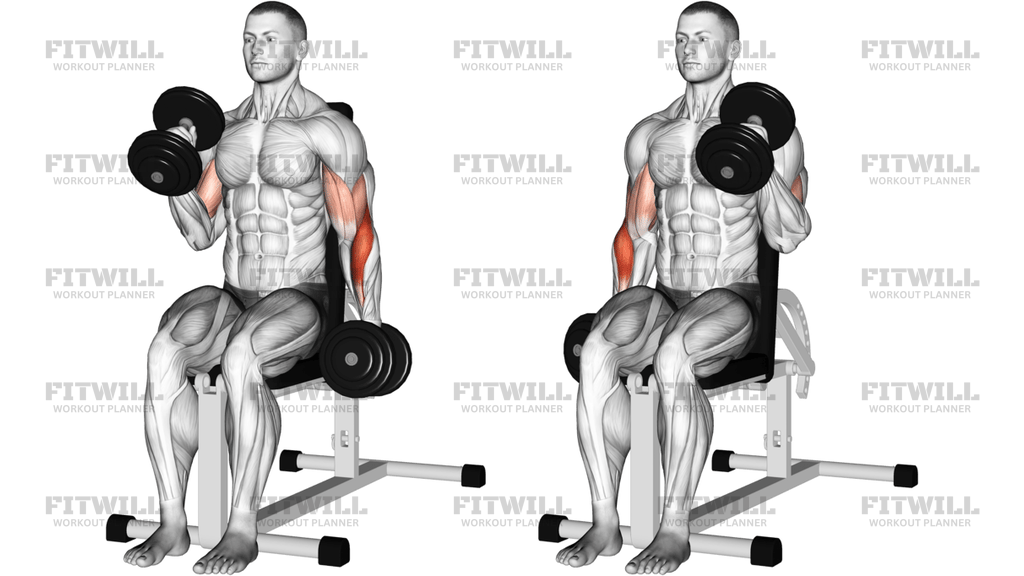
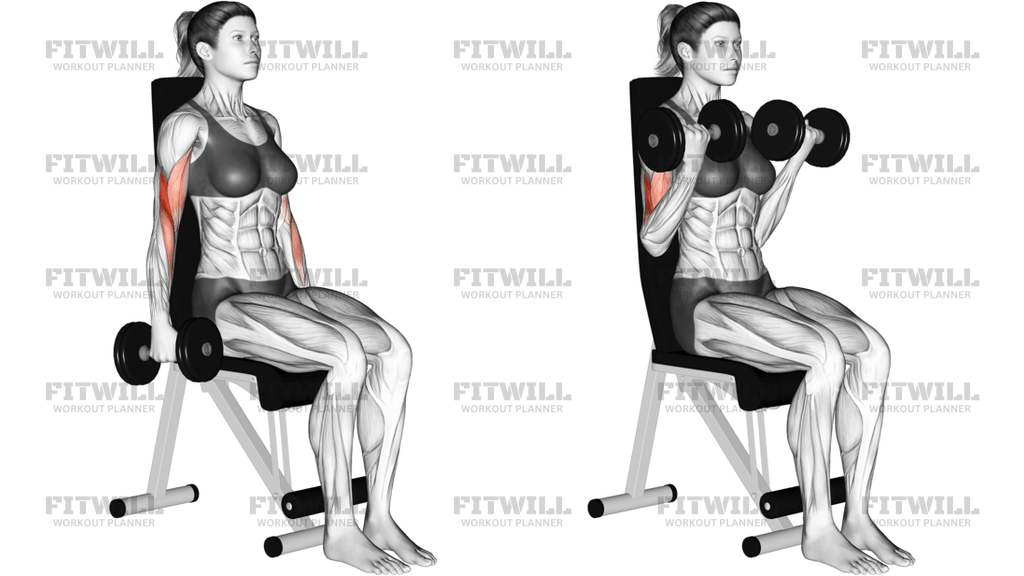
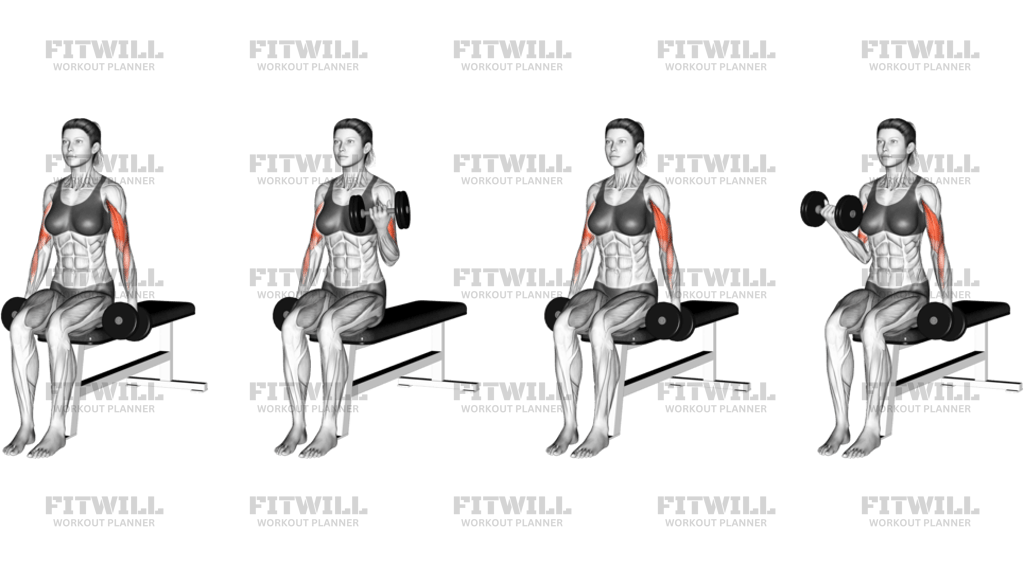
The image shows a flat bench setup with the lifter seated upright, feet planted, and the dumbbells hanging beside the thighs. That position matters: when the torso stays tall and still, each curl starts from a clean hang and finishes near the front shoulder without turning into a full-body heave. The working arm should move while the other arm stays quiet, which helps each side work independently and keeps the rep honest.
A good rep begins with the dumbbell at your side, palm neutral or slightly turned in, and the elbow tucked close to the ribcage. As you curl, the forearm rotates toward a palm-up position and the hand travels in a smooth arc toward the shoulder. The upper arm should stay mostly in place, the wrist should stay stacked, and the shoulder should not roll forward to steal tension from the biceps.
At the top, squeeze the biceps briefly, then lower the weight under control until the arm is almost straight again before switching sides. That alternating rhythm keeps tension on the arm that is working while giving the other side a brief reset. The exercise is useful for hypertrophy, accessory arm work, or technique-focused training because it is easy to scale with lighter loads and strict execution.
Use a weight that lets you keep the bench posture solid, the elbows quiet, and the lowering phase deliberate. If you lean back, swing the torso, or let the shoulders creep forward, the curl stops being a seated isolation pattern and becomes a momentum lift. Kept strict, this is a simple but effective movement for building stronger, fuller upper arms with very little setup complexity.
[ Workout Log & Planner ]
Put your next workout in Fitwill
Keep your plan and training log ready when you are.


Instructions
- Sit on the front half of a flat bench with both feet flat on the floor and a dumbbell in each hand hanging beside your thighs.
- Keep your chest tall, ribs stacked over your pelvis, shoulders down, and arms fully extended without locking the elbows hard.
- Brace lightly, then curl one dumbbell by bending the elbow while keeping that upper arm close to your side.
- As the weight rises, turn the palm up and keep the wrist straight instead of letting it bend back.
- Bring the dumbbell toward the front of the same shoulder without shrugging or leaning your torso back.
- Squeeze the biceps for a brief beat at the top, then lower the dumbbell slowly until the arm is almost straight again.
- Keep the opposite dumbbell still by your other thigh, then switch sides and repeat with the same control.
- Exhale as you curl up, inhale as you lower, and reset your posture if either shoulder starts to drift forward.
Tips & Tricks
- Choose a bench height that lets both feet stay planted and your knees bend comfortably without sliding forward.
- Keep your elbows close to your ribs; if they drift ahead of your body, the front delts start taking over.
- Rotate the palm smoothly as you curl instead of snapping the wrist into supination at the top.
- Lower each rep for two to three seconds so the biceps stay loaded instead of letting gravity drop the dumbbell.
- Do not lean back to finish the curl; a small torso rock usually means the weight is too heavy.
- Let the dumbbell travel close to the shoulder, but stop before the shoulder rolls forward and the elbow flies away from your side.
- If your forearms fatigue before your biceps, reduce the load and keep the wrist stacked over the forearm.
- Switch sides deliberately rather than rushing the alternating pattern, because the pause helps keep each rep clean.
Frequently Asked Questions
What muscles work hardest in the dumbbell seated alternate biceps curl?
The biceps are the main movers, with the brachialis, brachioradialis, forearms, and shoulder stabilizers helping support the rep.
Is this a good beginner biceps exercise?
Yes. The seated position makes it easier to learn strict curl mechanics without relying on momentum.
Why sit on a bench instead of curling while standing?
Sitting limits body sway, so each arm has to curl from a cleaner position and the set stays more honest.
Should my elbow move forward during the curl?
A small natural drift at the top is fine, but the upper arm should stay mostly pinned to your side instead of swinging forward.
How heavy should the dumbbells be?
Heavy enough to challenge the biceps, but light enough that you can keep the torso still and lower each rep under control.
Can I curl both dumbbells at the same time?
You can, but alternating usually makes it easier to keep strict form and gives each arm a short reset between reps.
What if my wrists feel strained during the rep?
Keep the wrist stacked, reduce the load, and avoid bending the hand back as the dumbbell approaches shoulder height.
Where does this fit in a workout?
It works well as accessory arm work after bigger lifts or as a focused biceps movement in a hypertrophy session.