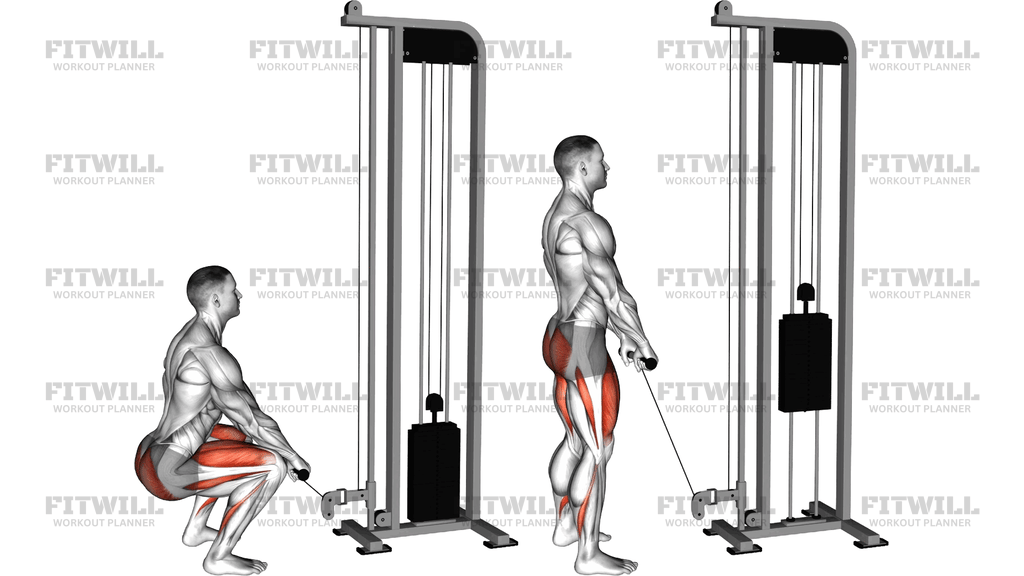
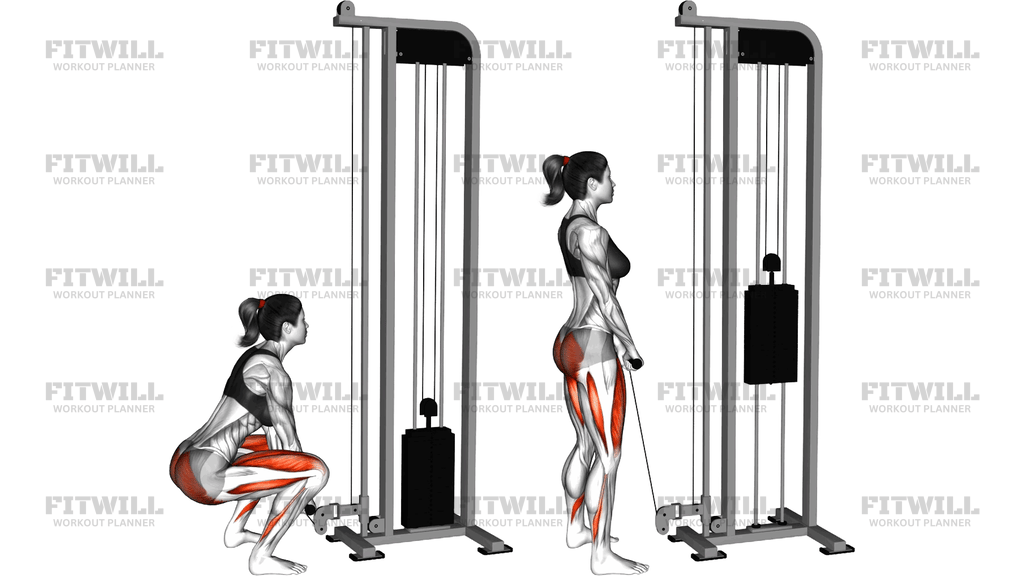
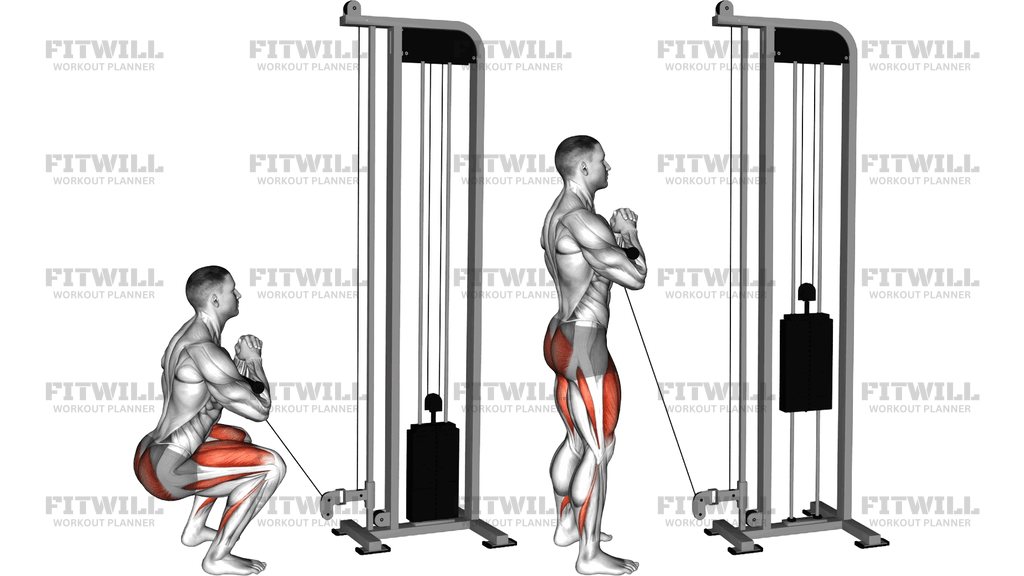
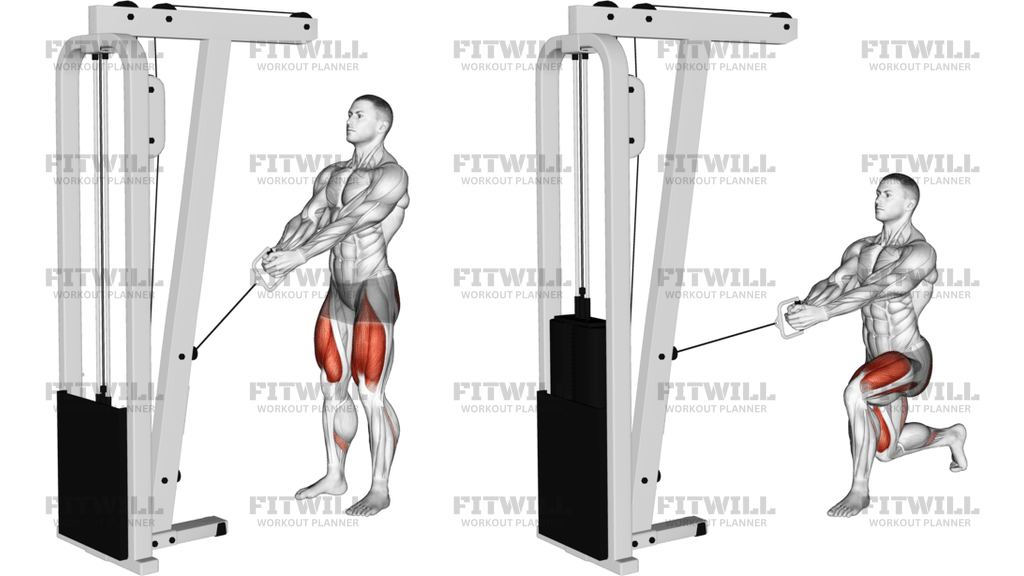
Cable Front Squat
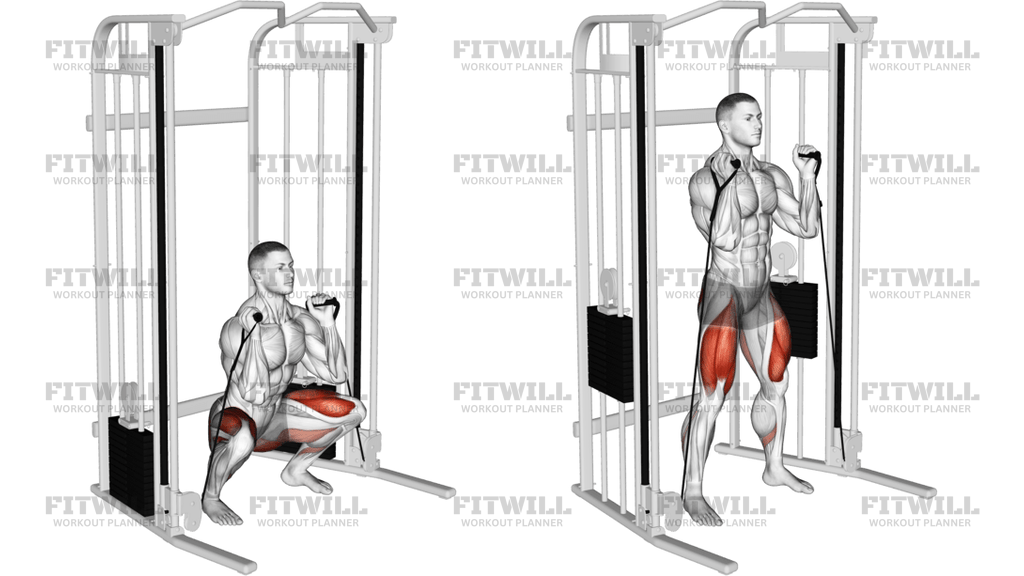
Cable Front Squat is a cable-loaded squat variation that keeps tension on the legs from the first inch of the descent to the top of the stand. It is useful when you want a more upright squat pattern, a smoother loading curve, and a lower-body exercise that teaches you to stay stacked over the middle of the foot.
Because the resistance comes from the cable machine and handle attachment, the exercise rewards a tall torso and a clean front-rack style hold at the shoulders. The thighs do most of the visible work, while the glutes, core, and upper back help you stay organized as you sink into the squat and rise back out. That makes Cable Front Squat a practical choice for hypertrophy work, accessory training, and technique practice when a barbell is not the best option.
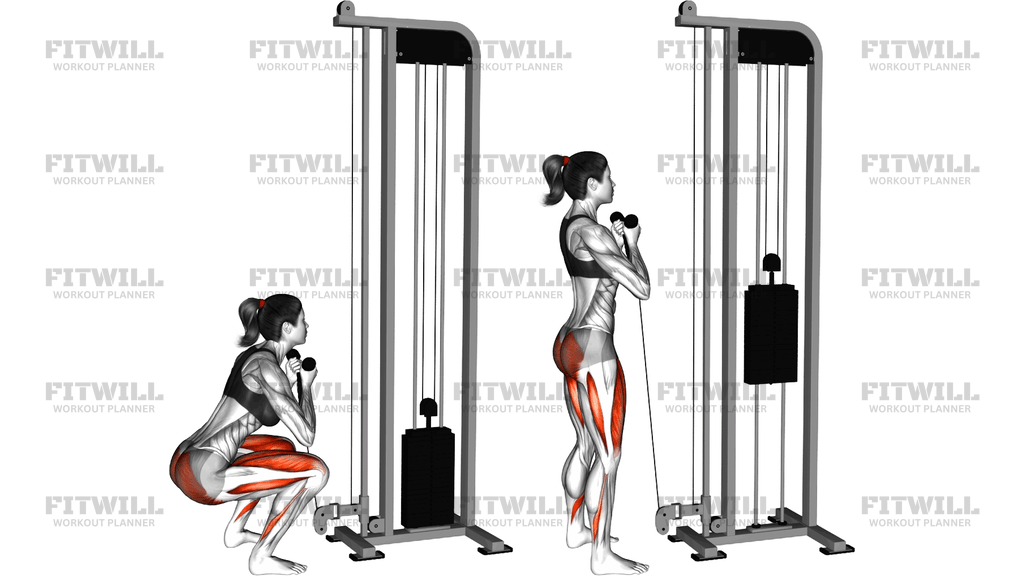
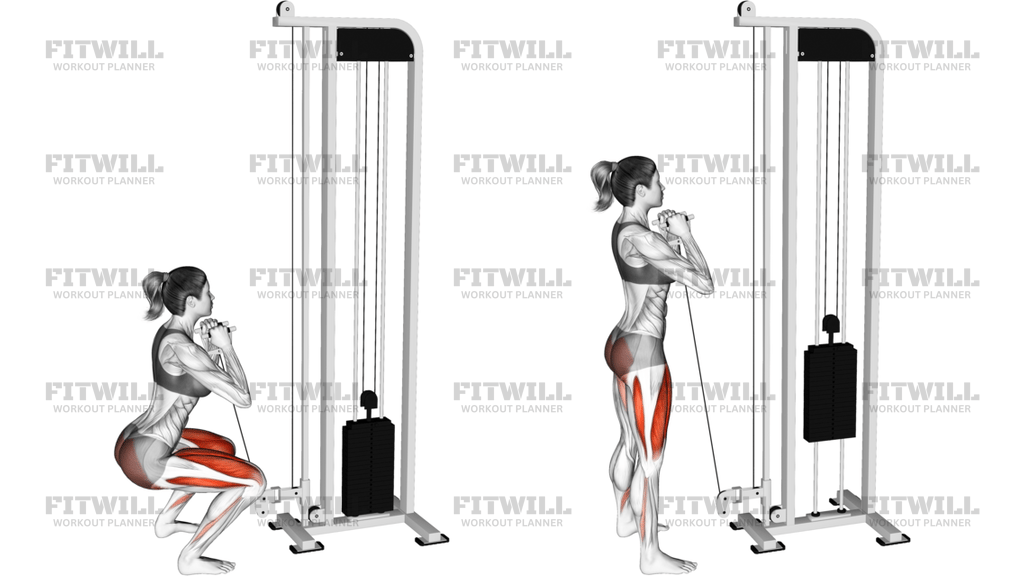
A good setup matters. Set the pulleys low, attach the handles, stand between the towers, and bring the handles to shoulder height with the elbows slightly forward. From there, step back just enough to create steady cable tension, plant the whole foot, and keep the ribcage stacked over the pelvis before you begin the first rep.
The squat itself should look smooth and upright. Sit down by letting the knees travel forward and the hips drop between the heels, then keep the chest tall as the thighs approach parallel or deeper if your mobility allows. At the bottom, the handles should stay close to the shoulders and the knees should track in line with the toes instead of collapsing inward.
Drive up by pushing the floor away through the midfoot and heels, then finish by standing tall without leaning back or letting the cables yank the shoulders forward. A lighter load, a slower lowering phase, or a brief pause in the bottom can make the movement more productive when your goal is control rather than max strength. If the heels rise, the torso folds, or the machine pulls you out of position, shorten the range and rebuild the stance before adding weight.
Cable Front Squat fits well in lower-body sessions, circuit work, and warm-up blocks where you want strong quad and glute tension without a barbell on the back. It can be scaled for beginners with a light stack and a conservative depth, but it still demands focus because the cable line changes every rep as you move. Used well, it is a simple way to build squat mechanics, leg strength, and positional control at the same time.
[ Workout Log & Planner ]
Put your next workout in Fitwill
Keep your plan and training log ready when you are.


Instructions
- Set the cable pulleys low, clip on the handles, and stand between the towers facing forward.
- Bring the handles to shoulder height with your elbows slightly in front of your torso and your feet about shoulder-width apart.
- Step back just enough to create steady tension, then plant your whole foot and stack your ribs over your pelvis.
- Inhale and brace before you start the rep.
- Sit straight down by bending your knees and hips together while keeping your chest tall.
- Lower until your thighs reach parallel or your deepest controlled depth without your heels lifting.
- Drive up through your midfoot and heels, keeping the handles parked near your shoulders as you stand.
- Finish tall with your hips and knees extended, then reset the cable tension before the next rep.
- Repeat for the planned reps, then walk the handles back to the stack before releasing.
Tips & Tricks
- If the stacks pull you forward at the bottom, step a little closer to the machine so the cables stay vertical enough to control.
- Keep the handles at shoulder height, not high in the neck, so your wrists stay neutral and the cables do not slide.
- Let the knees travel forward as you squat; forcing your hips too far back turns this into a hinge and changes the load.
- Use a stance that lets your heels stay heavy and your knees track over the toes without pinching.
- A one-second pause near the bottom removes bounce and makes the quads and glutes do more of the work.
- Slow the lowering phase if the cable stack snaps you into the bottom or the torso starts to pitch forward.
- Match both handles before each set if one side feels tighter than the other.
- Stop the set when the handles drift away from your shoulders or your lower back starts to round.
Frequently Asked Questions
What muscles does Cable Front Squat train most?
It mainly trains the thighs and glutes, with the core and upper back helping you stay upright under tension.
How do I hold the handles in Cable Front Squat?
Hold the handles at shoulder height with your elbows slightly forward, like a front rack, so the cables stay controlled and do not pull your arms down.
How deep should I go on Cable Front Squat?
Go as low as you can while keeping your heels down, your chest tall, and your lower back neutral. Parallel is a good target for most lifters.
Why does Cable Front Squat feel different from a barbell front squat?
The cable line keeps constant tension on the movement and can make the squat feel more upright, but it also changes the balance demand because the handles are pulling from below.
Can beginners use Cable Front Squat?
Yes. A light stack, a shoulder-width stance, and a smaller depth make it very manageable for beginners who are still learning squat mechanics.
What is the most common mistake in Cable Front Squat?
Letting the handles drift away from the shoulders or folding the torso forward as you come out of the bottom usually breaks the pattern first.
Should my knees travel past my toes in Cable Front Squat?
Usually yes, as long as your feet stay planted and the knees track in line with the toes. That forward knee travel is part of a solid squat.
Can Cable Front Squat replace regular squats?
It works well as an accessory or variation, but it is usually better thought of as a complement to heavy barbell squats rather than a straight replacement.