Cable Kneeling Pull Through
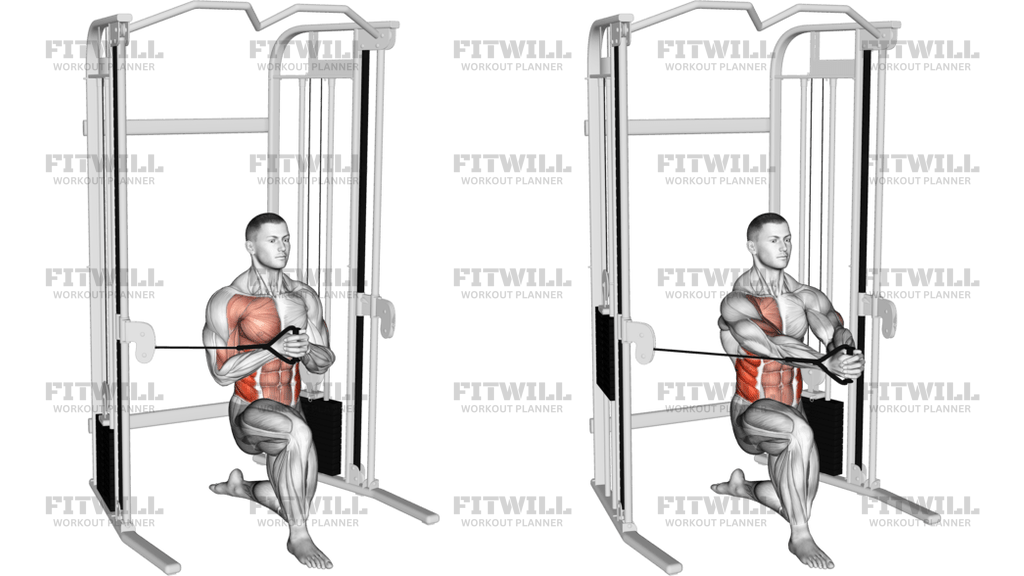
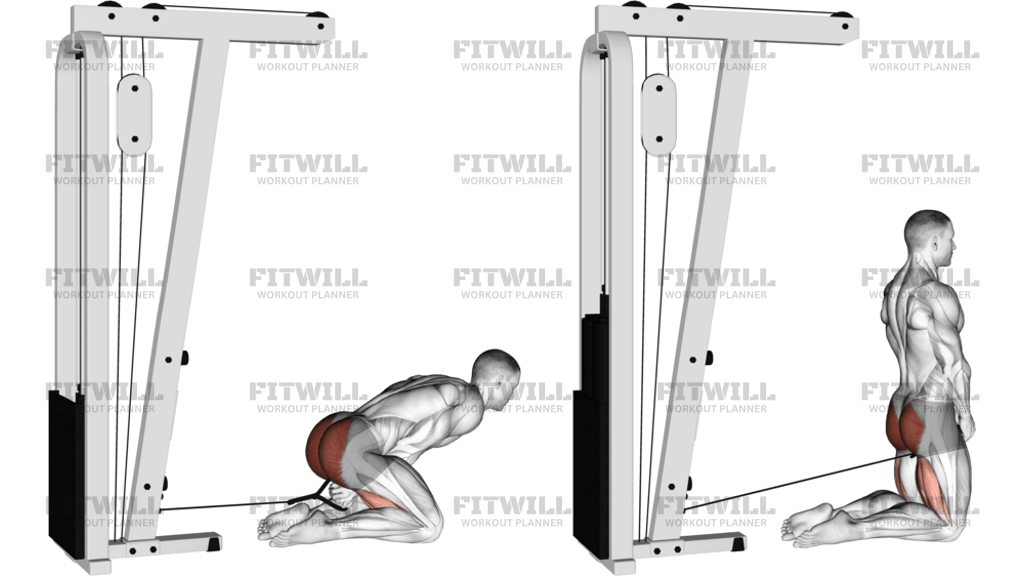
Cable Kneeling Pull Through is a kneeling hip-extension exercise built around a low cable and a rope or handle attachment. The setup in the image shows you starting on both knees, facing away from the machine, with the cable running between the legs so the resistance pulls the hips backward. That position makes the exercise feel very different from a standing pull-through: the knees stay planted, the torso hinges forward and back, and the glutes have to finish each rep by driving the hips to a tall, stacked kneeling position.
This movement mainly targets the glutes, with the hamstrings and spinal erectors helping as the hips extend and the torso comes upright. In anatomy terms, the main work centers on the Gluteus maximus, with support from Biceps femoris, Rectus abdominis, and Erector spinae. Because the line of pull comes from behind you and low to the floor, the quality of the rep depends on a clean hinge and a controlled lockout rather than on swinging the weight or yanking with the arms.
The setup matters. Kneel far enough from the stack that the cable is already under tension when you fold forward, but not so far that the weight stack jerks you off balance. Keep your shins and knees grounded, hold the handle close to the hips or between the thighs, and keep the chest angled down as you load the backside of the body. When you start the rep, let the hips travel back first, then drive them forward by squeezing the glutes until the ribs stack over the pelvis.
A good repetition finishes with the glutes tight, the abs braced, and the pelvis neutral rather than overarched. The best training effect comes from smooth reps that move through a controlled arc, especially on the way back into the hip hinge. If the cable pulls you into lumbar extension, shorten the range, lower the load, or move the knees closer to the pulley until the line of resistance feels manageable. This is a useful accessory for glute growth, posterior-chain activation, and teaching strong hip extension without needing a barbell or a bench.
Use it when you want focused glute tension with less spinal loading than many standing hinge variations. It works well in warm-ups, accessory blocks, and lower-body sessions where you want to practice hinge mechanics while keeping the knees supported on the floor. Keep each rep deliberate, own the pause at the top, and stop the set before your lower back starts to take over.
[ Workout Log & Planner ]
Put your next workout in Fitwill
Keep your plan and training log ready when you are.


Instructions
- Set the cable pulley low and attach a rope or handle, then kneel on both knees facing away from the machine with the handle between your thighs.
- Scoot far enough forward to create tension in the cable before you start, but keep enough room to hinge without the stack slamming.
- Hinge your torso forward from the hips, keep your shins and knees planted, and let the cable pull your hips slightly back.
- Hold the handle close to your body as you start the rep so the line of pull stays centered between your legs.
- Drive your hips forward by squeezing your glutes until you finish tall in a kneeling lockout with your ribs stacked over your pelvis.
- Do not lean back at the top; stop when the hips are fully extended and the lower back stays neutral.
- Lower yourself by sending the hips back again, keeping tension on the cable and the movement smooth.
- Exhale as you drive up, inhale as you hinge back down, and keep the rep rhythm steady.
Tips & Tricks
- If the cable yanks you backward at the start, move your knees a little closer to the pulley or reduce the load.
- Think about pushing your hips forward, not pulling with your arms; the handle should stay close to the pelvis the whole time.
- Keep the chest angled down on the way back so the glutes load before the torso rises.
- Finish each rep with a hard glute squeeze, but stop before your lower back arches to create extra height.
- A rope or D-handle should sit centered between the thighs; if it drifts to one side, the rep usually becomes uneven.
- Use a slower lowering phase to keep tension on the hamstrings and glutes instead of dropping into the bottom.
- Keep your knees comfortable on the floor by using padding if the surface is hard or if you plan to do higher reps.
- Choose a load that lets you hold the top position for a brief squeeze without shaking or losing balance.
Frequently Asked Questions
What does Cable Kneeling Pull Through work most?
It mainly targets the glutes, with the hamstrings and lower back helping during the hip extension.
Why kneel instead of standing for a cable pull-through?
The kneeling position removes a lot of leg drive and makes the glutes finish the rep with a cleaner hip extension.
Where should the handle travel during the rep?
It should stay centered between the thighs and close to the hips, not swing out in front of the body.
What is the most common mistake on this exercise?
Overarching the lower back at the top instead of finishing with the glutes and stacked ribs.
Is this a good beginner glute exercise?
Yes, as long as the load is light enough to keep the knees planted and the hinge controlled.
How far should I lean forward at the bottom?
Lean only as far as you can while keeping tension on the cable and without collapsing through the lower back.
Do I need a rope attachment?
A rope or single handle can work, but whichever attachment you use should stay secure and centered between the legs.
Where does this fit in a workout?
It works well as accessory glute work, a hinge warm-up, or a lower-body finisher when you want controlled tension.