Assisted Sit-Up
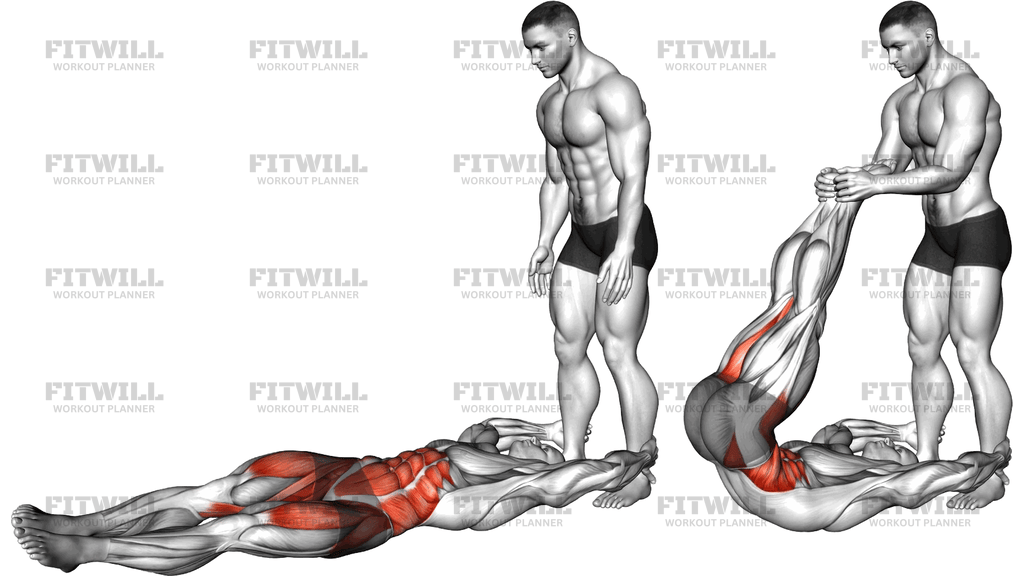
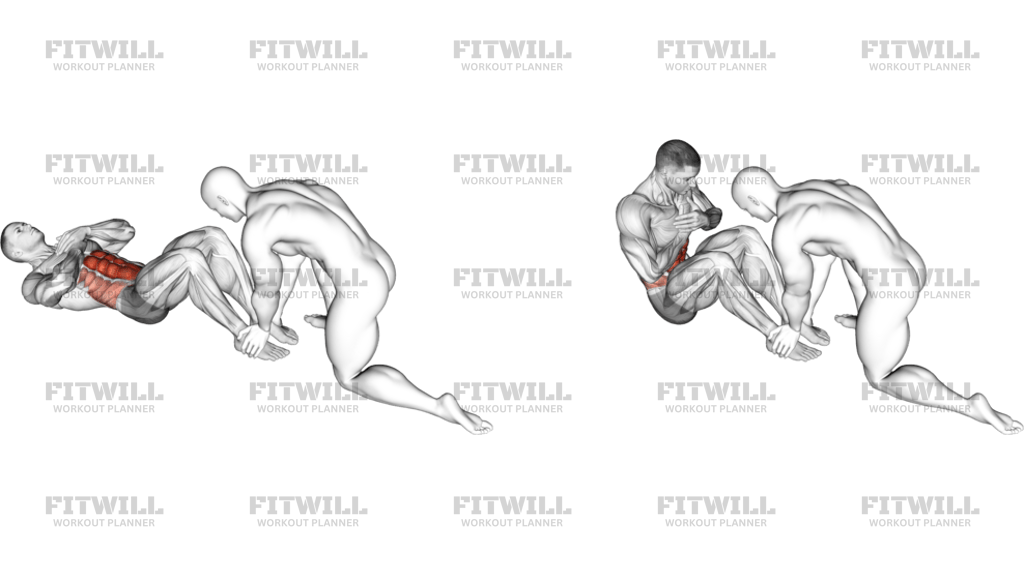
Assisted Sit-Up is a partner-anchored abdominal exercise that teaches you how to curl the torso up under control instead of yanking your way through repetitions. One person braces the feet while the lifter performs a full sit-up on the floor, so the movement stays simple but still gives the abs, obliques, and hip flexors a clear workload.
The exercise is useful when you want a direct trunk-flexion drill that does not require a machine or cable setup. The main work comes from the rectus abdominis, with the obliques and hip flexors helping stabilize the pelvis and finish the curl. Because the feet are fixed, the quality of each rep depends on how well you keep the ribs stacked, the neck relaxed, and the torso moving as one piece.
The setup matters more than most people think. Lie back far enough that your partner can hold your feet or ankles securely, then start with knees bent and hands crossed over the chest or lightly touching the head without pulling. If the feet slide or the pelvis tips too early, the rep turns into a hip-flexor tug-of-war instead of a controlled abdominal contraction.
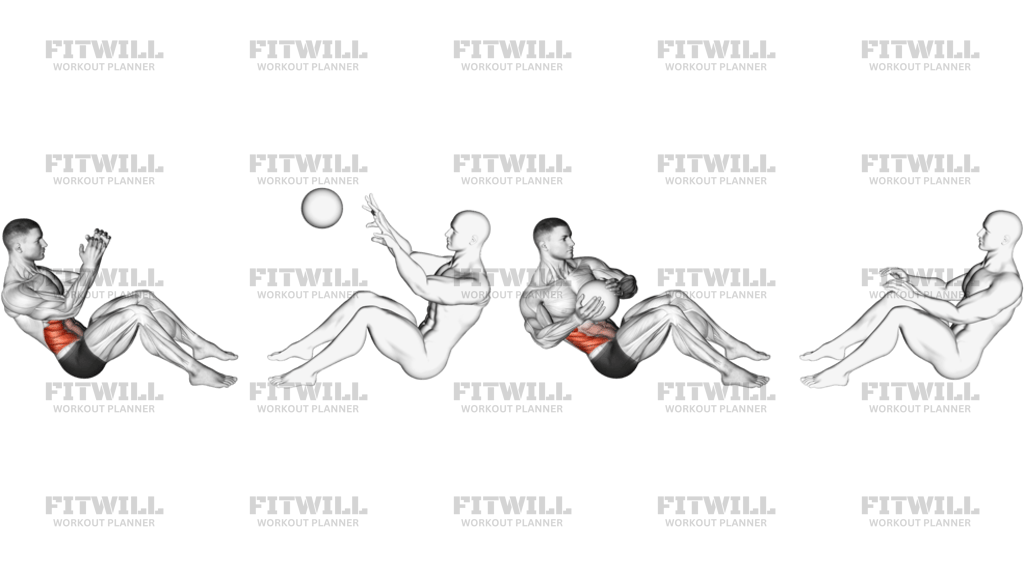
Each repetition should begin with a small brace, then a smooth curl up through the upper back until the torso approaches the thighs. At the top, sit tall without collapsing forward, then lower back down under control until the shoulder blades touch the floor again. A steady exhale on the way up and a calm inhale on the way down help keep the trunk organized and prevent the rep from turning into a fast bounce.
Assisted Sit-Up works well in core-focused sessions, warmups, conditioning circuits, or accessory blocks when you want a straightforward floor exercise with clear feedback. It is also easy to scale by changing the speed, arm position, or number of reps. Keep the range pain-free and stop the set if the lower back starts to arch hard or the neck starts doing the lifting for you.
[ Workout Log & Planner ]
Put your next workout in Fitwill
Keep your plan and training log ready when you are.


Instructions
- Lie on your back on a mat with your knees bent and your feet held firmly by a partner at the ankles or insteps.
- Cross your arms over your chest or place your fingertips lightly at your temples without pulling on your head.
- Press your lower back gently into the floor, tuck your chin slightly, and brace your abs before you start the rep.
- Exhale and curl your shoulders and upper back off the floor, bringing your ribs toward your pelvis.
- Keep the feet anchored and continue curling until you sit tall over your hips at the top.
- Pause briefly in the upright position without collapsing forward or letting the head lead the movement.
- Inhale as you lower your torso back down under control, one vertebra at a time.
- Finish with the shoulder blades touching the floor again, then reset your brace before the next rep.
Tips & Tricks
- Let the partner hold your feet just firmly enough to keep them from sliding; over-anchoring the legs can make the sit-up feel like a hip-flexor pull.
- Keep your elbows wide and your hands off the head so the neck does not turn into a lever for the rep.
- If your lower back pops off the floor early, shorten the range and focus on curling the ribcage instead of throwing the torso up.
- A slow lower is more useful here than a fast one; the descent should feel controlled all the way back to the mat.
- Keep the chin slightly tucked so the eyes stay up and the neck stays long instead of jutting forward.
- Do not let the knees flare or collapse inward while your partner is holding the feet; stable legs make the trunk work cleaner.
- If your hip flexors take over, move your feet a little closer to your glutes and reduce the speed of the ascent.
- Stop the set when you can no longer sit up without jerking or using momentum off the floor.
Frequently Asked Questions
What muscles does Assisted Sit-Up train?
It primarily trains the abs, with the obliques and hip flexors helping during the curl and the top position.
Why does someone hold my feet during Assisted Sit-Up?
The foot hold keeps your legs anchored so you can focus on trunk flexion instead of sliding around on the floor.
Should I keep my hands behind my head?
Only if you can keep the hands light. Crossing the arms over the chest is often easier because it removes the temptation to pull on the neck.
How high should I come up on each rep?
Curl until you are sitting tall over the hips, not just halfway off the floor, then lower with control back to the shoulder blades.
Why do I feel Assisted Sit-Up more in my hip flexors?
That usually happens when the feet are locked too hard or the torso is not curling enough. Slow the rep down and think about bringing the ribs toward the pelvis.
Is Assisted Sit-Up good for beginners?
Yes, as long as the partner keeps the feet stable and you use a smooth tempo instead of trying to whip yourself up.
What is the most common mistake in this movement?
The biggest issue is yanking the head or using momentum off the floor instead of controlling the curl through the abs.
Can I make Assisted Sit-Up harder without weights?
Yes. Slow the lowering phase, pause at the top, or keep the arms crossed tightly over the chest to reduce help from the upper body.