Battling Ropes Fly
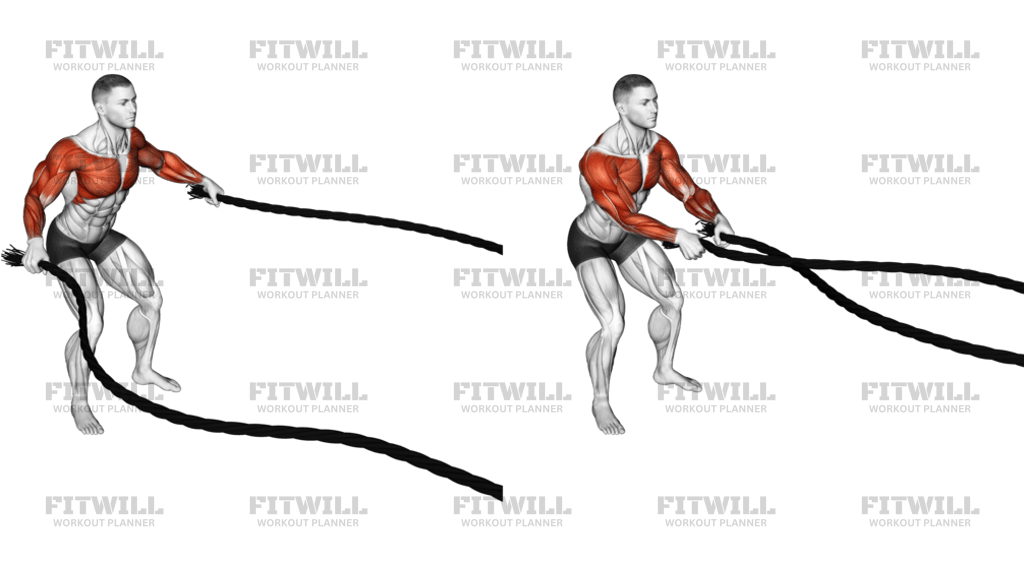
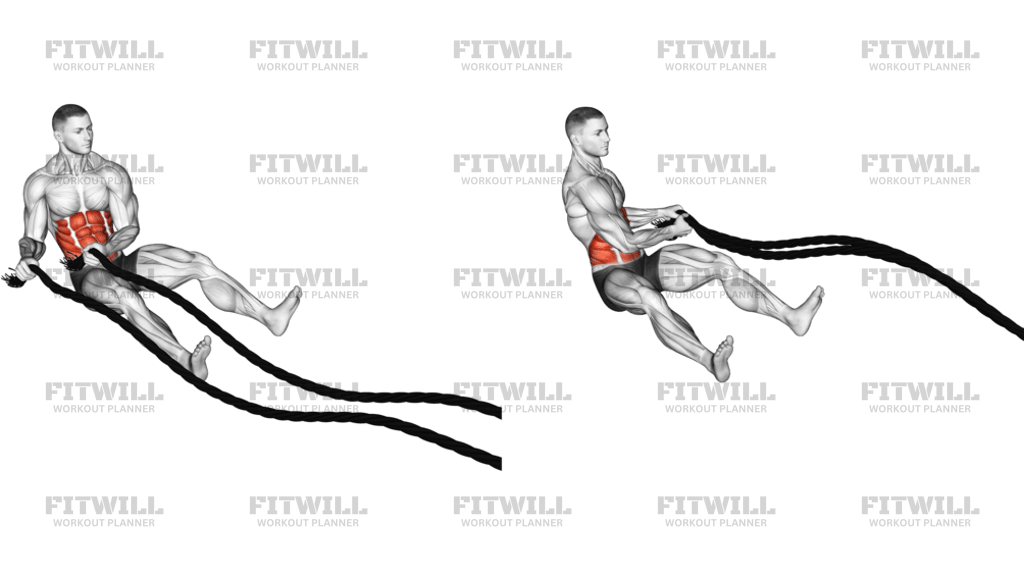
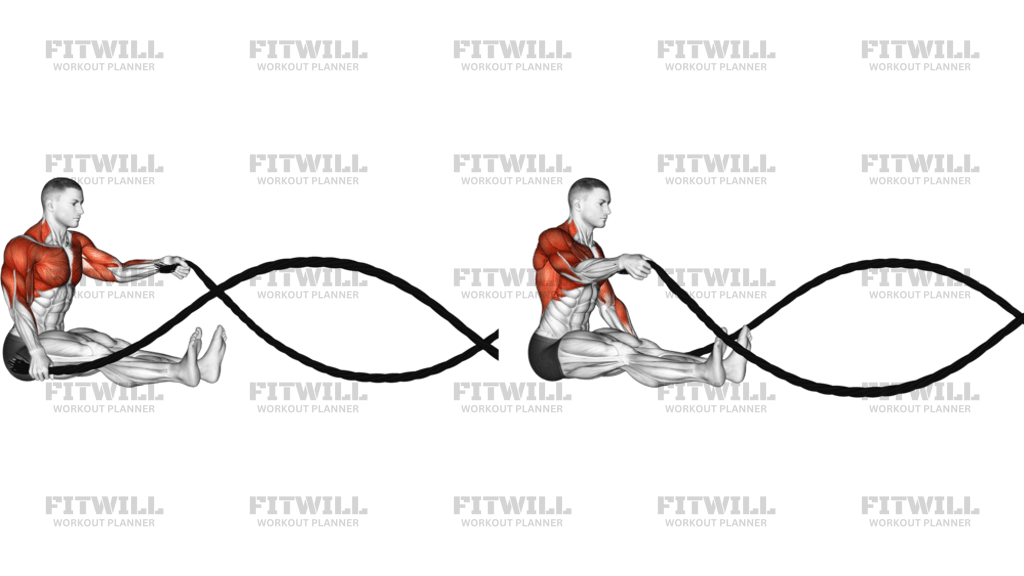
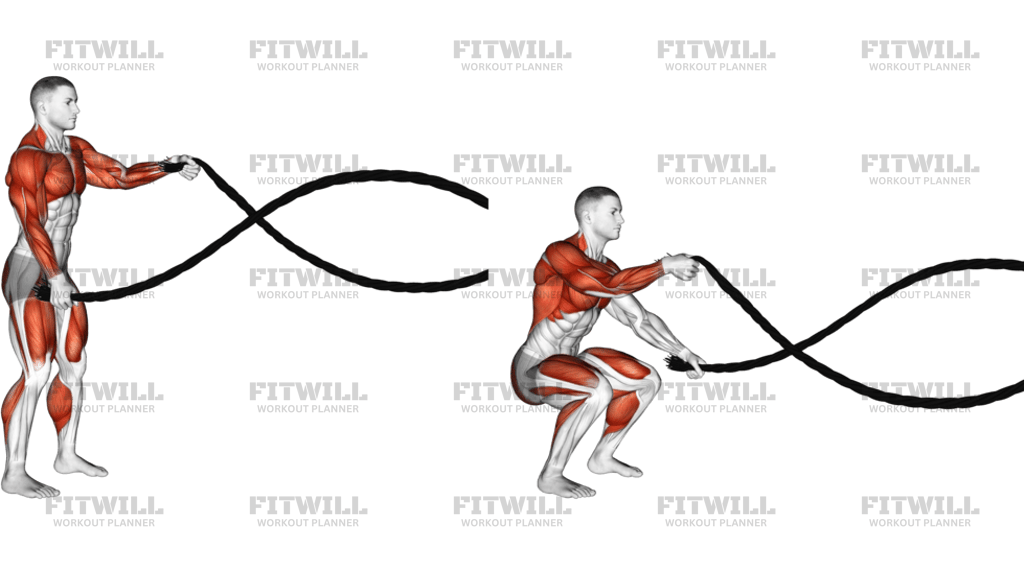
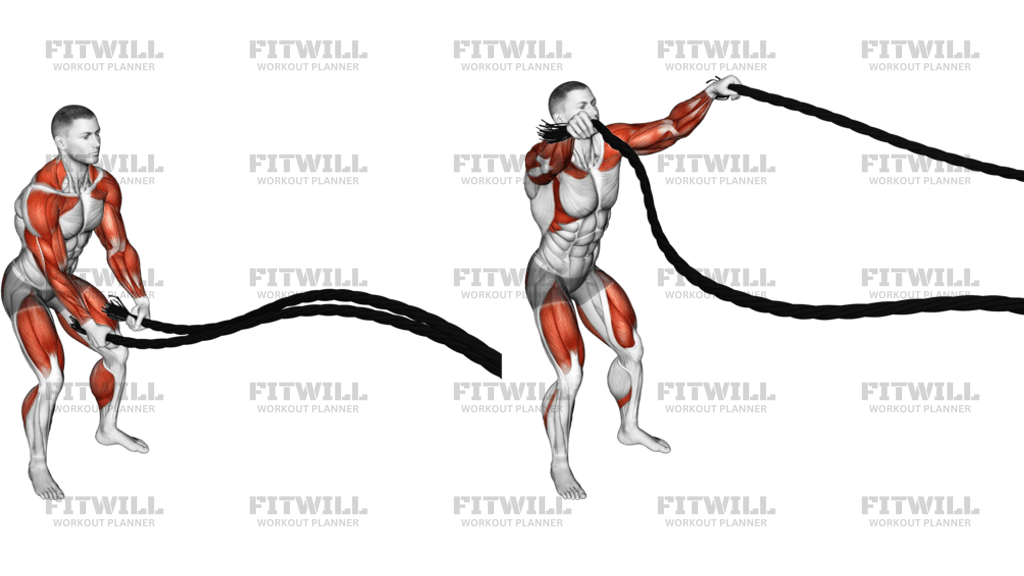
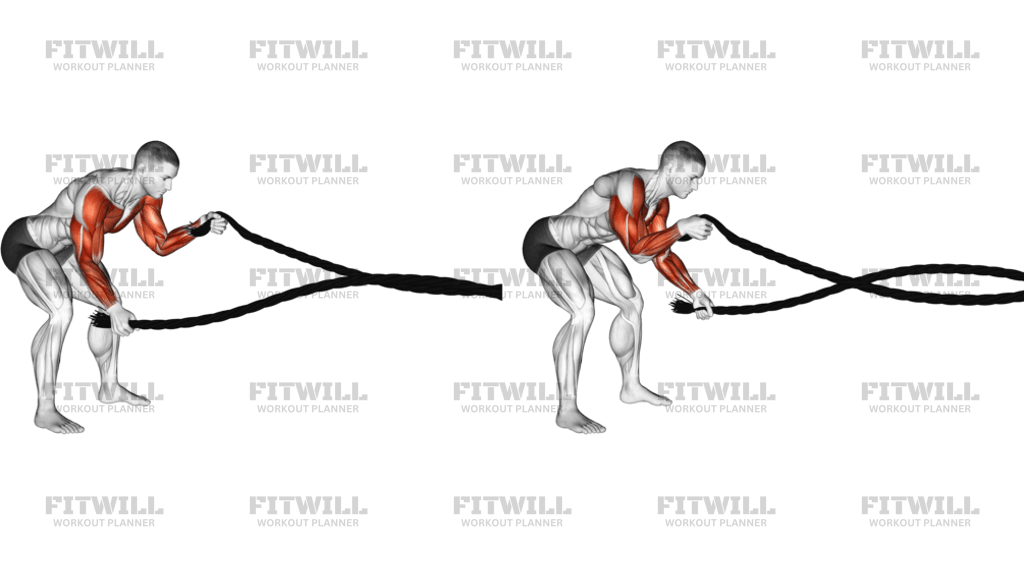
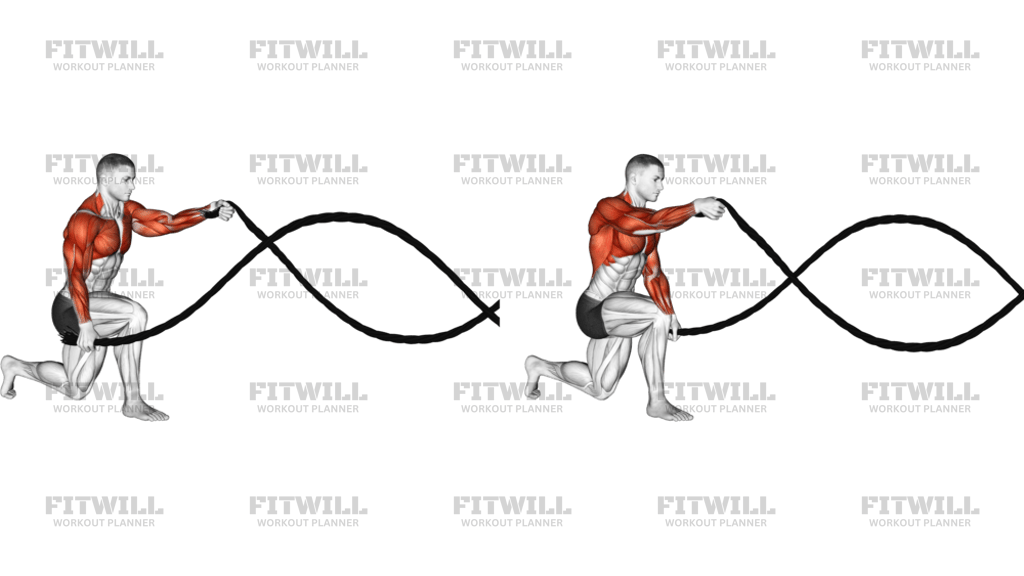
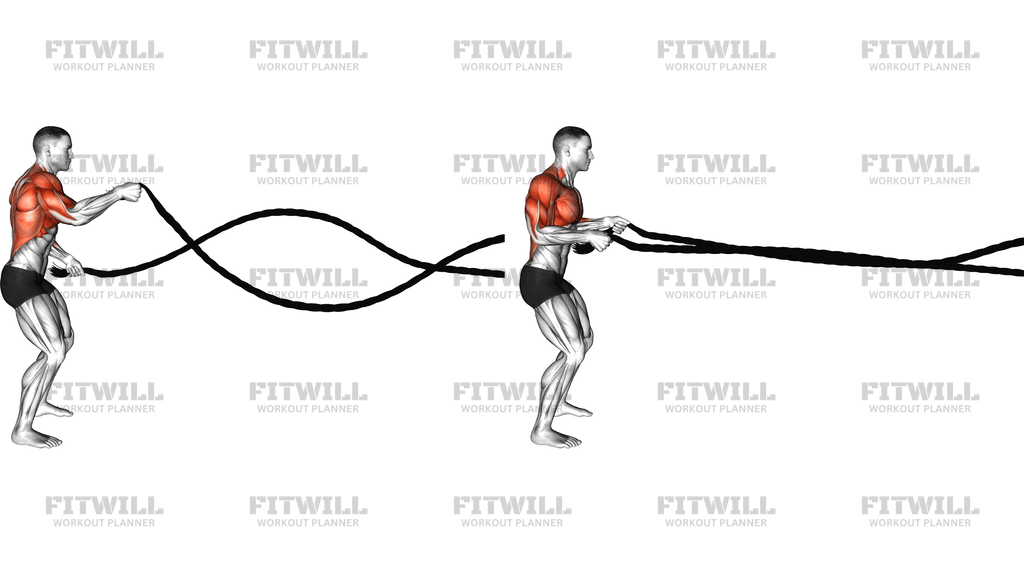
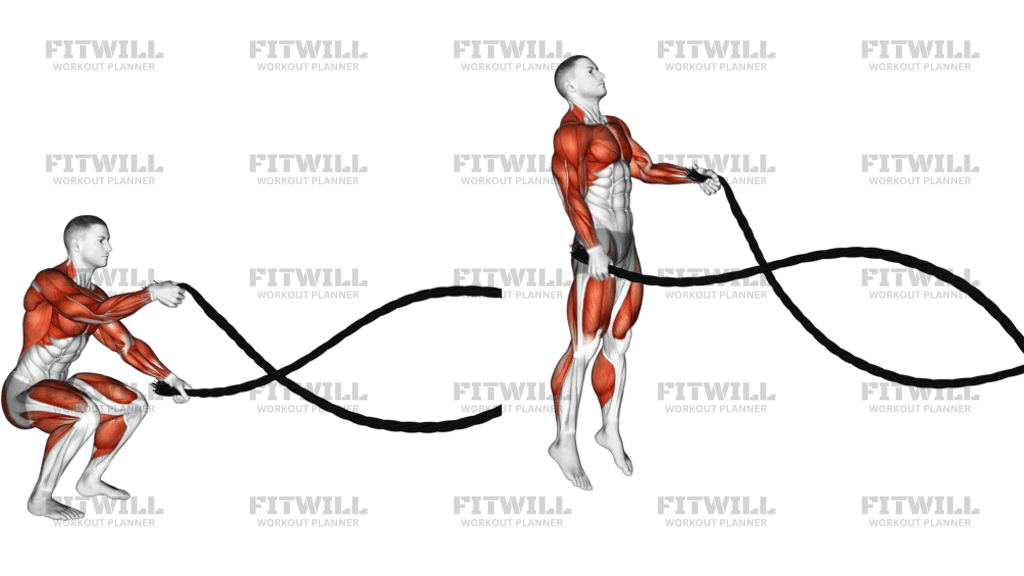
Battling Ropes Fly is a standing chest-focused rope drill that uses two rope ends to train horizontal arm adduction, shoulder control, and trunk stiffness at the same time. The movement looks similar to a cable or dumbbell fly, but the load comes from the rope anchor and the changing tension in the ropes. That makes setup important: your stance, distance from the anchor, and arm angle decide whether the rep feels smooth and controlled or unstable and noisy.
The main work should come from the chest, with the front shoulders, triceps, and upper-back stabilizers helping to guide the ropes through the arc. Because the ropes want to pull you out of position, the exercise rewards a tall posture, quiet ribs, and a slight bend in the elbows. When the setup is right, each rep creates a strong squeeze across the chest without turning into a shrugging, twisting, or bouncing motion.
Use this exercise when you want an upper-body accessory movement that keeps constant tension on the target muscles without requiring heavy external loading. It fits well in a chest block, a shoulder accessory circuit, or a conditioning session where you still want the work to feel deliberate. The goal is not to yank the ropes harder each rep, but to keep the same path, the same stance, and the same squeeze from start to finish.
Treat the fly path like a controlled arc: open the arms under tension, then bring the handles inward in front of the chest with the wrists, elbows, and shoulders staying organized. The range should stay pain-free and repeatable. If the ropes drag you forward, the load is too much or you are too close to the anchor. If you lose shoulder position, shorten the range and slow the return until the rep stays clean.
[ Workout Log & Planner ]
Put your next workout in Fitwill
Keep your plan and training log ready when you are.


Instructions
- Face the rope anchor and hold one rope end in each hand with a soft bend in the elbows, feet about hip-width apart.
- Step back until the ropes are lightly tensioned and your hands start slightly out from the chest, around shoulder height or a little lower.
- Set your shoulders down, stack your ribs over your pelvis, and keep a small athletic bend in the knees.
- Begin the rep by sweeping both hands inward in a wide arc until they meet in front of your chest.
- Keep the elbows softly bent and the wrists neutral so the motion comes from the shoulders and chest, not from a hard arm swing.
- Squeeze the chest at the close position for a brief moment without letting the shoulders roll forward.
- Open the arms back out under control until you feel the rope tension stretch the chest again.
- Keep the torso quiet, breathe out as the hands come together, and reset your stance before the next rep if the rope pulls you off balance.
Tips & Tricks
- If the ropes feel too heavy, shorten your step back before you lower the weight.
- Think about bringing the upper arms together, not just moving the hands inward.
- Keep the elbows in the same soft bend through the whole set instead of turning it into a press.
- Use a split stance if a narrow stance makes you sway or twist.
- Stop the rep before your shoulders shrug up toward your ears.
- Let the ropes stay under tension on the way out; do not let them go slack between reps.
- A slower return usually gives a better chest stimulus than a bigger, faster closing motion.
- Choose a rope position that lets you keep the chest lifted and the neck relaxed.
Frequently Asked Questions
What muscles does Battling Ropes Fly work?
It primarily trains the chest, with help from the front shoulders, triceps, and core stabilizers.
Can beginners perform this exercise?
Yes, beginners can use it if the rope tension is light and the range stays short and controlled.
Where should my hands travel during the rep?
Your hands should sweep in a wide arc from slightly out to the sides to directly in front of the chest.
Should my elbows stay straight?
No. Keep a soft bend in the elbows so the shoulders and chest drive the motion instead of locking the arms.
How is this different from battle rope waves?
Waves are driven mostly by rhythmic up-and-down arm action, while this variation uses a fly-style closing arc across the chest.
What is the biggest form mistake?
Letting the shoulders shrug and the torso twist to create extra range is the most common breakdown.
How do I make the exercise harder?
Step farther from the anchor, slow the return, or add reps while keeping the chest squeeze and posture clean.
Is this safe for shoulders?
It usually is when the range is pain-free and the shoulders stay down, but stop if the front of the shoulder pinches.