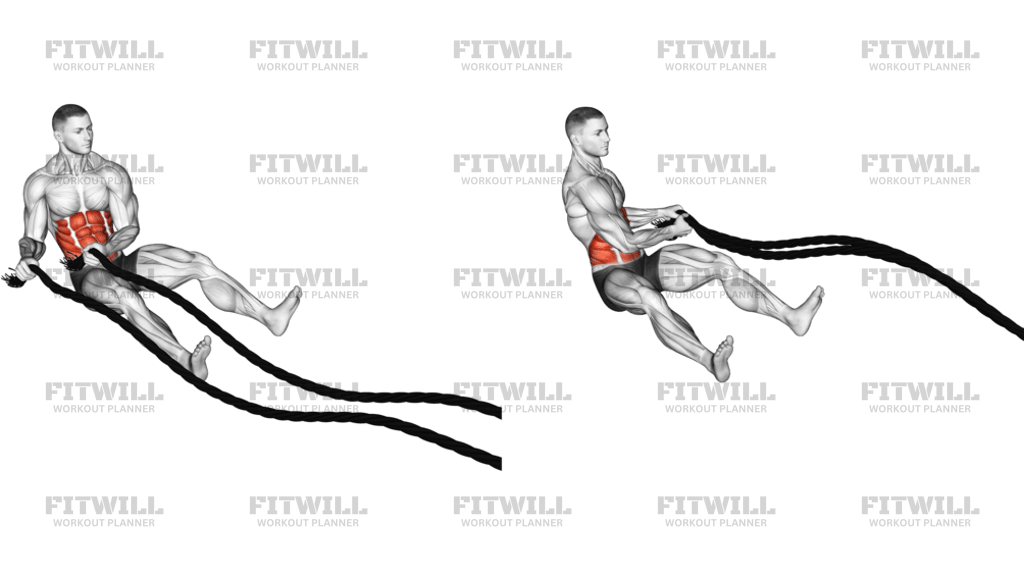
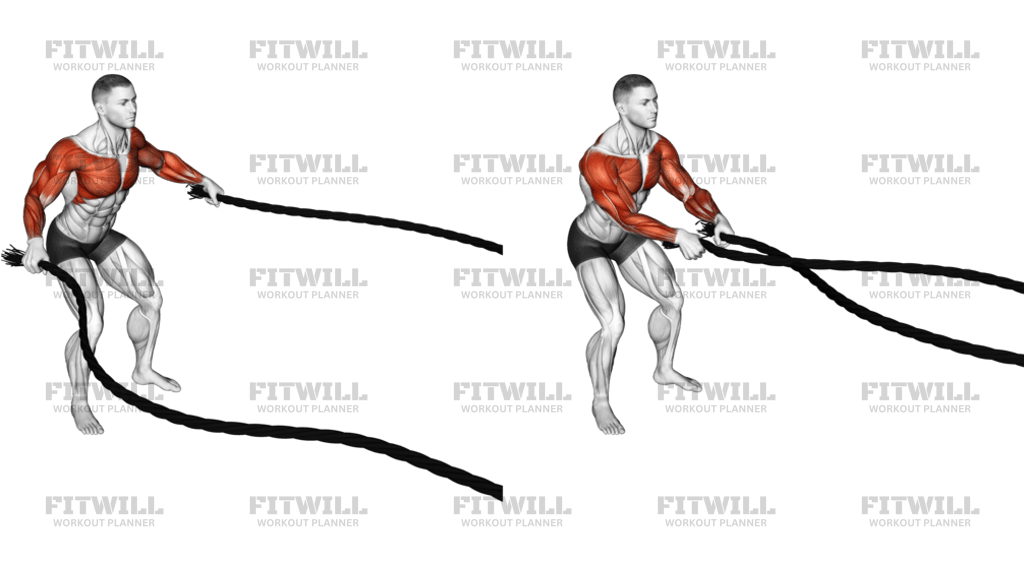
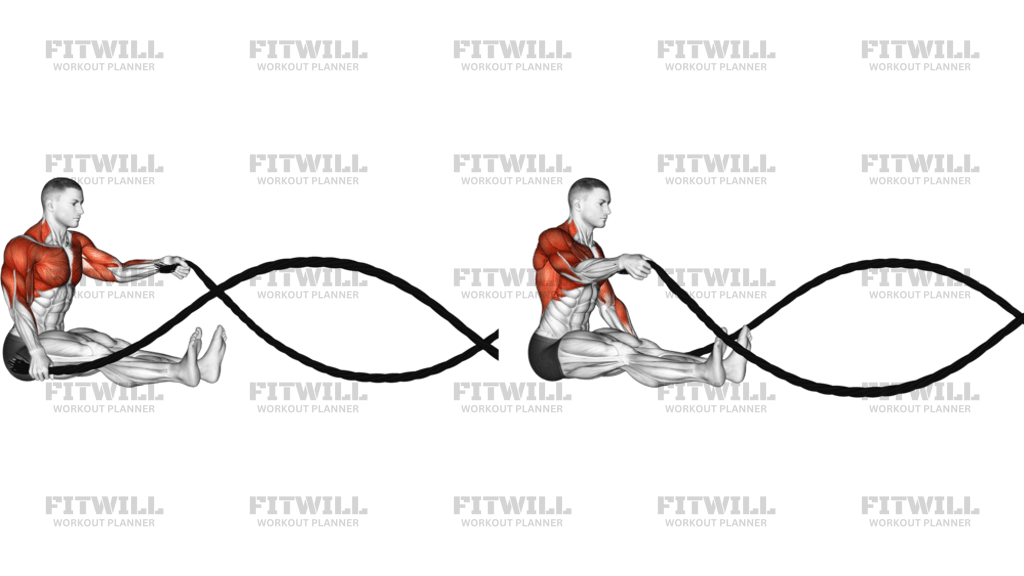
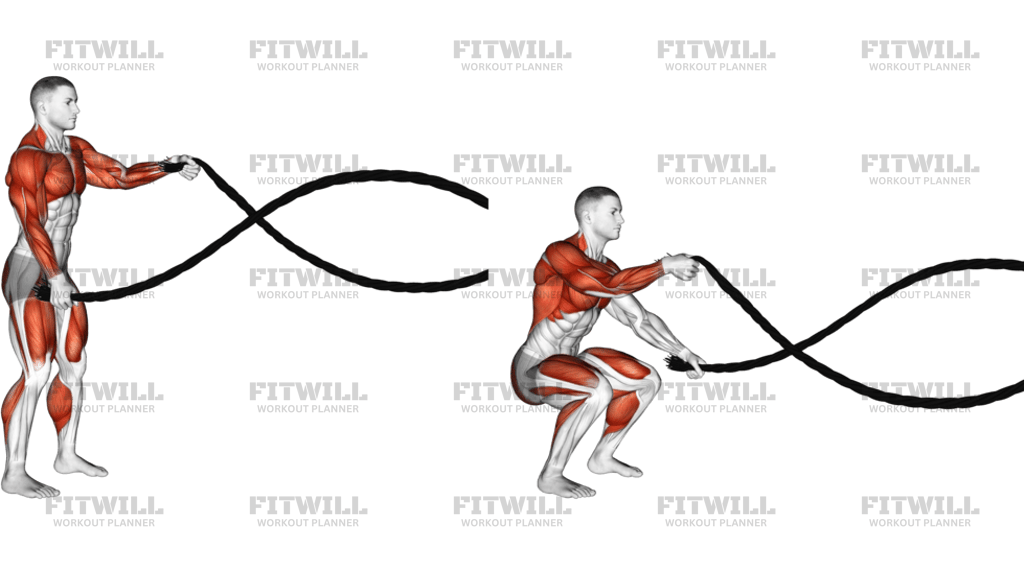
Battling Ropes Low Waves
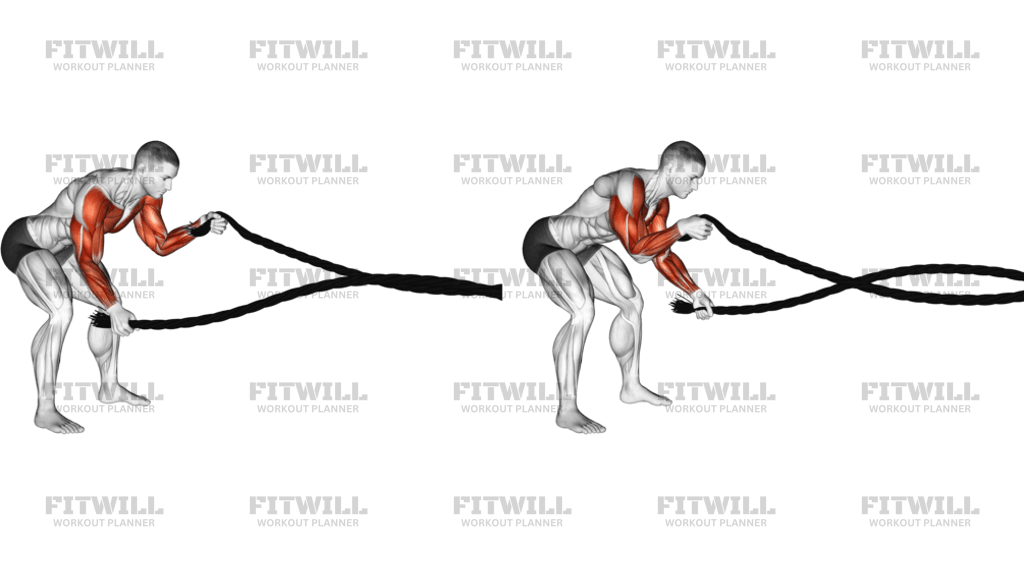
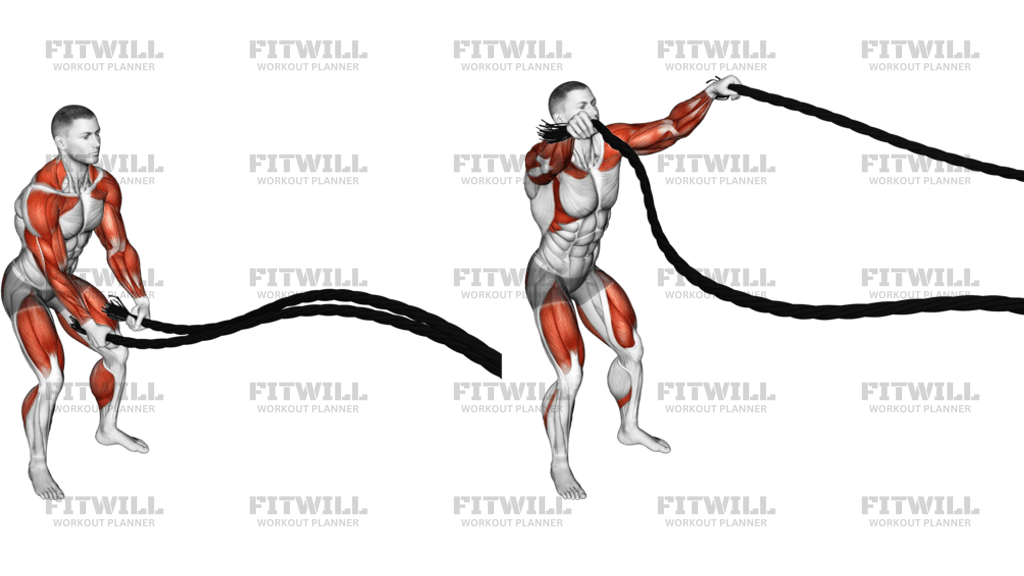
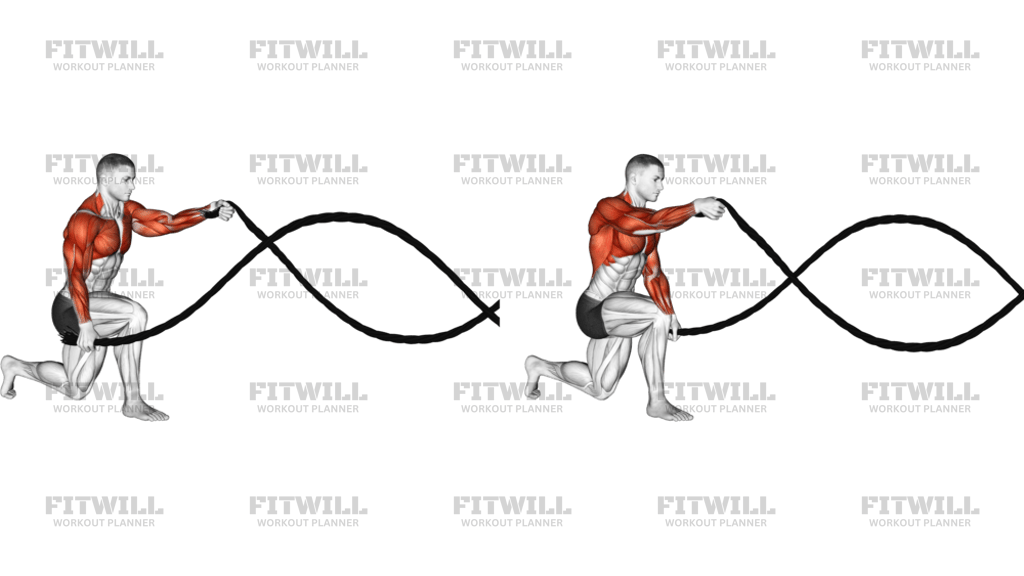
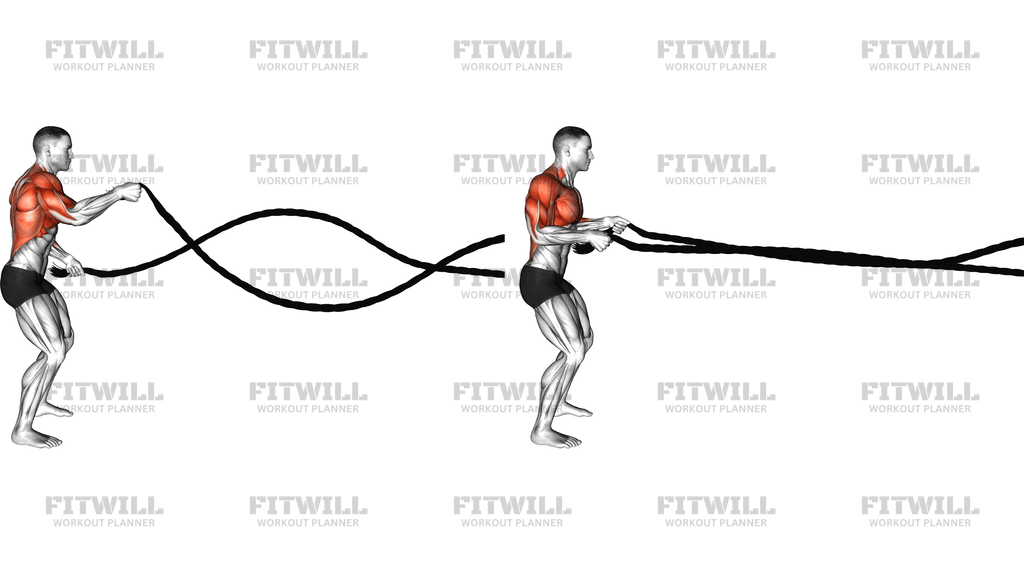
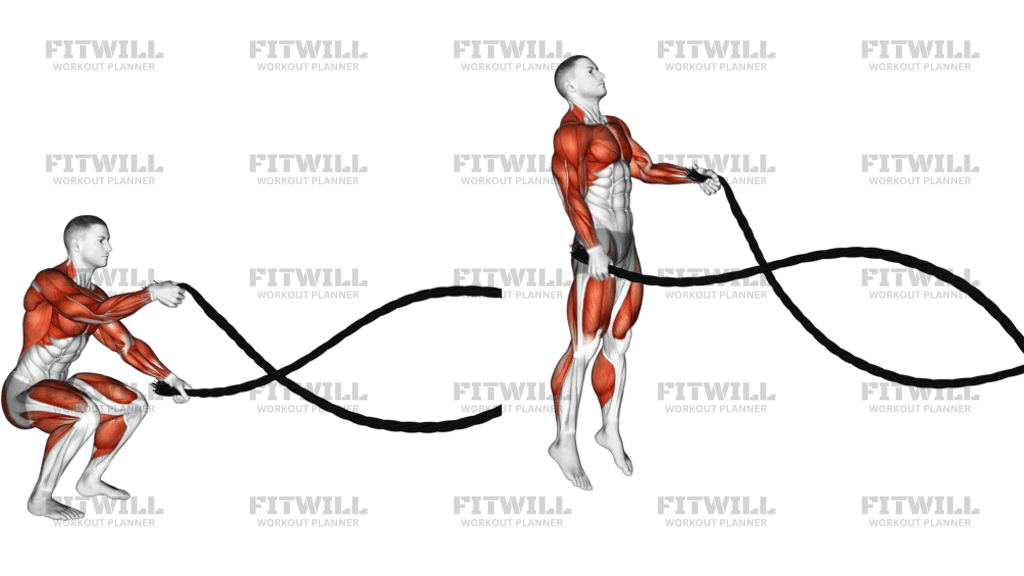
Battling Ropes Low Waves is an alternating rope-conditioning drill performed from a hip-hinged stance with the rope anchored in front of you. Each hand creates a small, fast wave that travels toward the anchor while the torso stays disciplined, making the exercise useful for shoulder endurance, arm drive, grip work, and trunk stiffness under rhythm.
The setup matters because the rope pattern is only as clean as the position behind it. With the feet about hip-width apart, knees softly bent, and hips pushed slightly back, you can keep the chest long and the ribs stacked instead of collapsing into the waves. The goal is not to yank the rope with the whole body; it is to keep the lower body stable while the arms produce a consistent ripple.
Low waves usually work the front and side of the shoulders, upper arms, upper back, forearms, and the muscles that resist unwanted trunk motion. Because the resistance changes every second, the drill also trains coordination and pacing. It fits well as a warm-up finisher, conditioning block, or accessory interval when you want a high-output pattern without heavy external loading.
As you work, think about snapping one rope down as the other rises, keeping the wave height low and the cadence even. The elbows should stay softly bent, the shoulders should stay down away from the ears, and the neck should remain relaxed. If the waves turn into big body swings or shrugging, the rope is too heavy or the tempo is too aggressive.
Use Battling Ropes Low Waves when you want a simple, repeatable conditioning drill that is easy to scale. Short intervals make it challenging without needing maximal effort, and the movement is especially useful when you want to build work capacity while keeping the joints in a controlled, athletic position.
[ Workout Log & Planner ]
Put your next workout in Fitwill
Keep your plan and training log ready when you are.


Instructions
- Stand facing the anchored rope with your feet about hip-width apart and your knees softly bent.
- Hinge your hips back slightly, keep your chest proud, and hold one rope in each hand with a neutral grip.
- Let the rope hang with a little slack in front of your thighs before you start the first wave.
- Brace your midsection and set your shoulders down so your upper traps do not take over.
- Drive one hand down as the other hand rises, creating small alternating waves toward the anchor.
- Keep the waves low and quick instead of swinging your whole torso to make them bigger.
- Maintain the hip hinge and steady knee bend while your feet stay planted.
- Breathe in a controlled rhythm, exhaling as you drive each wave.
- Stop the set if the rope height drops, the shoulders shrug, or your posture starts to bounce.
Tips & Tricks
- The rope should travel in a clean ripple, not a full-arm yank from the shoulders.
- Keep the wave height low if you want the drill to stay rhythmic and conditioning-focused.
- If your lower back rounds, sit your hips back a little more and shorten the amplitude.
- Lightly bend the elbows and keep the wrists neutral so the forearms can do their job without strain.
- A narrower stance usually makes the drill more stable, while a wider stance can help if the tempo is very fast.
- Use short sets when the goal is power and crisp speed; use longer sets when the goal is work capacity.
- If the rope starts slapping the floor randomly, slow the cadence until both waves are even again.
- Choose a rope thickness that lets you keep shoulder position clean for the full interval.
- Keep the neck long and relaxed so the upper traps do not dominate every rep.
Frequently Asked Questions
What muscles do Battling Ropes Low Waves work?
They mainly train the shoulders, arms, forearms, grip, and upper back, with the core working hard to keep the torso still.
Why are the waves kept low?
Low waves keep the motion quick and repeatable so you can stay in control instead of turning it into a full-body swing.
Should I stand upright or hinge forward?
A slight hip hinge is better than standing tall, because it gives you a more stable base for the alternating rope pattern.
How do I know if I’m using too much rope resistance?
If you have to shrug, lean back, or throw your torso to keep the waves moving, the rope is too heavy or the interval is too long.
Is this better for conditioning or strength?
It is mainly a conditioning and muscular-endurance drill, though the shoulders and arms still work hard against the rope tension.
Can beginners do Battling Ropes Low Waves?
Yes, beginners can use a light rope and short intervals as long as they can keep the waves even and the torso steady.
What is the most common form mistake?
The biggest mistake is turning the exercise into a squat-and-swing movement instead of letting the arms create the waves.
How should I breathe during the drill?
Use a steady rhythm and exhale as you drive the waves so you do not hold your breath for the entire set.