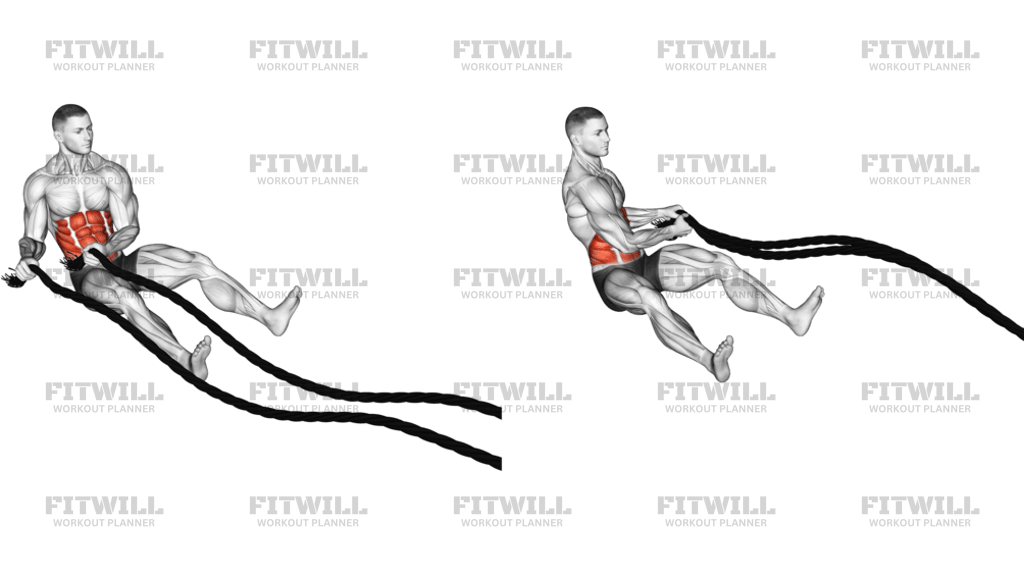
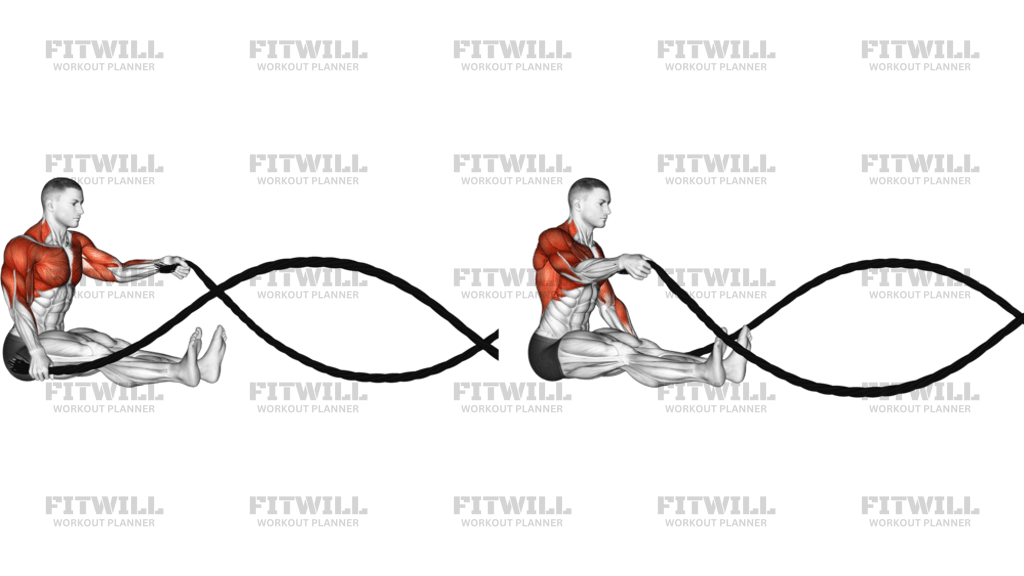
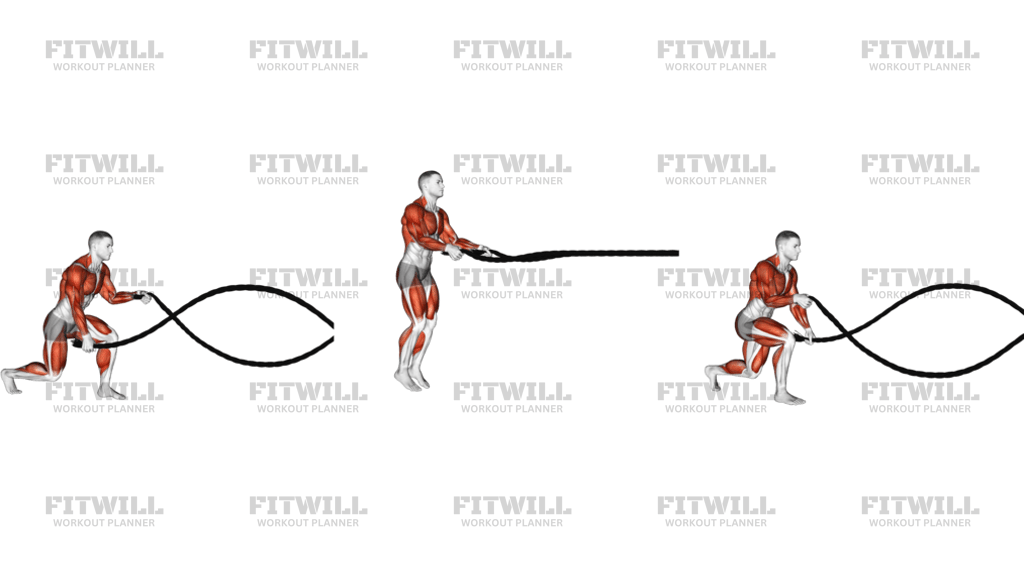
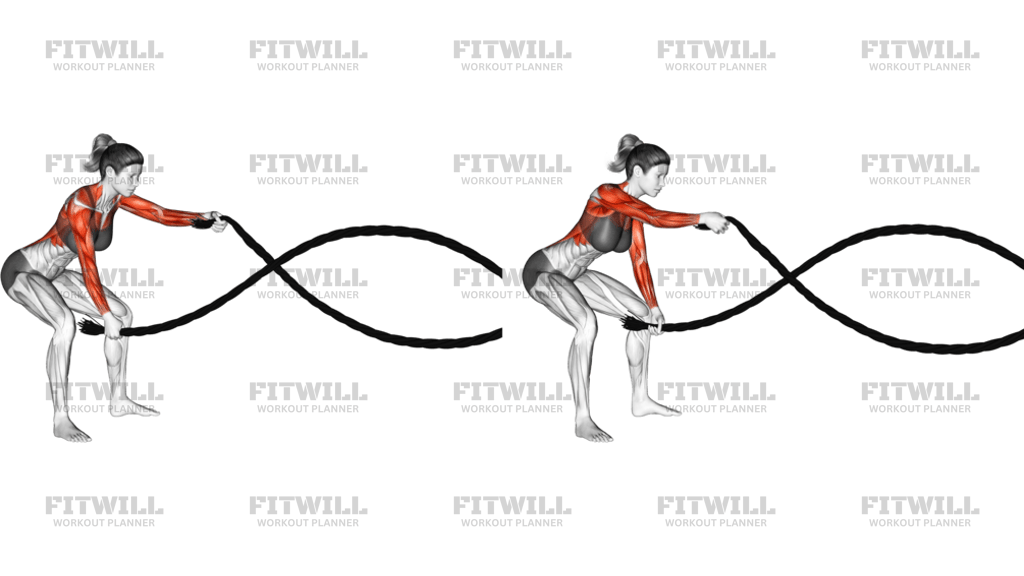
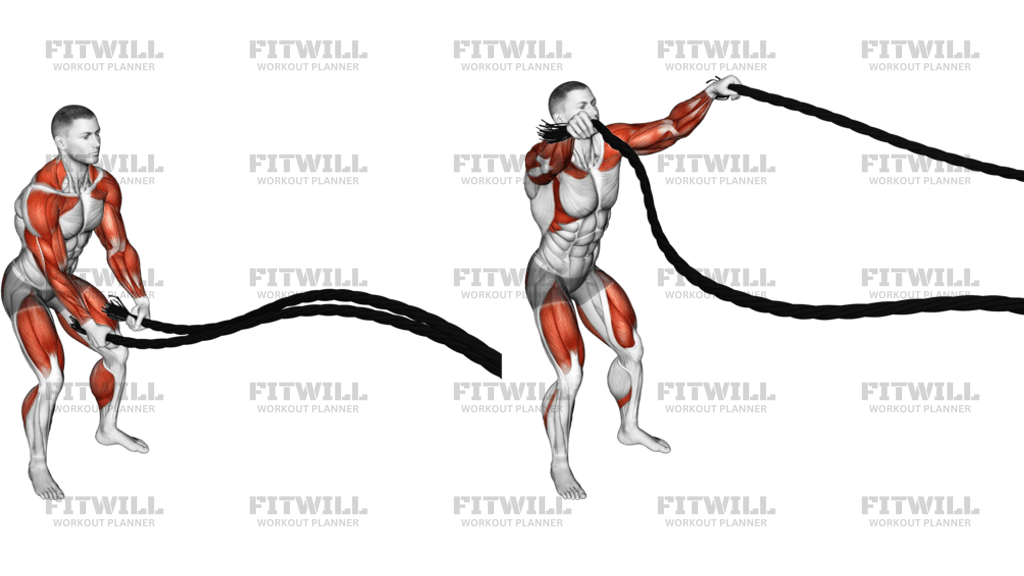
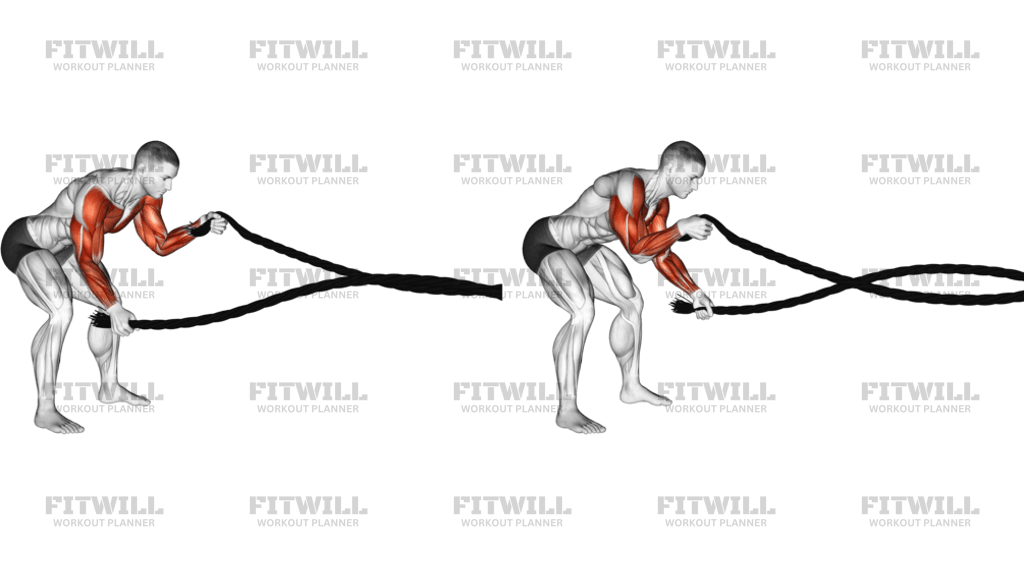
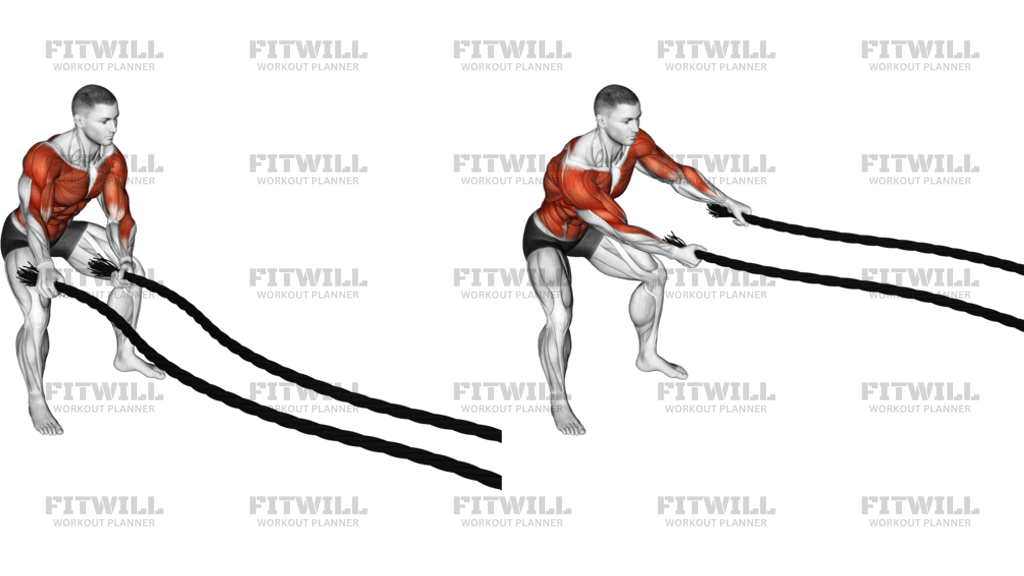
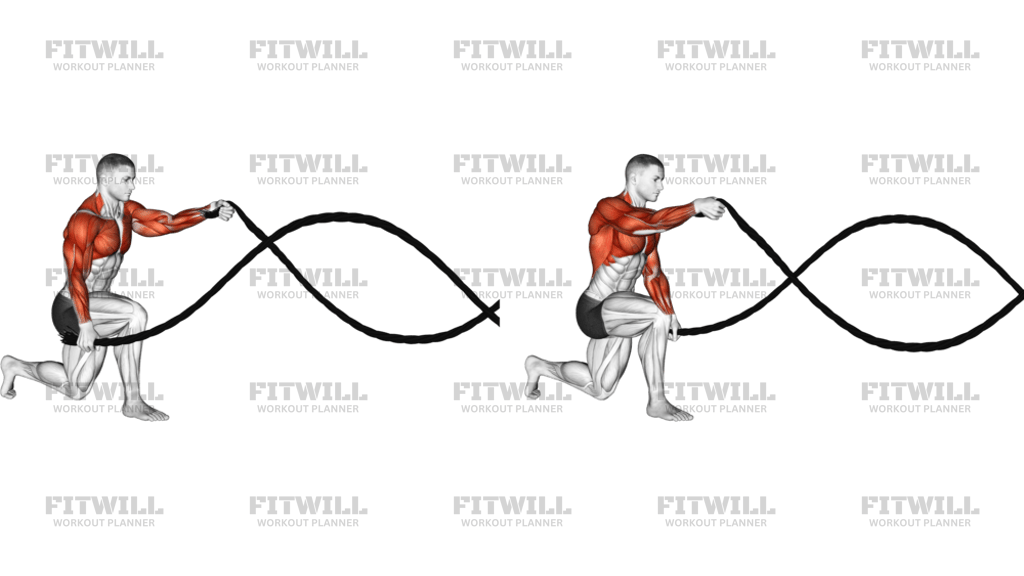
Battling Ropes Alternate Arms Squat
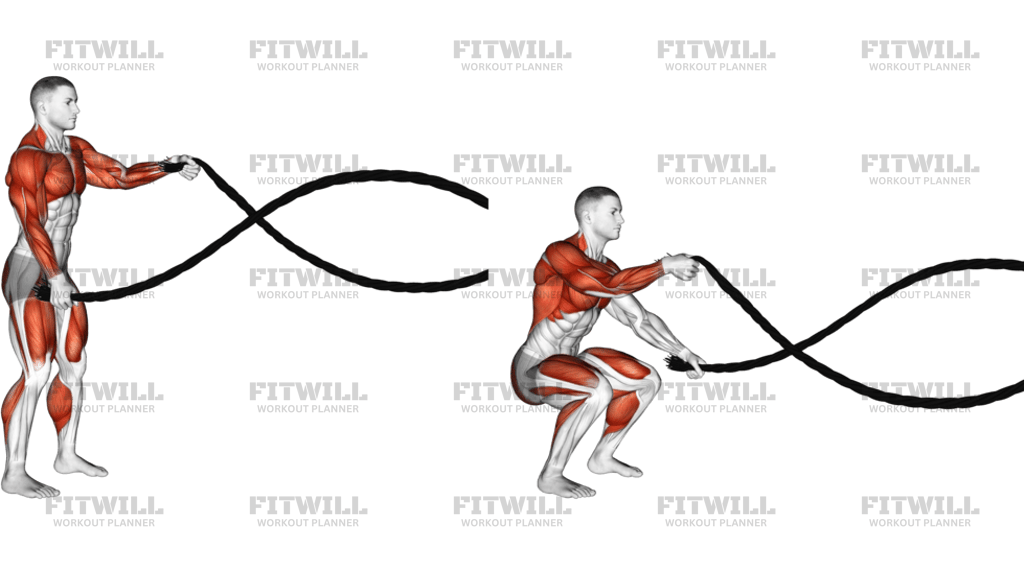
Battling Ropes Alternate Arms Squat is a full-body conditioning drill that pairs alternating rope waves with a squat. One arm drives the rope while the other controls the opposite side, and the legs, hips, trunk, and shoulders all have to stay organized as the body drops and rises. The exercise is useful when you want a movement that feels athletic and demanding without turning into a pure upper-body rope swing.
The rope should be anchored securely in front of you and set up so the handles stay in front of your body with light tension. The standing position matters because it gives you a clean wave pattern before the squat begins. From there, the goal is to keep the rope rhythm smooth while the lower body takes you down into a controlled squat, then back up to standing without losing posture or letting the torso twist.
A good repetition stays tall through the chest, controlled through the ribs, and grounded through the feet. As you lower, send the hips back and down rather than collapsing forward. Each alternating arm action should stay crisp and independent, with the shoulders relaxed instead of shrugged. If the rope waves become noisy or uneven, the squat is usually too deep, the stance is too narrow, or the pace is too fast for the current load.
This movement works well in conditioning circuits, athletic warm-ups, or finishers when you want more leg drive and trunk control than a standard rope wave. It also teaches bracing under fatigue, because the core has to resist rotation while the arms are moving asymmetrically. Use a range of motion you can repeat cleanly, and stop the set when the squat depth, wave pattern, or knee tracking starts to break down.
[ Workout Log & Planner ]
Put your next workout in Fitwill
Keep your plan and training log ready when you are.


Instructions
- Stand facing the anchored rope with your feet about shoulder-width apart and hold one handle in each hand with soft elbows.
- Step back until the rope has light tension and bring the handles in front of your hips and lower chest, keeping your chest tall.
- Set your shoulders down and back slightly, plant your whole foot, and brace your trunk before the first wave.
- Start the alternating arm pattern by driving one hand up as the other hand lowers, creating a clean wave on each side.
- As the ropes keep moving, sit your hips back and down into a squat while keeping your chest lifted and your knees tracking over your toes.
- Lower only as far as you can while keeping the waves even and your heels grounded.
- Drive through the floor to stand back up, keeping the alternating rope rhythm steady as you rise.
- Exhale sharply through the rope drive, then repeat for the planned reps or interval before easing the ropes down under control.
Tips & Tricks
- Choose a rope length and stance that let the handles travel without pulling you onto your toes.
- Keep the waves compact enough that you can hold the squat without your shoulders creeping toward your ears.
- If the rope pattern starts crossing over badly, slow the arm tempo before you shorten the squat.
- Let the hips move back first on the descent so the knees do not shoot forward and collapse the wave rhythm.
- Keep the ribs from flaring as you stand up; a hard back arch usually means the core has stopped controlling the drill.
- Use a squat depth you can repeat for the whole interval instead of chasing the lowest possible rep.
- Keep the hands in front of your body line rather than letting one arm drift far behind you.
- Stop the set when your heels lift, your torso twists, or the rope slaps turn into uncontrolled swings.
Frequently Asked Questions
What does Battling Ropes Alternate Arms Squat train?
It combines rope conditioning with a squat, so it challenges the shoulders, arms, core, glutes, and quads at the same time.
Can beginners perform this exercise?
Yes, but beginners should use a shallow squat and slower rope waves until the alternating pattern feels stable.
How low should I squat while waving the ropes?
Squat only as low as you can while keeping your heels down, chest up, and the wave pattern clean.
Should the alternating rope waves stay even on both sides?
They should look mostly even. If one side starts dominating, reduce speed and clean up the arm path.
How far should I stand from the anchor?
Stand far enough away that the rope has light tension at the start and the handles stay in front of your body when you squat.
Is this more of a strength move or a conditioning move?
It is mostly a conditioning and muscular-endurance drill, with a strong demand on leg drive and trunk control.
What is the most common mistake with this exercise?
People often let the squat collapse into a forward lean, which destroys the rope rhythm and shifts stress into the lower back.
How can I make Battling Ropes Alternate Arms Squat harder?
Use a deeper but still controlled squat, increase the wave speed, lengthen the work interval, or use a heavier rope.