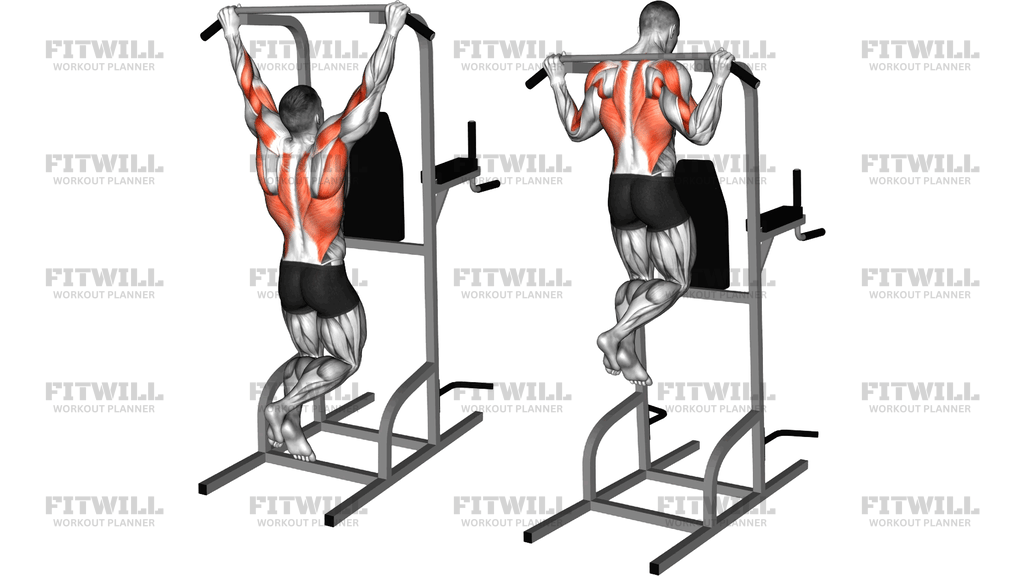
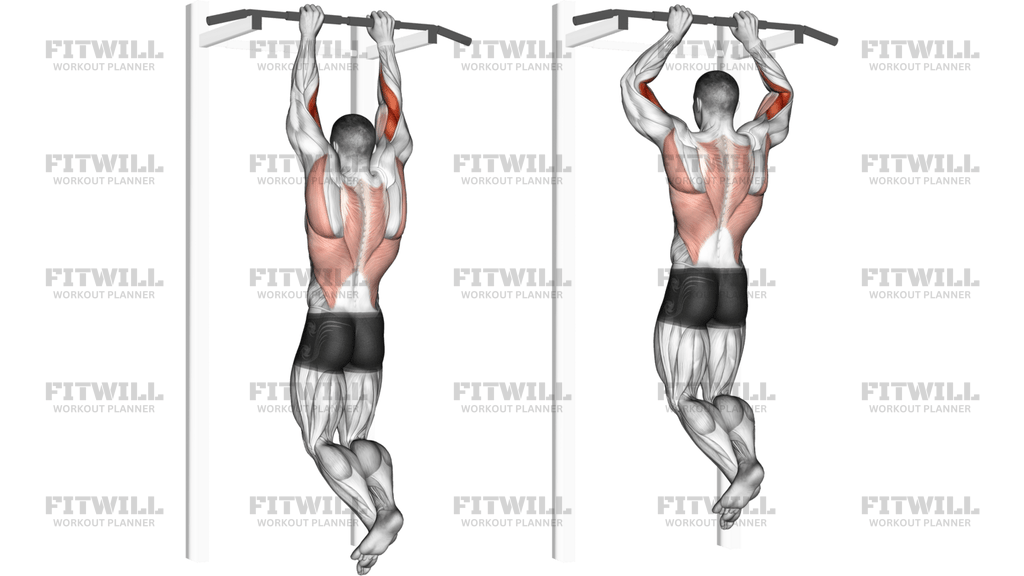
Pull-Up With Bent Knee Between Chairs
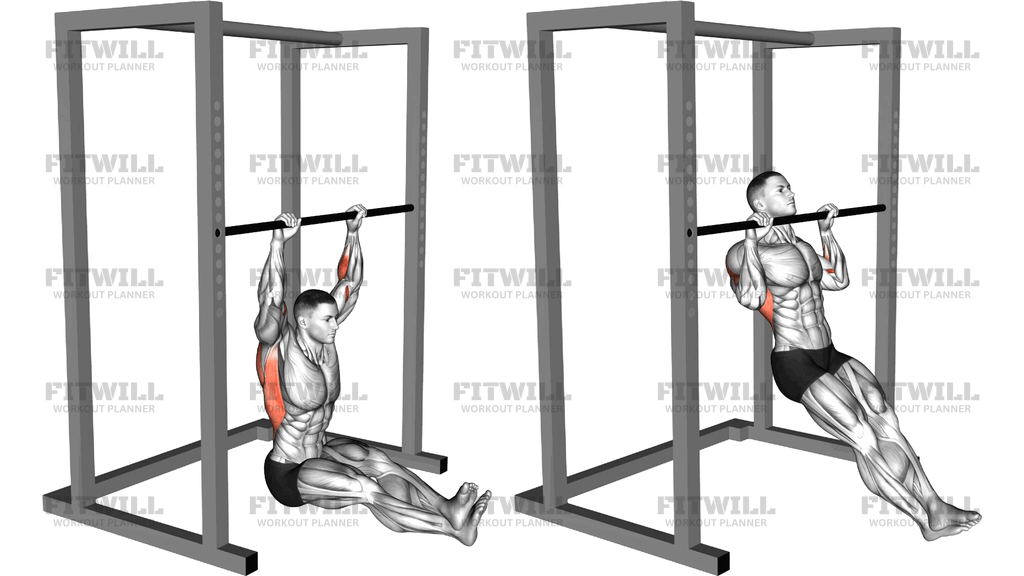
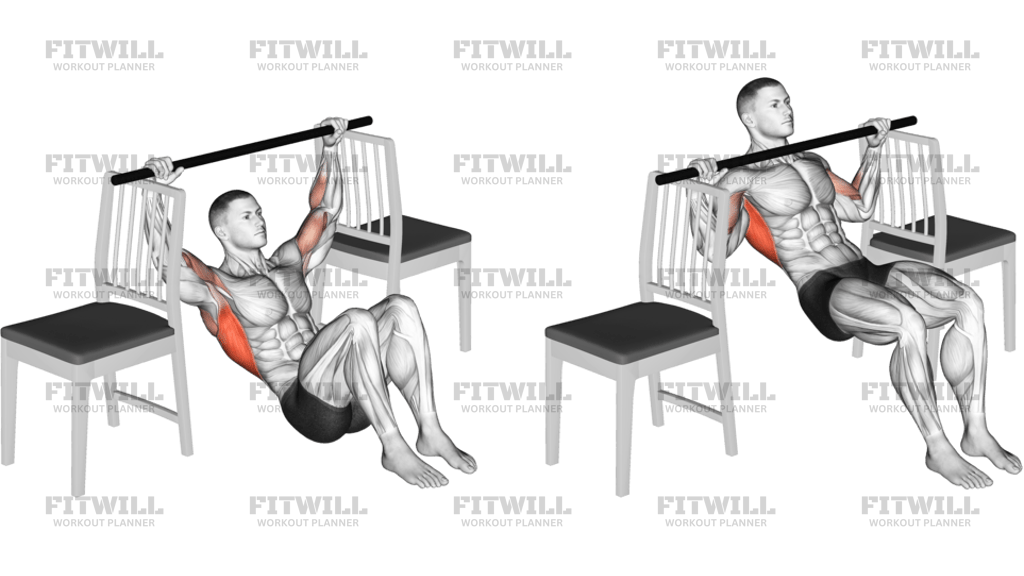
Pull-Up With Bent Knee Between Chairs is a chair-supported bodyweight pulling exercise that behaves more like a horizontal pull-up or inverted row than a hanging bar pull-up. The image shows the lifter lying back between two sturdy chairs with bent knees and both hands on a bar or rail bridged across the seats. That bent-knee position shortens the lever, makes the body easier to control, and helps keep the torso steady while the back does the work.
The exercise mainly trains the lats, upper back, biceps, and forearms, with the rear delts and trunk muscles helping you keep the chest lifted and the hips from sagging. In anatomy terms, the main work centers on the Latissimus dorsi, with help from Rhomboids, biceps brachii, and Forearm flexors. It is a practical bodyweight option when you want a rowing pattern without a machine, pull-up bar, or heavy external load.
The setup matters more here than in many other pulls because the equipment is furniture-based. The chairs must be stable, the bar must sit securely across them, and your grip should be even before you start the first rep. Once you are positioned under the bar, keep the ribs down, the neck long, and the knees bent so the torso stays braced instead of swinging.
Each repetition should begin from a controlled hang with the shoulders set, then finish with the chest traveling toward the bar by driving the elbows down and back. The goal is not to yank your body upward; it is to pull smoothly until the upper chest reaches the bar or as close as you can get without shrugging. Lower under control and reset your shoulder position before the next rep.
This movement works well in home training, accessory work, or beginner pull-strength progressions because the knee bend can make the position manageable while still challenging the back. It is also easy to progress by straightening the legs, elevating the feet, slowing the lowering phase, or adding a pause at the top. If the chairs shift, the bar rolls, or your shoulders start creeping toward your ears, stop the set and reset the setup before continuing.
Fitwill
Log Workouts, Track Progress & Build Strength.
Achieve more with Fitwill: explore over 9600 exercises with images and videos, access built-in and custom workouts, perfect for both gym and home sessions, and see real results.
Start your journey. Download today!




Instructions
- Place two sturdy chairs shoulder-width apart and bridge a secure bar or rail across the seat backs or top rails so it cannot roll.
- Sit between the chairs, lie back under the bar, and grasp it with an overhand grip slightly wider than shoulder width.
- Bend your knees and plant your heels or feet flat so your lower body is stable before you pull.
- Let your arms straighten fully, then set your shoulders down and away from your ears without losing control of the bar.
- Brace your ribs and abs so your torso stays long instead of arching as you start the rep.
- Pull your chest toward the bar by driving your elbows down and back.
- Keep your body in one controlled line from shoulders to knees as you rise.
- Touch the upper chest to the bar or come as high as you can without shrugging, then pause briefly.
- Lower yourself slowly until the arms are straight again and the shoulder blades open under control.
Tips & Tricks
- Test the chairs before every set; if one slides, the setup is not safe enough for pulling reps.
- Keep the bar seated flat across both chairs so it cannot tip forward when you load one side harder than the other.
- Use more knee bend and keep the feet closer to your hips to make the row easier; straighten the legs to make it harder.
- Pull your chest to the bar instead of reaching your chin forward, which helps keep the neck neutral and the shoulders from shrugging.
- Start each rep by setting the shoulder blades down first, then finish with the elbows driving behind the torso.
- Lower with a slow, even tempo so the last third of the descent does not collapse into the floor or chair legs.
- Keep the ribs stacked over the pelvis; if your low back arches hard, shorten the range or bring the feet in closer.
- Stop the set if the bar twists in your hands or the chairs start to spread apart under load.
Frequently Asked Questions
What muscles does Pull-Up With Bent Knee Between Chairs work most?
The main emphasis is on the lats and upper back, with help from the biceps, forearms, and rear shoulders.
Is this really a pull-up or more of a row?
It is more of a horizontal pull-up or inverted row because your body is supported between the chairs instead of hanging from a high bar.
Why are the knees bent in this version?
Bent knees shorten the lever, make the body easier to control, and let you keep the torso steadier under the bar.
How high should I pull on each rep?
Pull until your upper chest reaches the bar or until you can no longer rise without shrugging or twisting.
Can a beginner use this exercise?
Yes, if the chairs are stable and the knees stay bent enough to keep the position controlled.
What is the biggest safety issue with this movement?
The chairs or bar can shift, so you should only use stable furniture and stop immediately if the setup moves.
What if I want to make it harder?
Straighten the legs more, slow the lowering phase, add a pause at the top, or elevate the feet if the setup allows it.
Where should I feel the work most?
You should feel the effort in the sides of the back and between the shoulder blades, not in the neck or low back.