Bodyweight Row In Doorway
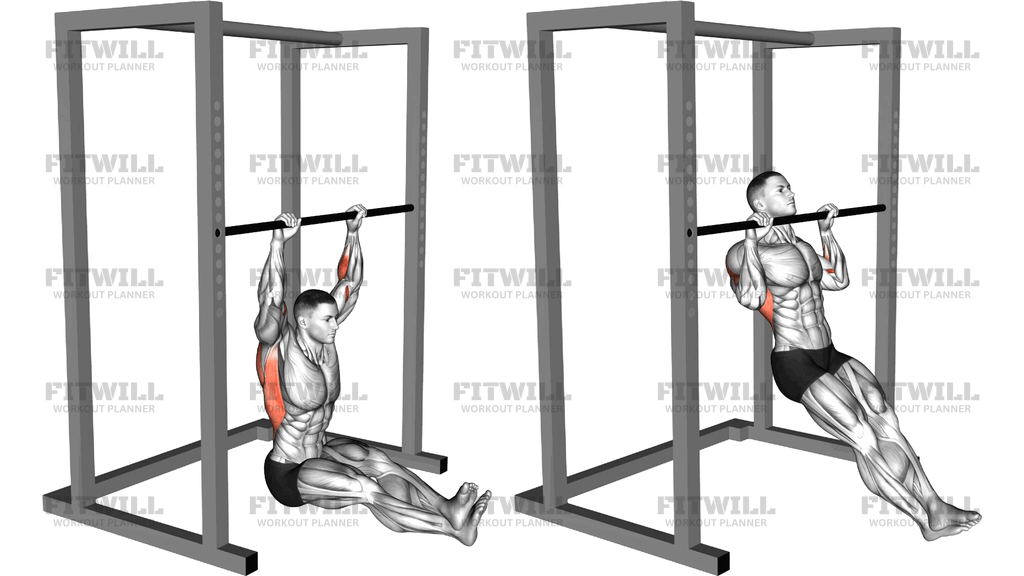
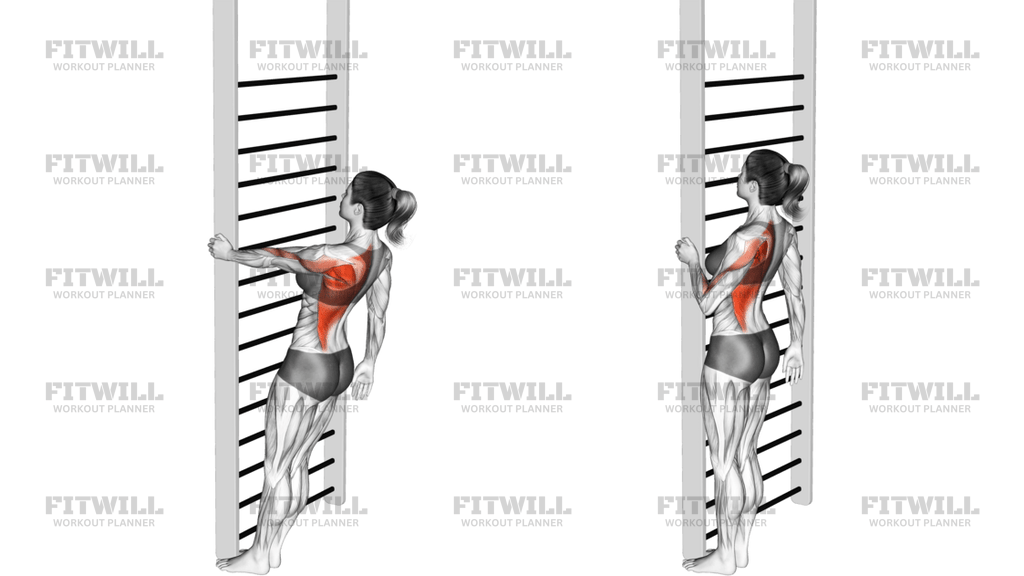
Bodyweight Row In Doorway is a standing horizontal pull that uses a sturdy doorway as the anchor and your own body weight as the resistance. With both hands fixed to the frame and the feet planted on the floor, you lean back, keep the torso long, and row your chest toward the doorway. That makes it a simple but effective way to train pulling strength without a bar, bench, or machine.
The main job of the movement falls to the lats, with the upper back, biceps, rear shoulders, and forearms helping to hold position and finish each rep cleanly. In anatomy terms, the primary work centers on the latissimus dorsi, with assistance from the rhomboids, biceps brachii, and forearm flexors. Because the body is at an angle, the exact difficulty changes with foot placement: the farther the feet are from the doorway, the more of your body weight you must control.
The setup matters more here than in many other rows. A solid grip on the inner edges of the frame, a straight wrist, and a braced torso keep the pull honest and keep the shoulders from drifting into a shrug. You should feel tension across the back before the first rep starts, not after you have already yanked yourself forward. The goal is a controlled lean, a smooth pull, and a steady return, all while the body stays in one long line.
Use a rowing path that brings the elbows back and down as the chest moves toward the doorway. Do not twist the hips, kick the legs, or turn the pull into a half-standing swing. The top of the rep should feel like a hard squeeze between the shoulder blades and through the sides of the back, followed by a slow return to straight arms. A brief pause at the peak is useful if you want to make the exercise stricter and reduce momentum.
This exercise fits well as accessory work for back development, posture-focused training, or a home session where equipment is limited. It is also useful as a regression for athletes who need a pulling pattern but cannot yet handle a full inverted row or pull-up variation. Keep the doorway stable, adjust the lean to match your current strength, and stop the set if the frame shifts, your shoulders climb, or the lower back starts doing the work instead of the lats.
[ Workout Log & Planner ]
Put your next workout in Fitwill
Keep your plan and training log ready when you are.


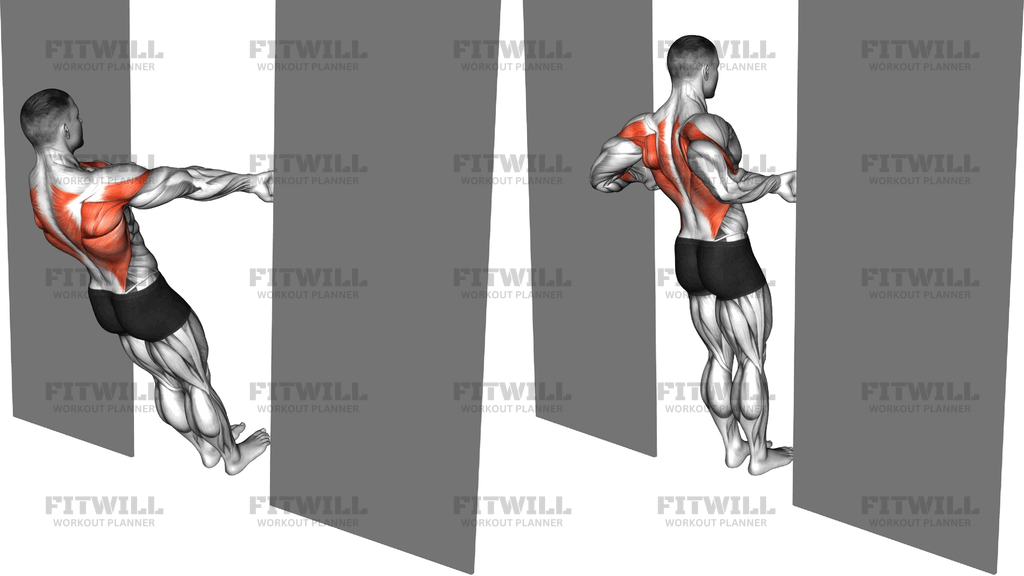
Instructions
- Stand in a sturdy doorway and grasp the inner edges of the frame at about lower-chest height, with your palms facing each other and your wrists straight.
- Walk your feet forward until your body leans back and your arms are straight, keeping a long line from your head through your hips to your heels.
- Plant both feet flat on the floor, or stagger one foot slightly behind the other if you need more balance.
- Brace your abs and glutes before the pull so your ribs stay down and your lower back does not arch.
- Start each rep with your shoulders set down away from your ears and tension already in the doorway.
- Pull your chest toward the frame by driving your elbows back and down, not by shrugging your shoulders.
- Squeeze your shoulder blades as you reach the top, then keep the neck long and the torso straight.
- Lower yourself slowly until your arms are straight again, keeping control through the entire return.
- Exhale as you pull and reset your body position before the next repetition.
Tips & Tricks
- Use only a solid doorway that does not swing, flex, or slide when you load it.
- The farther your feet are from the door, the harder the row becomes.
- Keep your wrists neutral by holding the frame, not by bending the hands backward.
- Think about driving the elbows toward your ribs so the lats stay in charge.
- If your shoulders start to shrug, shorten the range or reduce the lean.
- Keep your heels heavy and your ribs stacked so the lower back does not take over.
- Pause for a beat at the top if you want to remove momentum and make each rep stricter.
- Use a smooth lowering phase instead of dropping back to the start.
- Stop the set if the doorway shifts or the grip feels unstable.
Frequently Asked Questions
What muscles do doorway rows work most?
They mainly train the lats and upper back, with help from the biceps, rear shoulders, and forearms.
Where should my hands go on the doorway?
Place them on the inner edges of a sturdy frame around lower-chest height so your wrists stay straight and the pull feels even.
How do I make the exercise harder?
Step your feet farther from the door so your body angle is lower and more of your weight has to be pulled.
How do I make it easier?
Stand closer to the doorway and keep your torso more upright so less body weight is being pulled.
What is the most common mistake?
Most people shrug their shoulders or swing their hips instead of keeping a straight line and rowing the chest to the frame.
Should I feel this in my biceps too?
Yes, the biceps assist the pull, but the movement should still feel anchored in the back and not just in the arms.
Is this safe for any doorway?
No. Only use a doorway that is solid, fixed, and able to handle your body weight without moving.
Can beginners use this row?
Yes, it is a good beginner pulling drill if you keep the lean modest and the tempo controlled.