Resistance Band Shoulder Stretch Behind The Back
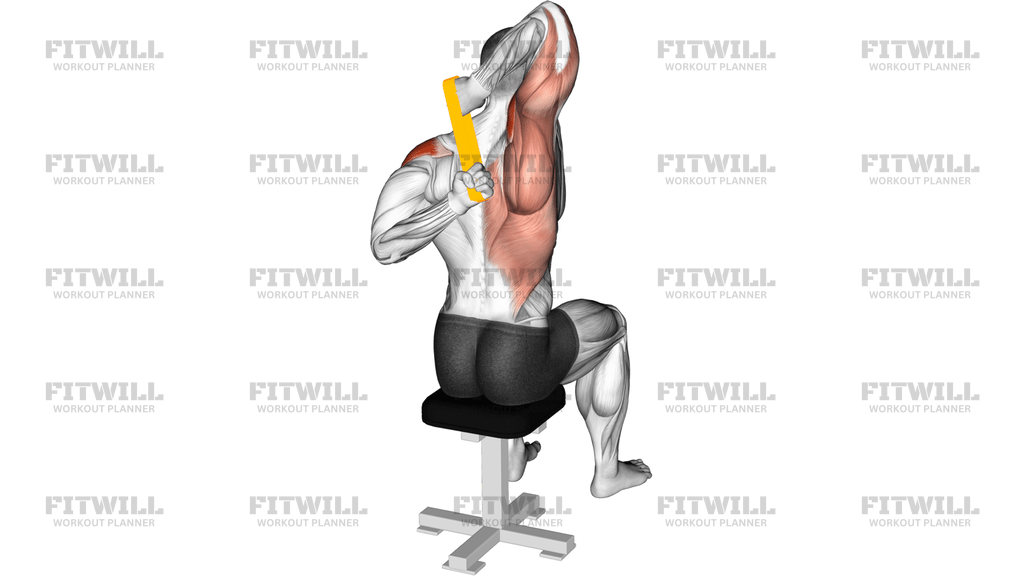
Resistance Band Shoulder Stretch Behind The Back is a seated mobility drill that uses a light band to create a controlled opening through the back of the shoulder, upper arm, and upper back. It is most useful when your shoulders feel stiff after pressing, overhead work, or long periods of sitting, because the band gives you a gentle way to increase range without forcing the joint.
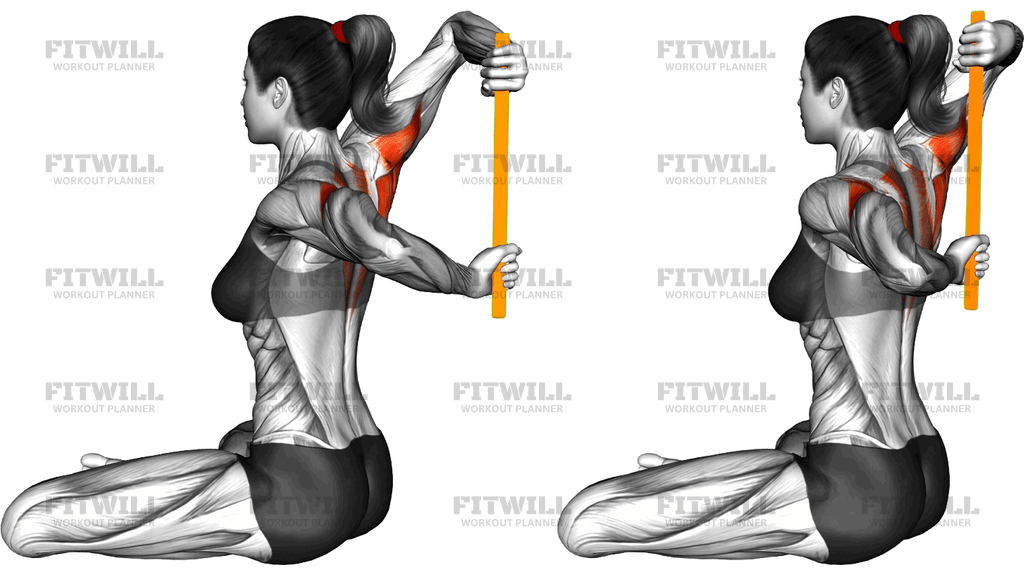
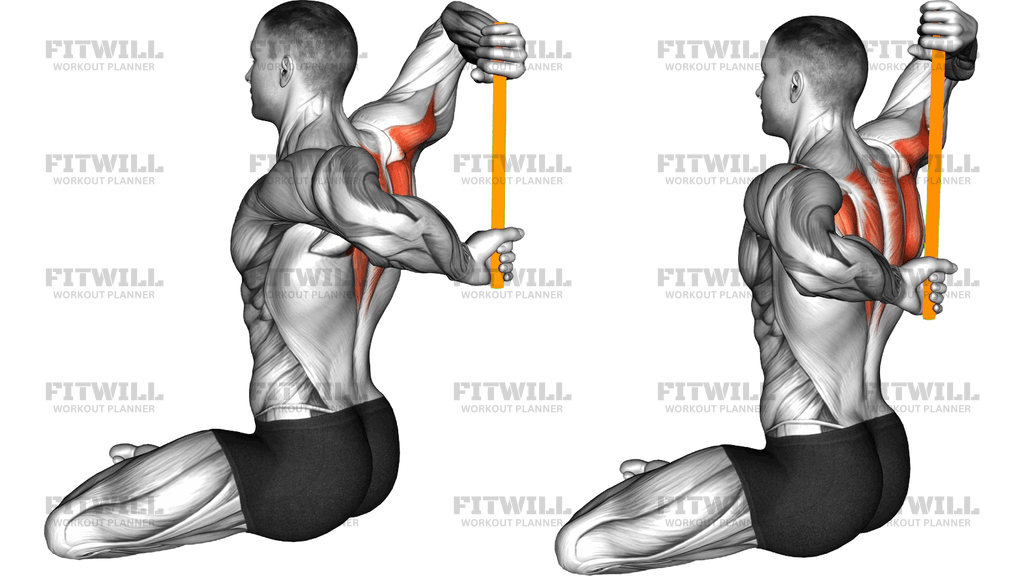
The setup matters more than the pull itself. Sit tall on a bench or firm seat with your feet planted, ribs stacked over your pelvis, and the neck long. One arm reaches overhead and bends so the hand travels down behind the head, while the other hand stays lower behind the torso to manage the band and adjust tension. The goal is to feel a stretch in the rear shoulder and triceps, not a pinch in the front of the joint.
As you settle into the stretch, use a small pull to create traction and then let the breathing do most of the work. Exhale slowly, soften the ribs, and let the shoulder blade glide without shrugging toward the ear. If the band is pulling you into a twist, lean less and reduce the tension; the stretch should stay organized through the torso instead of turning into a back arch or a shoulder shrug.
This exercise is a good fit for warm-ups that need a controlled shoulder opening, cooldowns after upper-body training, or mobility blocks when one side feels tighter than the other. It can be performed with very little tension, making it beginner-friendly, but it should still feel deliberate and precise. Stop short of sharp pain or numbness, and keep the range conservative if the shoulder has been irritated by heavy pressing, hanging work, or repetitive overhead loading.
[ Workout Log & Planner ]
Put your next workout in Fitwill
Keep your plan and training log ready when you are.


Instructions
- Sit upright on a flat bench or firm seat with both feet planted and your torso stacked over your hips.
- Hold the resistance band so one hand can stay low behind your waist while the working arm reaches overhead.
- Bend the working elbow and let that hand travel down behind your head toward the upper back.
- Keep the elbow pointing up and avoid letting the ribs flare or the lower back arch as you set the stretch.
- Gently pull the lower hand to create a light stretch through the back of the shoulder and upper arm.
- Exhale slowly and relax into the end range instead of forcing the shoulder farther with your hands.
- Keep the neck long and the shoulder away from the ear while you hold the position for a brief pause.
- Release the tension slowly, bring the arm back up, and repeat on the other side before resetting.
- Use the same controlled setup for each side so the stretch stays even and deliberate.
Tips & Tricks
- The best sensation is a broad pull through the rear shoulder and triceps; a front-of-shoulder pinch means the elbow is drifting or the range is too deep.
- Keep the ribs stacked over the pelvis so the band does not turn the stretch into a low-back arch.
- Use only enough band tension to feel traction; this is a mobility drill, not a hard pull.
- If one side is much tighter, shorten the hold on that side and avoid chasing the same end range on both arms.
- Let the shoulder blade glide instead of shrugging toward the ear as you increase tension.
- A slow exhale usually lets the arm settle farther than a forceful tug from the hands.
- If the band is awkward to manage, switch to a lighter strap or towel so the stretch stays smooth.
- Do not bounce at the end range; brief still holds work better for this shoulder position.
- Stop immediately if you feel numbness, tingling, or a sharp catch in the front of the shoulder.
Frequently Asked Questions
What does Resistance Band Shoulder Stretch Behind The Back work the most?
It mainly targets the back of the shoulder, triceps, and the tissues around the upper back and shoulder blade. It should feel like a stretch, not a strength move.
Do I need a resistance band for this stretch?
A band is helpful because it lets you fine-tune the pull, but a strap or towel can work if you need a gentler version.
Where should I feel the stretch in Resistance Band Shoulder Stretch Behind The Back?
Most people feel it in the rear shoulder and upper arm, with some opening across the upper back. If you feel a pinch in the front of the shoulder, back off the range.
Is Resistance Band Shoulder Stretch Behind The Back good before bench press?
Yes, as a light warm-up it can help restore shoulder comfort before pressing. Keep the hold brief and follow it with specific bench warm-up sets.
What is the most common mistake with this stretch?
Pulling so hard that the ribs flare and the lower back arches. That usually turns the stretch into compensation instead of a clean shoulder opening.
Can beginners do Resistance Band Shoulder Stretch Behind The Back?
Yes. Beginners should keep the band tension light and stay well short of any sharp or pinchy feeling.
Why does one side feel tighter than the other?
Shoulder mobility, pressing volume, and daily posture often create asymmetry. Start with the tighter side, use less tension, and let the range build gradually.
When should I stop doing this stretch?
Stop if you feel numbness, tingling, or a sharp pain in the shoulder. A mild pulling sensation is normal, but joint pain is not.