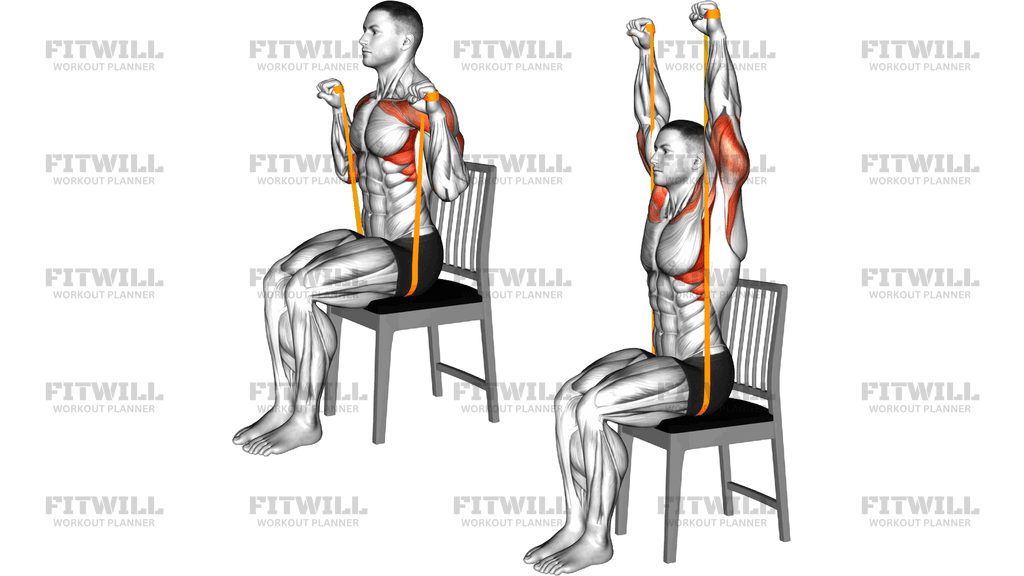
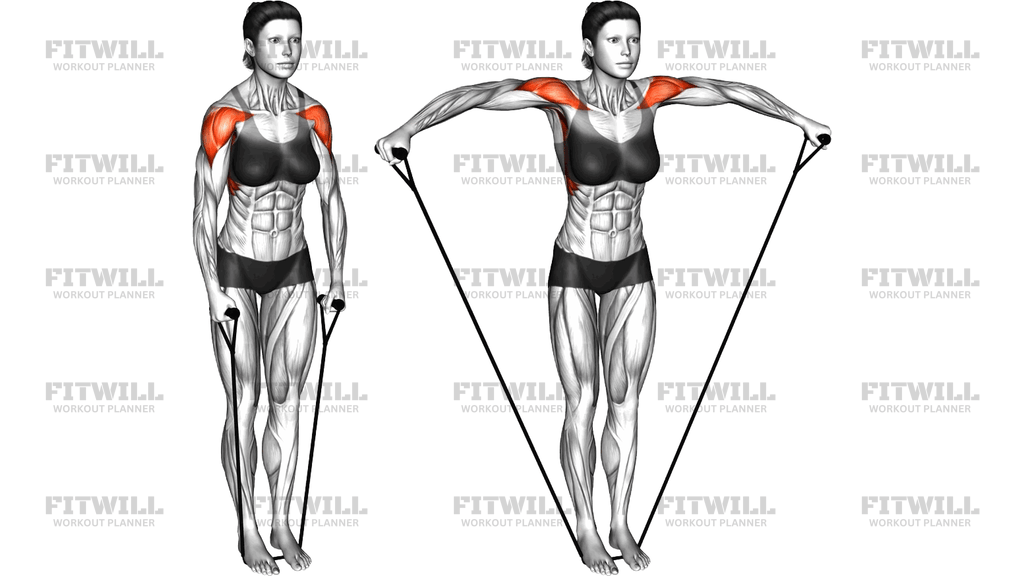
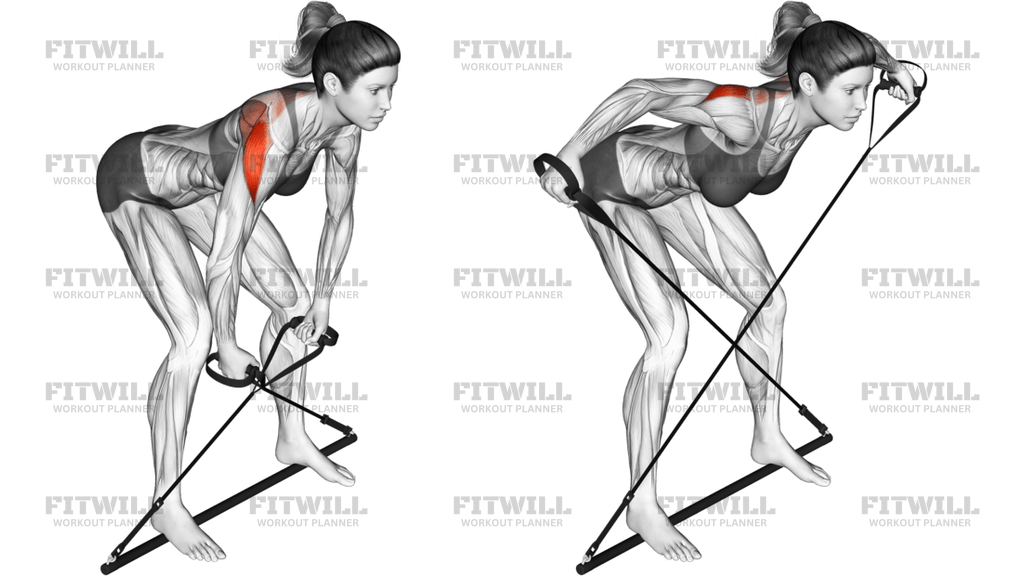
Resistance Band Overhead Shoulder Press
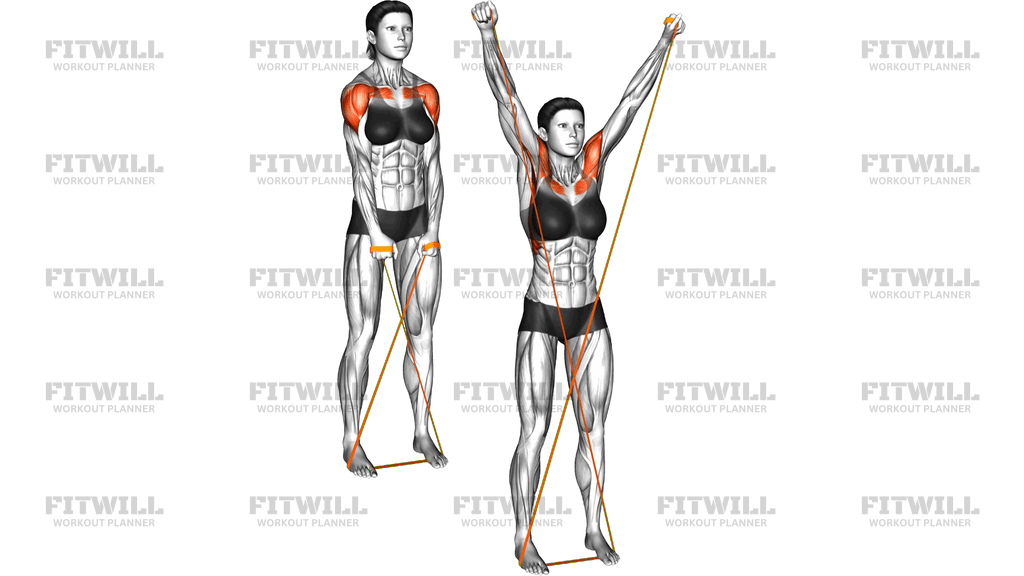
Resistance Band Overhead Shoulder Press is a standing shoulder-strength exercise performed with a resistance band anchored under both feet and pressed from shoulder height to full overhead lockout. It trains the delts directly while asking the upper back, traps, and triceps to stabilize the shoulders and finish the press cleanly. Because the band gets harder as your hands rise, the top half of the rep usually feels the most demanding, which makes control and body position especially important.
The setup determines whether this feels like a smooth vertical press or a shaky full-body heave. Stand on the band with feet about hip-width apart, hold the handles or band ends at shoulder level, and stack the wrists over the elbows before you start. Keep the ribs down, pelvis neutral, and weight centered through both feet so the band tension loads the shoulders instead of pulling you backward or into a low-back arch.
From the bottom position, press the band up and slightly back so the arms finish beside the ears without shrugging the shoulders toward the neck. At the top, the elbows should extend fully but the ribs should stay stacked, not flared. Lower the handles under control until they return to shoulder height and the band still has steady tension; do not let it snap you into the start.
This exercise is useful as a home-friendly shoulder builder, as accessory work after bigger pressing lifts, or as a controlled option when you want shoulder volume without a barbell or machine. It can also help reinforce overhead mechanics because each rep teaches you to keep the torso quiet while the arms travel overhead. Light to moderate resistance is usually enough to make the set effective; the point is a clean press path, not a forced range.
Treat the movement as a shoulder press first and a balance drill second. If you lean back, flare your ribs, or lose the line of the wrists over the elbows, the shoulders will stop doing the work they should. Keep the neck long, finish with the biceps near the ears, and stop the set if the band starts pulling you out of position or if the front of the shoulder pinches at lockout.
[ Workout Log & Planner ]
Put your next workout in Fitwill
Keep your plan and training log ready when you are.


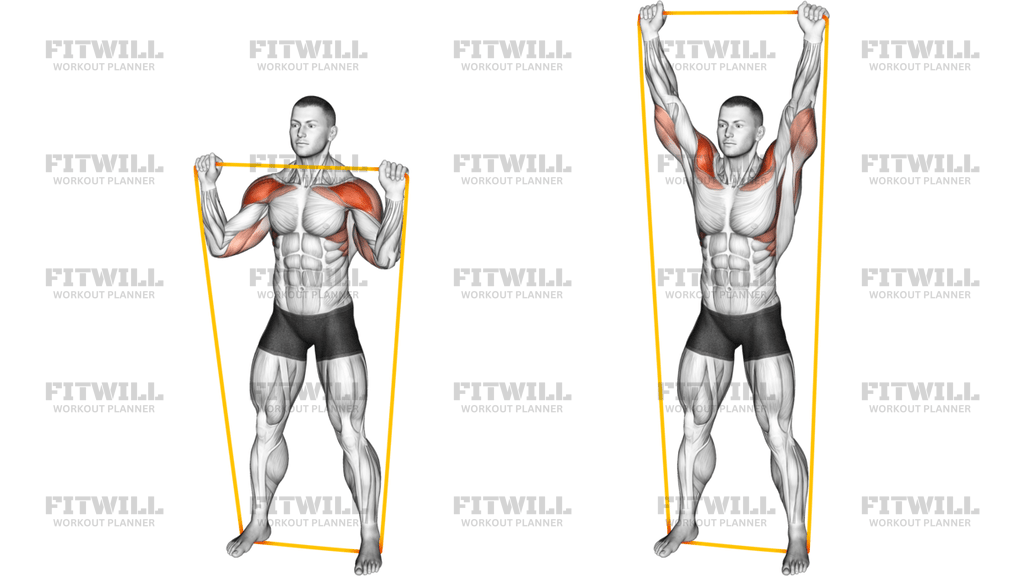
Instructions
- Stand on the middle of the resistance band with feet about hip-width apart and hold one handle or band end in each hand at shoulder height.
- Set your wrists over your elbows, turn your palms forward, and keep your elbows slightly in front of the torso rather than flared wide.
- Brace your abs, stack your ribs over your pelvis, and keep your weight balanced from heel to midfoot before the first press.
- Press both hands straight up and slightly back until your arms are fully extended beside your ears.
- Let the shoulders rotate upward naturally at the top, but do not shrug hard or lean backward to finish the rep.
- Pause briefly overhead with the band under tension and the neck long.
- Lower the handles slowly back to shoulder height, keeping the band moving in a smooth vertical line.
- Reset the shoulders and breathe in at the bottom before starting the next repetition.
Tips & Tricks
- Start with enough band tension that the handles are already pulling up on your hands at shoulder height; a slack start makes the first inch sloppy.
- Keep the wrists stacked over the elbows on the way up so the press stays shoulder-driven instead of turning into a bent-wrist grind.
- If the band drifts forward in front of your face, bring the hands slightly back as they rise so the finish stays beside the ears.
- Use a light knee bend and firm feet to keep the band from tipping you backward as the resistance increases overhead.
- Do not turn the rep into a standing incline press by arching the lower back; the ribs should stay down through the whole set.
- A slightly narrower stance usually makes the band path cleaner because both hands can travel evenly over the center of the feet.
- Lower the handles under control for at least as long as the press takes; the eccentric is where the shoulders learn to stay organized.
- Stop the set before the top position turns into a neck shrug or the band starts pulling one arm higher than the other.
Frequently Asked Questions
What does the Resistance Band Overhead Shoulder Press train most?
It primarily trains the delts, especially the front and middle portions, while the triceps and upper back help finish and stabilize the press.
Where should the band start on this exercise?
The band should run under both feet, with the hands starting around shoulder height and the elbows slightly in front of the body.
How do I keep the press path clean with a band?
Press up and slightly back so the hands finish beside the ears instead of drifting forward or out in front of the shoulders.
Why does my lower back want to arch during the press?
Usually the band is too heavy or the ribs are flaring to create extra range. Reduce the tension and keep the pelvis and ribcage stacked.
Should my shoulders shrug at the top?
A small amount of upward rotation is normal, but the shoulders should not jam into your neck. Finish tall without cranking the traps hard.
Can beginners use this version of the shoulder press?
Yes. It is beginner-friendly if the band is light enough to control and the first few reps can be done without leaning back.
What is the most common mistake with the band handles?
Letting the wrists bend back or the elbows flare out. Keep the wrists stacked and the elbows tracking in a controlled line under the hands.
How heavy should the band feel?
Choose a band that challenges the top half of the rep but still lets you lower each rep smoothly to shoulder height.
Can I use this instead of a barbell overhead press?
Yes, especially for higher-rep shoulder work or home training, but the resistance curve is different so the top of the movement will usually feel harder.
When should I stop the set?
Stop when the band starts pulling you into a lean, one arm finishes noticeably higher than the other, or the front of the shoulder starts to pinch.