Band High Fly
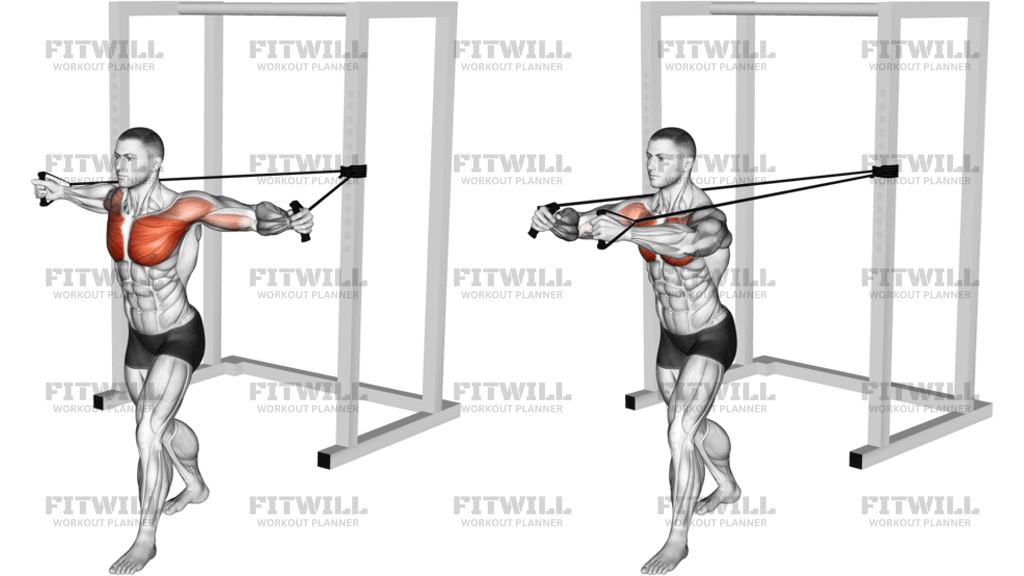
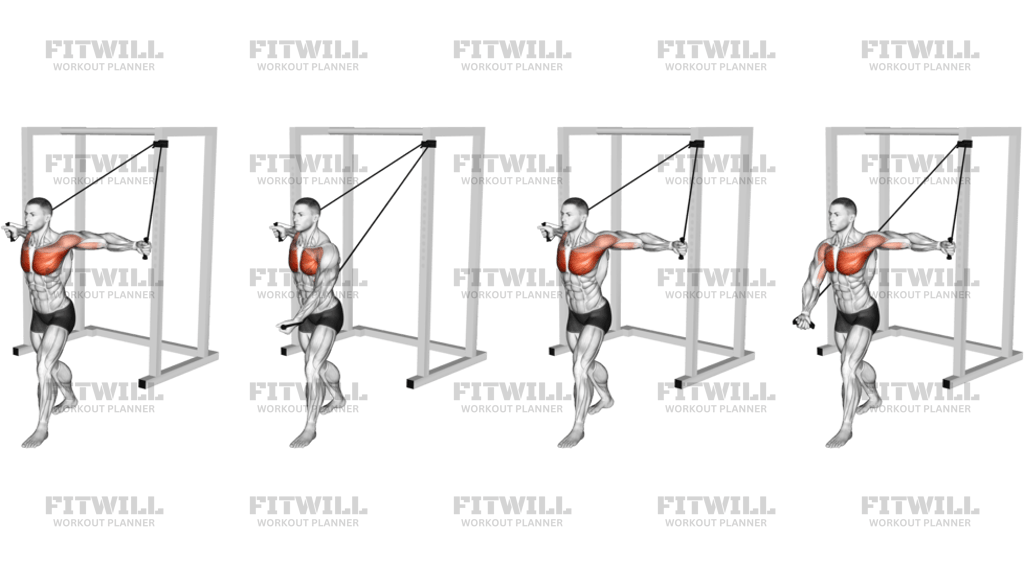
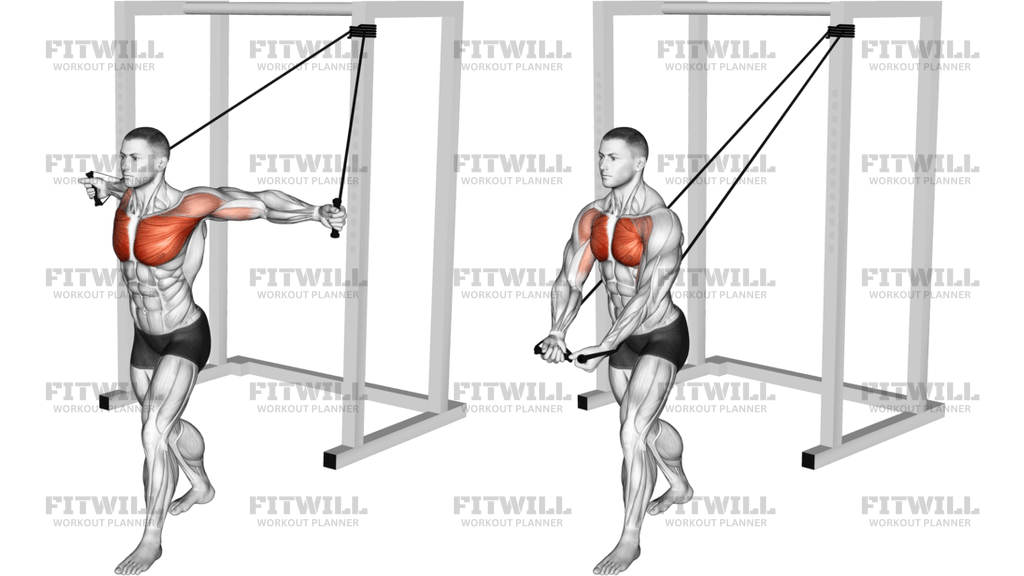
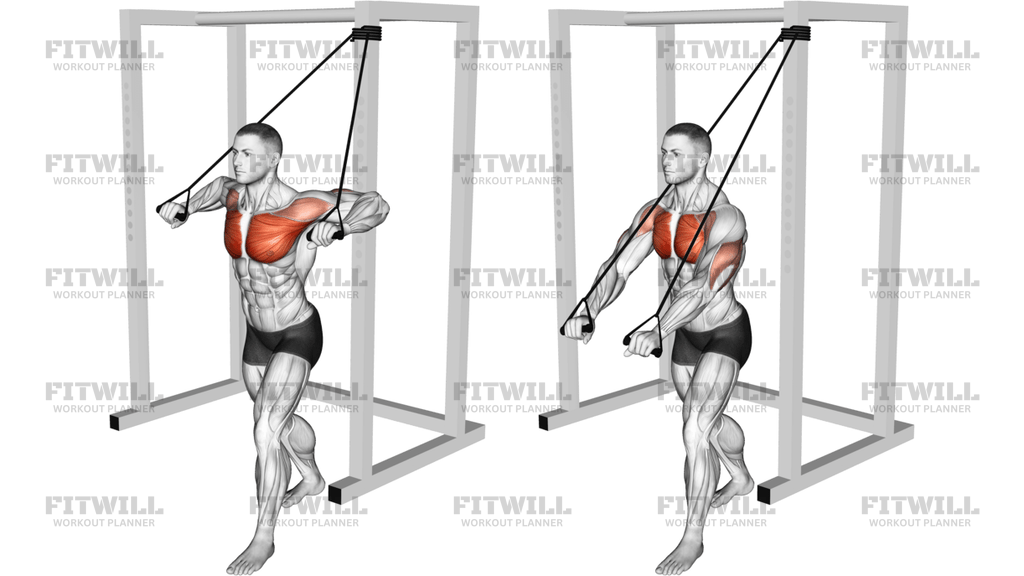
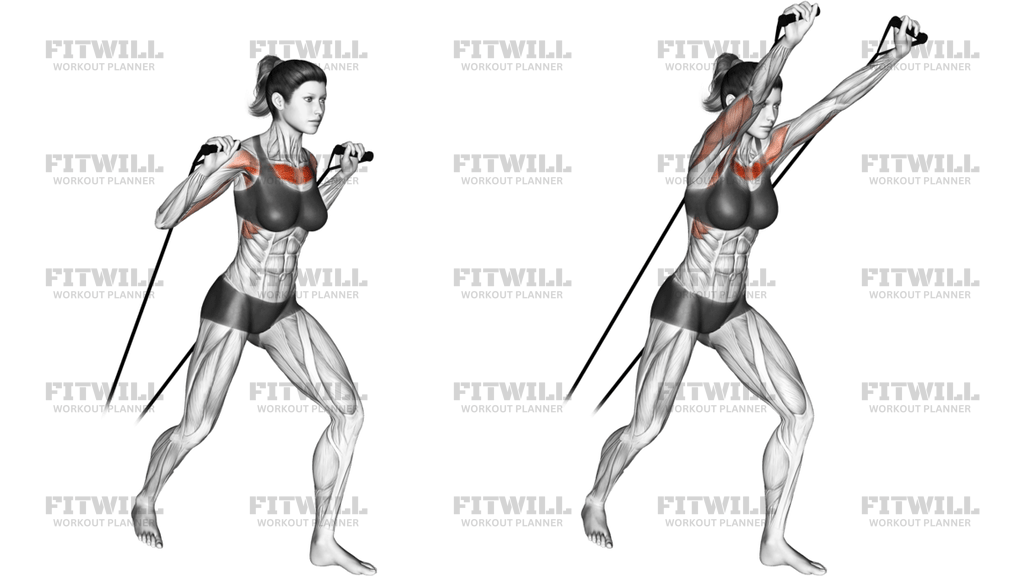
Band High Fly is a standing band fly for the chest that keeps tension on the pecs through a wide horizontal arc. With the band anchored at shoulder height, you face away from the anchor, step forward to create tension, and open the arms out before bringing the hands back together in front of the chest. The movement is simple, but the setup matters because band tension changes quickly as you move, and a small change in stance or anchor height can make the exercise feel very different.
The main job is horizontal adduction of the arms, so the pectoralis major does most of the work while the front delts, triceps, and trunk help you stay organized. In practical terms, this is a chest isolation pattern with constant resistance, which makes it useful for warm-ups, accessory work, higher-rep hypertrophy sets, or finishing a pressing session without loading the joints as heavily as a machine or dumbbell fly.
Good reps start before the first pull. Step far enough from the anchor that the band is already under light tension with your hands in front of your chest, then keep a soft bend in the elbows and a tall posture. If you lean back, shrug, or let the ribs flare, the band quickly turns the exercise into a shoulder-dominant tug instead of a chest-focused fly. The cleanest version feels like the upper arms sweep out and back around the ribcage while the hands stay on a smooth arc.
On each rep, open under control until you feel the chest stretch without forcing the shoulders too far behind the body, then bring the hands back together with the pecs doing the work, not momentum. A short pause at the end of the squeeze helps you feel the contraction and keeps the band from snapping you back to the start. Breathing should stay calm and predictable so the torso stays stacked and the neck relaxed.
Use lighter resistance than you would for a press, especially if you are learning the movement or using it after heavy benching. The goal is clean scapular control, smooth tension, and a repeatable chest contraction rather than a large range or a dramatic load. When done well, Band High Fly is a compact, joint-friendly way to train the chest with very clear muscle feedback.
[ Workout Log & Planner ]
Put your next workout in Fitwill
Keep your plan and training log ready when you are.


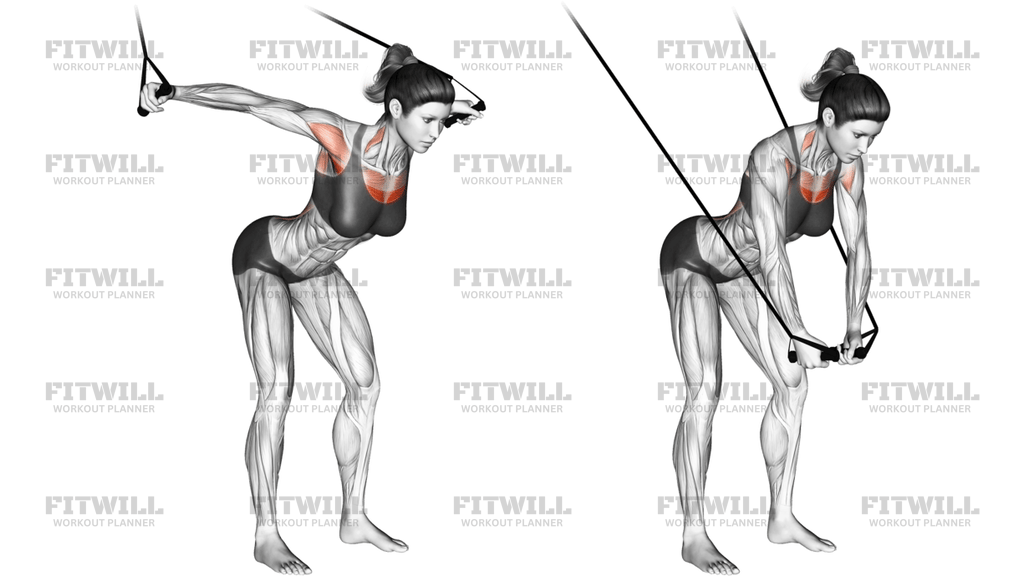
Instructions
- Anchor the band at shoulder height behind you and stand facing away from the anchor with a split or shoulder-width stance.
- Hold the handles in front of your chest with a slight bend in your elbows and enough step-out to create light tension before the first rep.
- Set your ribs down, stack your head over your chest, and keep your shoulders relaxed instead of shrugged up.
- Open your arms out in a wide arc until your upper arms are near shoulder level and you feel a stretch across the chest.
- Keep the elbows softly bent and fixed while the hands travel around the ribcage rather than turning the rep into a press.
- Squeeze the hands back together in front of the chest by contracting the pecs, not by snapping the band or leaning forward.
- Pause briefly in the front squeeze while keeping tension on the band.
- Return to the start slowly and stop before the band loses control or your shoulders roll forward.
- Exhale on the fly, inhale on the return, and repeat for the planned reps.
Tips & Tricks
- Use a band that lets you keep tension from the start without pulling your shoulders forward.
- A small elbow bend is enough; locking the arms out usually shifts the work away from the chest.
- If your shoulders shrug at the top, shorten the range or step closer to the anchor.
- Keep the sternum from popping up as you close the hands or the rep becomes a rib flare and shoulder move.
- Think about wrapping the arms around the chest instead of sweeping the hands straight back like a reverse fly.
- A slow return matters more than a hard squeeze because the band gets easier as you come back in.
- Keep the wrists neutral so the handles stay stacked over the forearms instead of bending back.
- Stop the set when the torso starts rocking or the band starts yanking you out of position.
Frequently Asked Questions
What muscle does Band High Fly target most?
The chest, especially the pectoralis major, does most of the work. The front delts and triceps help, but they should not take over.
Can beginners perform this exercise?
Yes. Beginners usually do best with a light band and a shorter range so they can learn the chest squeeze without losing posture.
Where should the band be anchored?
Use a stable anchor at about shoulder height behind you. That keeps the line of pull clean and makes the fly feel smooth instead of jerky.
How do I keep this from turning into a shoulder exercise?
Keep the elbows softly bent, keep the ribs stacked, and think about squeezing the chest to bring the hands together. If you shrug or lean back, the shoulders take over.
What range of motion should I use?
Open only as far as you can control without the shoulders drifting behind the torso or the band pulling you out of position.
Is Band High Fly the same as a chest fly?
It is a standing fly variation with a band. The feel is similar to a cable fly, but the resistance increases more as you close the hands.
What is the most common mistake?
Using too much band tension and turning the rep into a swing. If your torso rocks or the band snaps back, the load is too heavy.
Where does this fit in a workout?
It works well after pressing, during a chest accessory block, or as a light warm-up to wake up the pecs before heavier work.