Elevanted Inverted Underhand Grip Row Between 3 Chairs
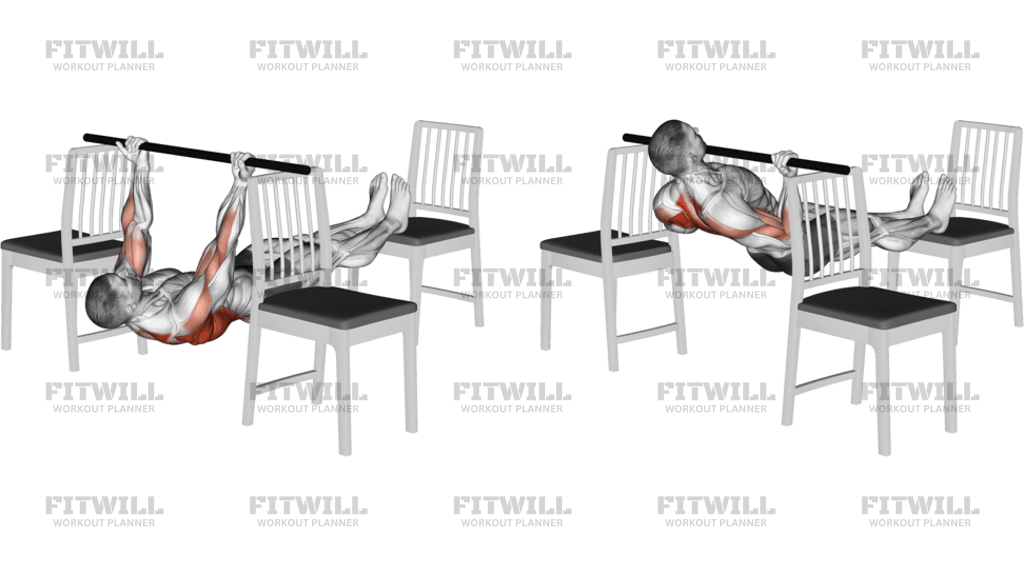
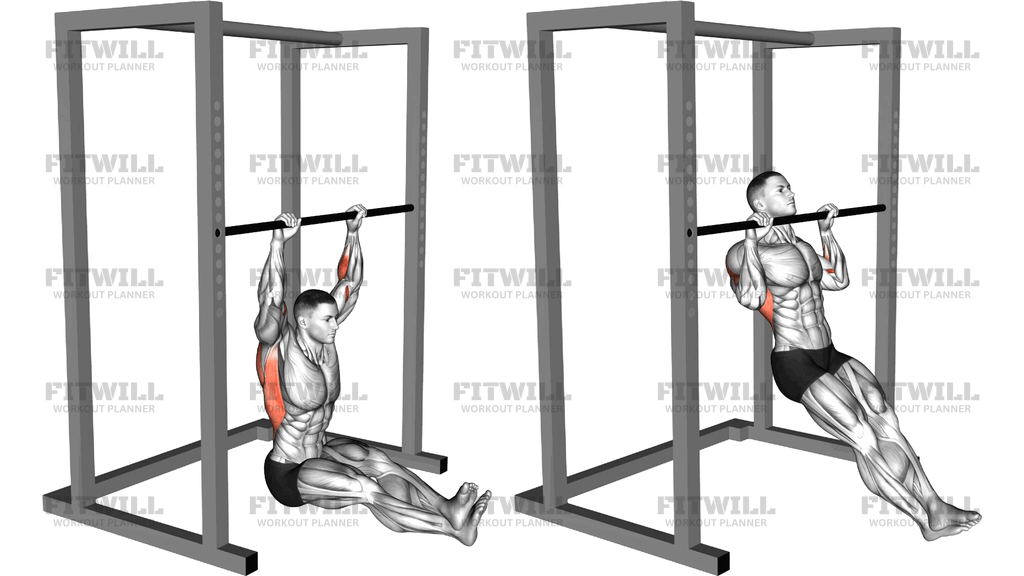
This inverted row uses a bar set across two chairs and a third chair to support the feet, so the whole movement depends on how stable the setup feels before the first rep. The underhand grip changes the emphasis slightly compared with an overhand row: the elbows stay closer to the torso, the lats work hard, and the biceps usually contribute more to the pull. Because the body is suspended at an angle, small changes in body line and chair placement make a big difference in how smooth and controlled each repetition feels.
The main job is to pull the chest toward the bar without turning the exercise into a hip bridge or a shrugging motion. The upper back, lats, biceps, and forearms all help, but the movement should still feel like a clean horizontal pull driven from the shoulders and elbows. If the chairs are too close, too far apart, or uneven, the bar can shift and the rep becomes unstable, so the setup is part of the exercise, not just a starting point.
A good rep begins with the shoulders packed down and the body held in one long line from head to heels. From there, pull the sternum toward the bar, keep the elbows angled back and in, and squeeze the shoulder blades together only as much as the grip and body angle allow. At the top, the chest should approach the bar before you reverse the motion under control. Lower slowly until the arms are straight again, keeping the torso rigid instead of letting the hips sag.
This variation works well for home pulling strength, accessory back work, or as a bodyweight option when you want a row that is easier to load and repeat than a free-hanging version. It can also be scaled by moving the feet, changing the body angle, or bending the knees a little if the full position is too demanding. The exercise is only as safe as the furniture used for it, so sturdy chairs, a stable bar, and a non-slip floor matter more than speed or extra reps.
Done well, this row builds lat strength, upper-back control, and arm endurance while teaching you to keep tension through the whole pull instead of jerking yourself upward. Done poorly, it turns into a swinging, chair-wobbling set that loads the shoulders and lower back more than intended. Treat every rep as a check on setup, body line, and pulling path, and stop the set as soon as the chairs start to move or your torso loses shape.
[ Workout Log & Planner ]
Put your next workout in Fitwill
Keep your plan and training log ready when you are.


Instructions
- Place two sturdy chairs on a flat, non-slip floor and set a straight bar, dowel, or fixed handle across their seats at the same height.
- Put a third chair in line for the feet, then lie under the bar with your shoulders roughly beneath it and your heels supported on the third chair.
- Take an underhand grip slightly wider than shoulder width with straight wrists and arms fully extended.
- Lock in your torso by squeezing the glutes and bracing the abs so the body stays in one long line.
- Start the pull by driving the elbows down and back, bringing the chest toward the bar instead of reaching with the chin.
- Keep the elbows close to your sides and let the shoulder blades move naturally as the chest rises.
- Briefly squeeze at the top when the chest reaches the bar or comes as close as the setup allows.
- Lower under control until the arms are straight again, keeping the hips level and the chairs steady.
- Reset your brace before each rep and stop the set if the setup shifts or you lose body tension.
Tips & Tricks
- Use chairs that do not slide, rock, or flex; the setup should feel solid before you lie underneath it.
- If the bar rolls on the chair seats, wrap a towel or mat under the contact points so it stays centered.
- Keep the underhand grip firm but not cranked back at the wrists; a bent wrist turns the pull into a forearm test.
- Pull the chest to the bar, not the chin, or the neck will take over and the lats will do less work.
- Keep the elbows tucked closer to your ribs to keep the underhand row honest and reduce shoulder flare.
- Raise or straighten the body to make the row harder, or bend the knees slightly if the full position is too much.
- Use a slower lowering phase to make the lats and mid-back work harder without needing extra reps.
- Stop the set as soon as the hips drop or the feet start slipping off the third chair.
Frequently Asked Questions
What Muscles Does This Underhand Inverted Row Train Most?
The lats are the main target, with the upper back, biceps, and forearms helping through the pull.
Can Beginners Do An Inverted Row Between Three Chairs?
Yes, if the chairs are sturdy and the body angle is easy enough to keep the chest and hips controlled.
Why Use An Underhand Grip On The Bar?
The underhand grip keeps the elbows closer to the torso and usually makes the biceps contribute a little more to the pull.
How Stable Do The Chairs Need To Be For This Row?
They need to be very stable, because any shifting or rocking changes the pull and can make the setup unsafe.
What Should My Chest Do At The Top Of The Rep?
Pull the sternum toward the bar until the chest touches or nearly touches it, then lower under control.
Can I Make This Inverted Row Easier?
Yes, move the body to a less horizontal angle or bend the knees slightly so the arms do less of the load.
What Is The Biggest Form Mistake In This Setup?
Letting the hips sag or the chairs shift is the biggest problem, because both take tension away from the back and arms.
What Can I Use Instead Of Chairs And A Bar?
A sturdy table edge, a fixed bar, or a low Smith machine bar can work if the support points are stable and the height matches the same pull angle.