Seated Pull-Up Between Chairs
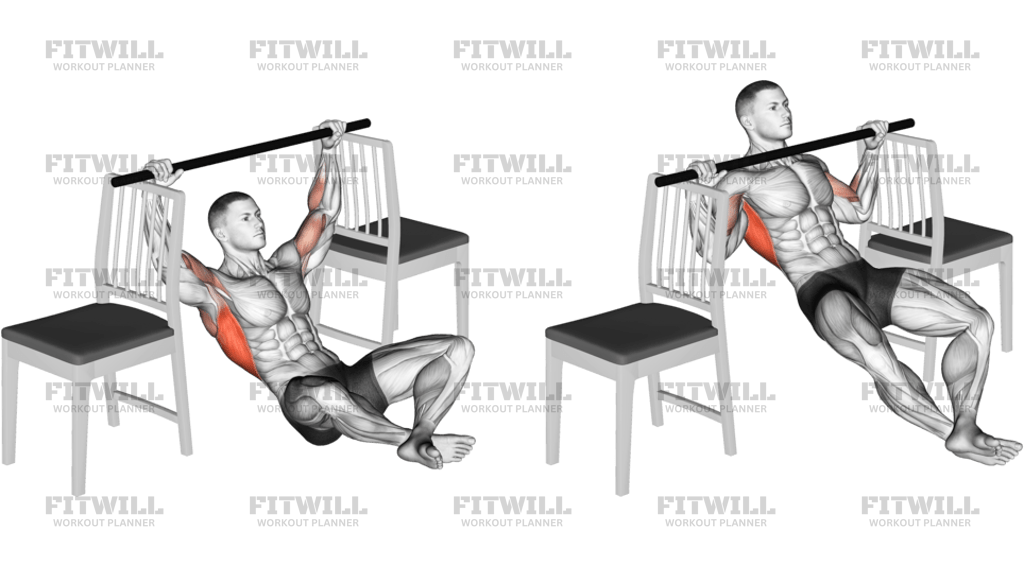
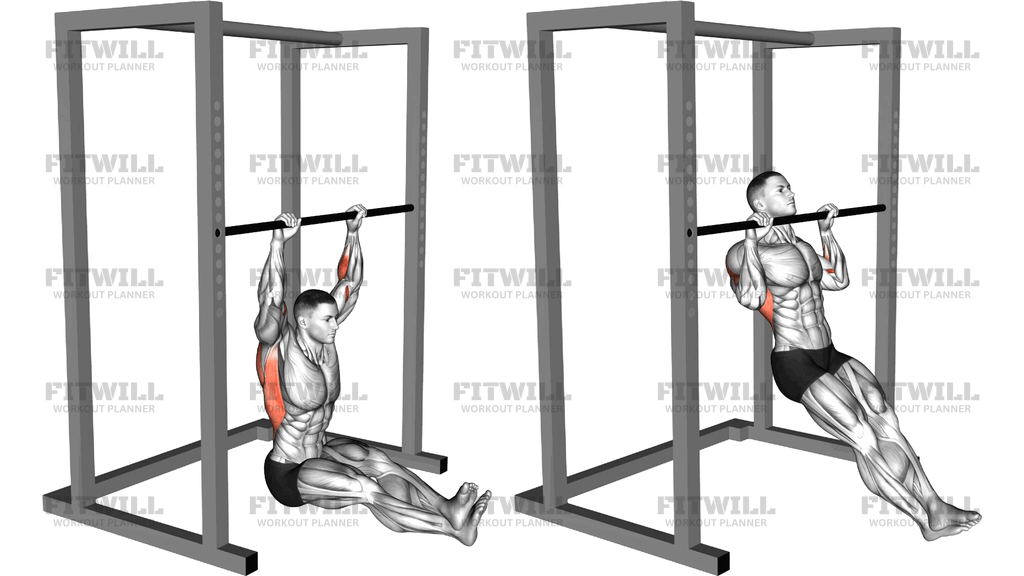
Seated Pull-Up Between Chairs is a bodyweight horizontal pulling exercise built around a simple but demanding setup: two stable chairs support a bar while your body hangs underneath it and pulls up toward the bar. The movement looks simple, but the quality of the rep depends on how securely the chairs are placed, how steady the bar is, and how well you keep your torso organized while you pull.
The exercise primarily trains the lats and upper back, with the biceps, forearms, rear shoulders, and the muscles that hold your torso rigid all contributing to the lift. In anatomy terms, the main work centers on the latissimus dorsi, with help from the rhomboids, biceps brachii, and forearm flexors. Because the body is angled under the bar instead of vertical, it is a useful way to practice rowing strength, scapular control, and trunk stiffness without needing a machine.
Setup matters more here than on many other bodyweight rows. The chairs need to be heavy enough to resist sliding, the bar needs to rest securely, and your feet need to give you enough leverage to stay in position without dragging the hips or shrugging the shoulders. Once you are set, keep the chest lifted, ribs controlled, and shoulders packed down as you pull the chest toward the bar and bring the elbows back.
Use this movement when you want a back-focused row that is friendly to home setups, accessory work, or conditioning circuits. It can be scaled by moving the feet, bending the knees more, or slowing the lowering phase. Stop the set if the bar shifts, the chairs move, or the lower back starts to take over, because the exercise should feel like a controlled row, not a rescue from an unstable setup.
[ Workout Log & Planner ]
Put your next workout in Fitwill
Keep your plan and training log ready when you are.


Instructions
- Place two sturdy chairs shoulder-width apart and rest a straight bar across the backs so it cannot roll or tip.
- Sit on the floor between the chairs, grip the bar a little wider than shoulder width, and slide your body under it with your heels planted on the floor.
- Bend your knees only enough to fit under the bar, then set a straight line from shoulders through hips to heels.
- Brace your abs and squeeze your glutes before the first pull so your torso stays rigid.
- Start with your arms straight and your shoulders pulled down away from your ears.
- Pull your chest toward the bar by driving your elbows back and down.
- Pause briefly at the top when your upper chest reaches the bar and your shoulder blades are squeezed together.
- Lower yourself slowly until your arms are straight again, then reset your body before the next rep.
Tips & Tricks
- Use chairs that do not wobble, and test the bar with body weight before starting your set.
- Keep your ribs from flaring up; the lift should come from the back, not from arching the spine.
- Think about pulling the bar to your lower chest while the elbows slide back along your sides.
- If the movement feels too hard, bend the knees more and bring the feet closer to your hips.
- If you want more challenge, walk the feet farther away so your torso becomes more horizontal.
- Keep the neck long and look slightly up instead of craning the chin toward the bar.
- Lower under control for two to four seconds so the lats stay loaded through the whole rep.
- Stop the set as soon as the chairs shift, the bar starts to roll, or your shoulders start shrugging.
Frequently Asked Questions
What muscle does Seated Pull-Up Between Chairs target most?
The lats are the main target, with the upper back, biceps, forearms, and rear shoulders helping to complete the row.
Can beginners perform this exercise?
Yes, if the chairs are stable and you keep your knees bent enough to stay in a strong body line. Beginners should start with a more upright torso.
Where should my chest be at the top of the rep?
Pull until your upper chest comes close to the bar without shrugging your shoulders up to meet it.
What is the biggest mistake in this setup?
The biggest problem is a bar or chair that moves while you row. If the support shifts, the rep becomes unsafe and the exercise loses its purpose.
How can I make the row easier?
Bend your knees more and keep your feet closer to your hips so your torso is more upright and less body weight has to be lifted.
How do I make it harder?
Move your feet farther out, straighten your legs more, or slow the lowering phase so your body stays under tension longer.
How should my elbows move during the pull?
Drive them back and slightly down. If they flare straight out to the sides, the row usually turns into a less efficient shoulder-dominant pull.
Is this the same as a pull-up?
No. This is a horizontal bodyweight row under a bar, so it trains similar back muscles but with a different angle and less vertical pulling demand.