Lunge With Leg Lift
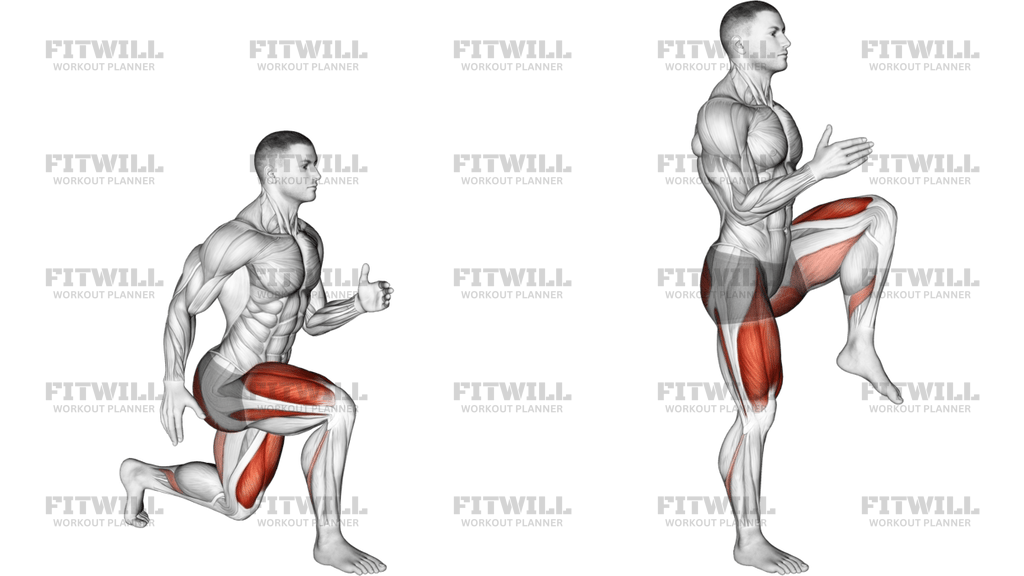
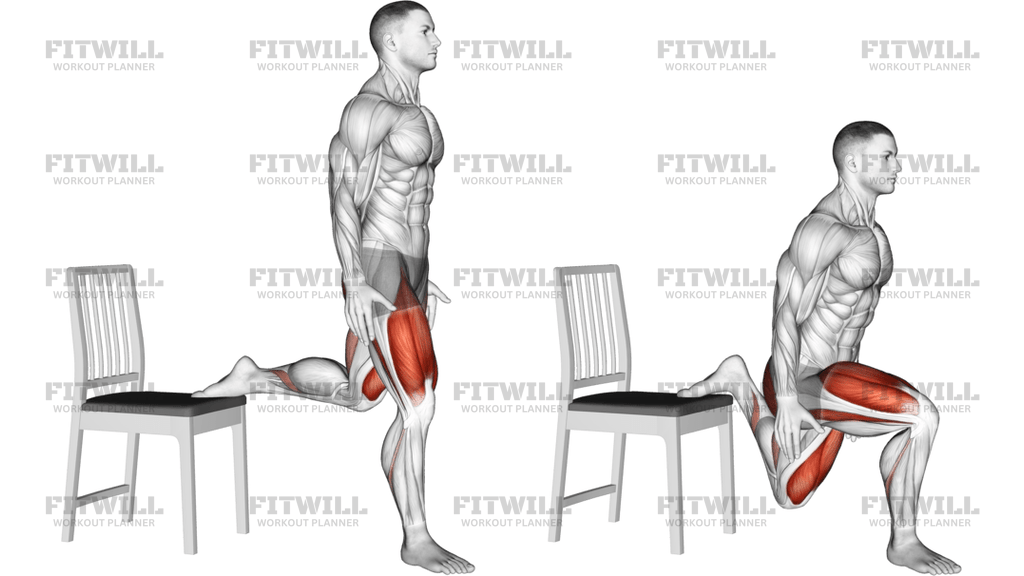
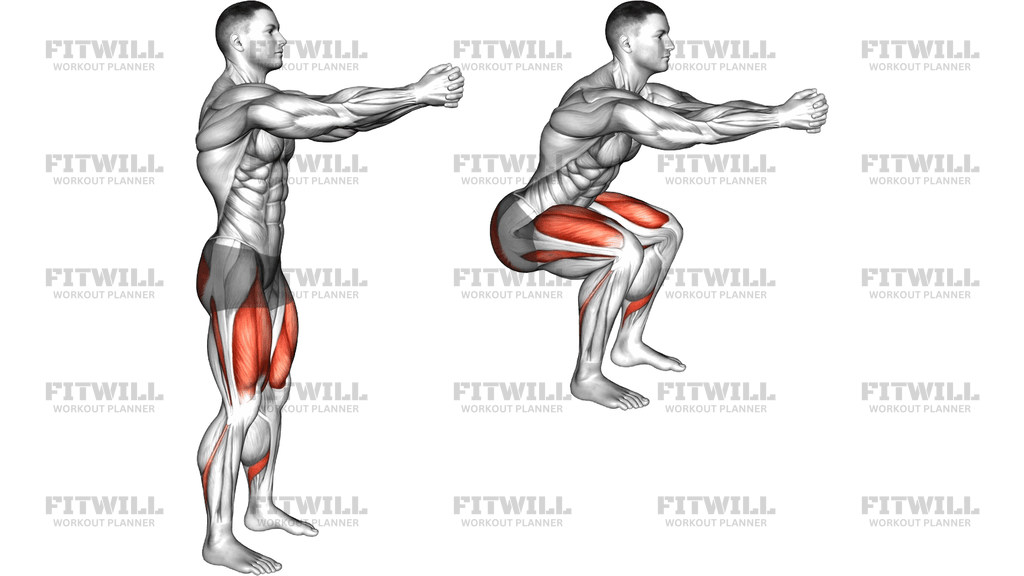
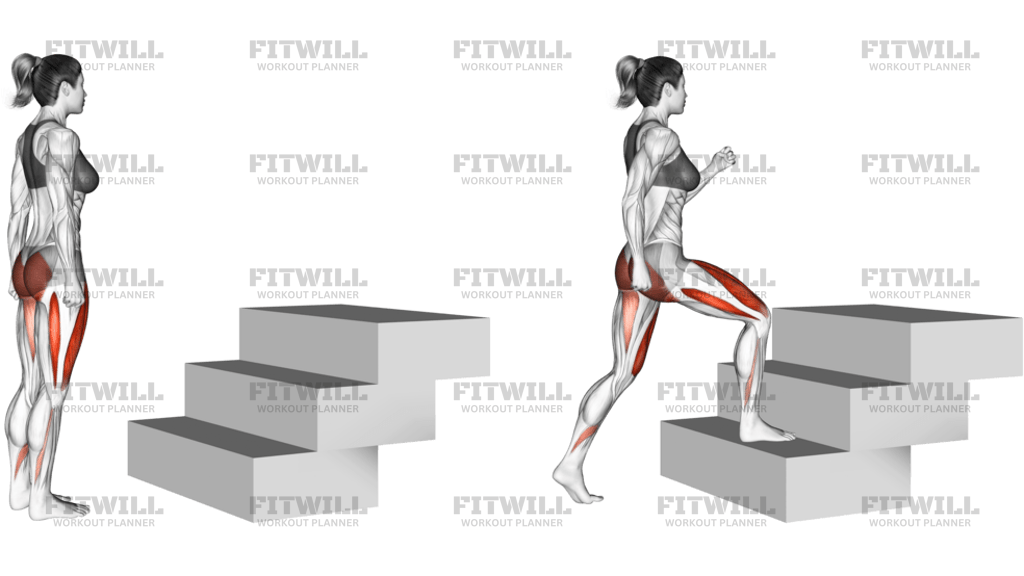
Lunge With Leg Lift is a body-weight lower-body exercise that combines a reverse lunge with a standing knee lift. It is useful when you want to train the glutes and thighs while also challenging single-leg balance, hip control, and coordination in one movement. The alternating down-and-up pattern makes it a practical choice for warm-ups, lower-body accessories, and body-weight strength circuits.
The lunge portion loads the front leg hard through the glutes and thighs, while the lift phase asks the standing hip and trunk to stabilize as the other leg comes through. That makes Lunge With Leg Lift more than a simple leg exercise: it also teaches you to stay tall, keep the pelvis level, and avoid wobbling when you transfer from the split stance back to one leg. The core and lower back work is mostly about controlling position, not cranking through motion.
The setup matters because the movement starts from a stable split stance. Step back far enough that the front foot stays flat and the front shin can stay roughly vertical, then lower under control instead of dropping straight down. From the bottom, drive through the front heel and midfoot to stand, then bring the trailing knee up toward hip height with control so the lift is clean rather than rushed.
During each repetition, the torso should stay tall and the front knee should track over the toes without collapsing inward. The lifted knee should come forward under the hip, not swing wildly across the body. If you are using only body weight, focus on crisp balance and even tempo. If you add speed or load, keep it modest enough that the lunge depth and leg lift stay smooth and repeatable.
This exercise is often used to build unilateral leg strength, improve athletic mechanics, and expose side-to-side control differences. It can fit into a lower-body day, a conditioning circuit, or a movement prep block before heavier squats or lunges. Lunge With Leg Lift is especially useful when you want leg training with a balance demand, but it should still feel controlled enough that every rep ends in a stable standing position.
Fitwill
Log Workouts, Track Progress & Build Strength.
Achieve more with Fitwill: explore over 9600 exercises with images and videos, access built-in and custom workouts, perfect for both gym and home sessions, and see real results.
Start your journey. Download today!




Instructions
- Stand tall with your feet hip-width apart and your hands ready for balance at your sides or in front of your chest.
- Step one leg back into a split stance, keeping the front foot flat and the front knee tracking over the toes.
- Lower into a reverse lunge until both knees are bent and your torso stays upright over the front hip.
- Pause briefly at the bottom with your weight centered through the front heel and midfoot.
- Drive through the front leg to stand up, bringing the back leg forward as you rise.
- Lift the trailing knee up in front of your body to about hip height without leaning backward.
- Squeeze the standing glute at the top and keep your pelvis level instead of twisting.
- Lower the lifted leg with control and step straight back into the next lunge repetition.
- Breathe in as you lower into the lunge and exhale as you stand and lift the knee.
Tips & Tricks
- Keep the front foot planted from heel to forefoot; if the heel lifts, shorten the step-back distance.
- Think about lowering straight down into the lunge instead of taking a long forward lean at the torso.
- Use the standing leg to lift the knee rather than swinging the free leg from momentum.
- Let the back knee travel toward the floor, but stop before the hips tip or the front knee caves inward.
- If balance is shaky, keep the hands in front of your chest and slow the top knee drive.
- A smaller knee lift is fine as long as the pelvis stays level and the standing side remains tall.
- Move at a tempo you can repeat cleanly on every rep; this exercise breaks down fast when rushed.
- If you feel it mostly in your low back, reduce the knee lift height and keep the ribs stacked over the pelvis.
Frequently Asked Questions
What muscles does Lunge With Leg Lift work most?
It mainly trains the glutes and thighs, with the core and lower back helping you stay balanced through the lunge and knee lift.
Is Lunge With Leg Lift good for beginners?
Yes, as long as you keep it body weight and use a short, controlled range. Beginners should focus on steady balance before trying to speed it up.
Should my back knee touch the floor in Lunge With Leg Lift?
It does not have to touch. Lower until you can keep the front foot flat, the torso tall, and the knee under control.
What is the biggest mistake with the knee lift?
Swinging the leg forward and leaning back to fake the lift. The standing leg should do the work while the torso stays stacked.
Should I alternate legs each rep?
You can alternate sides or finish all reps on one leg before switching. Alternating is more athletic; same-side reps make it easier to focus on balance.
Where should I feel the lunge and leg lift most?
You should feel the front glute and thigh during the lunge, then the standing glute and hip stabilizers when you drive up and balance at the top.
What can I use instead of Lunge With Leg Lift?
A reverse lunge, split squat, or reverse lunge to balance hold are good substitutions if the knee lift makes you lose control.
How can I make Lunge With Leg Lift harder?
Slow the lowering phase, pause at the bottom, or add a light dumbbell or medicine ball only after the balance pattern is consistent.
Why does my front knee wobble during this exercise?
Usually the step-back distance is too short or the hip is not staying stacked. Step back a little farther and keep the front knee tracking in line with the second toe.