Chin-Ups Narrow Parallel Grip
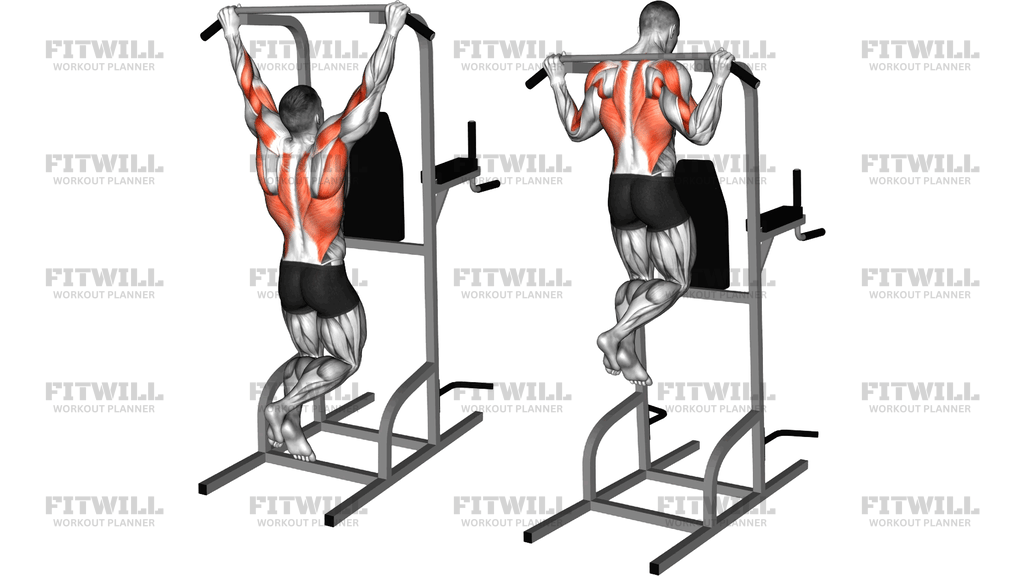
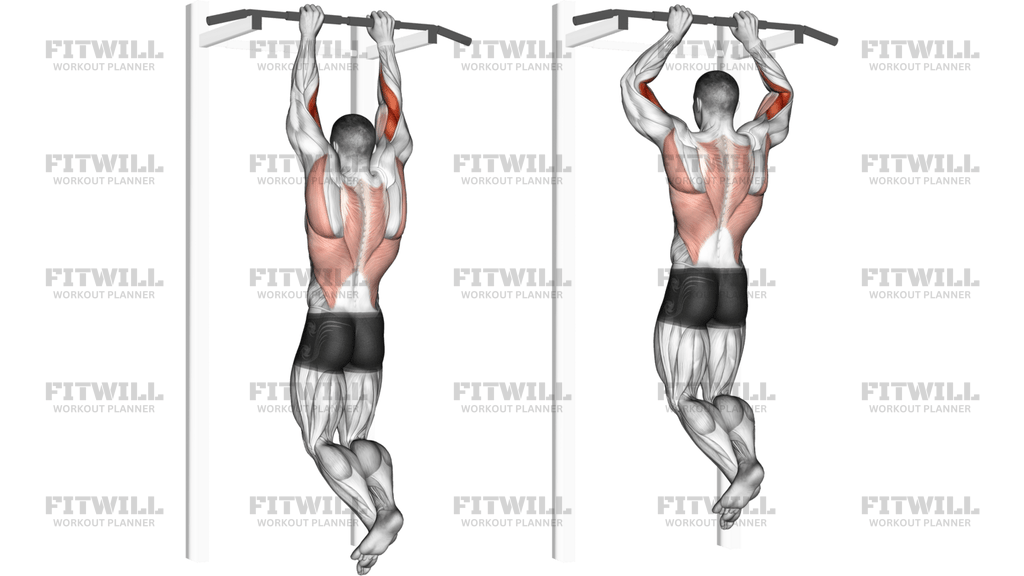
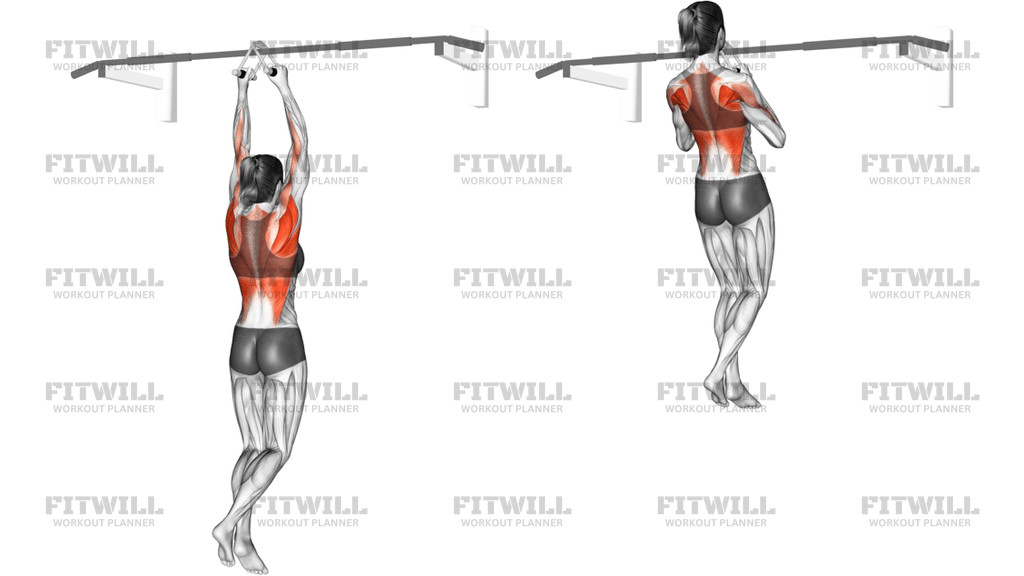
Chin Ups (narrow Parallel Grip) is a bodyweight vertical pulling exercise performed on a pull-up bar or parallel handles with the palms facing each other and the hands kept close together. It builds pulling strength through a full range of motion, with the lats doing most of the work and the upper back, biceps, and forearms helping to stabilize and finish each rep.
The narrow neutral grip changes the feel of the movement compared with a wider pull-up. It usually lets the elbows travel a little closer to the torso, which can make it easier to keep the shoulders packed and the path clean. That makes setup important: if the ribcage flares, the shoulders shrug, or the legs swing, the set turns into momentum instead of a strict vertical pull.
A good rep starts from a dead hang or an active hang with the shoulders set down away from the ears. From there, pull the chest toward the handles by driving the elbows down, then finish with the chin over the bar without craning the neck. The descent matters just as much as the lift, so lower under control until the arms are long again and the shoulder blades can move freely.
This version of the chin-up is useful for building back strength, arm strength, and grip endurance while keeping the movement pattern simple and repeatable. It also works well as a main bodyweight pull, an assisted strength drill, or a progression toward weighted chin-ups. Because the body is hanging freely, the exercise also exposes weak links quickly, which makes it valuable for honest strength training and technique practice.
For safety and quality, keep the wrists neutral, avoid kicking or kipping, and stop a set when the next rep would require a heave or a neck reach to finish. If you cannot yet control the full range, use band assistance, a machine assist, or slow negatives so the path stays smooth and the shoulders stay in a strong position.
[ Workout Log & Planner ]
Put your next workout in Fitwill
Keep your plan and training log ready when you are.


Instructions
- Grip the parallel handles with your palms facing each other and your hands close together, then hang with straight arms and quiet legs.
- Set your shoulders down away from your ears before you pull, keeping the ribs stacked instead of flared.
- Take a breath, brace your midsection, and start the rep by driving your elbows down and back.
- Pull your chest toward the handles until your chin clears the bar without craning your neck.
- Squeeze briefly at the top while keeping the shoulders out of your ears.
- Lower yourself slowly until the arms are fully extended and the shoulder blades can open again.
- Keep your body in one line on the way up and down; avoid kicking, swinging, or twisting.
- Exhale as you pull and inhale on the controlled descent.
- Reset at the bottom before the next rep so each repetition starts from a stable hang.
Tips & Tricks
- Think about pulling your elbows toward your ribs, not just lifting your chin over the bar.
- A packed shoulder position at the bottom usually makes the first inch of the pull feel stronger and cleaner.
- If your legs drift forward, lightly cross the ankles behind you and keep the glutes tight to reduce swing.
- Do not turn the top of the rep into a neck reach; the chin should clear the handles because the body pulled higher, not because the head shot forward.
- A slower lowering phase builds more control in the lats and biceps than dropping straight to the bottom.
- If you cannot keep the same path rep after rep, use assistance before the set turns into a momentum drill.
- Keep the grip close enough that the elbows can travel comfortably without forcing the wrists inward.
- Stop the set when the shoulders start shrugging or the chest can no longer rise cleanly toward the bar.
Frequently Asked Questions
What muscles do Chin Ups (narrow Parallel Grip) work most?
The lats are the main target, with the upper back, biceps, and forearms helping throughout the pull.
Can beginners perform this exercise?
Yes. Most beginners need assistance at first, such as a band, assisted chin-up machine, or slow negatives.
What does the narrow parallel grip change?
It keeps the palms facing each other and usually lets the elbows stay a little closer to the torso, which makes the pull feel more direct through the lats and arms.
How high should I pull myself?
Pull until your chin clears the handles or bar without jutting the head forward. The torso should do the work, not a neck reach.
Why do my shoulders get tired before my back?
If the shoulders shrug or the scapulae lose position, the upper traps take over. Start each rep with the shoulders down and keep the path controlled.
Should I use a dead hang or stay active at the bottom?
Either can work, but a controlled active hang is often better for keeping the shoulders organized and reducing sloppy swing.
What is the most common mistake on this chin-up?
Using momentum from the legs or torso instead of a clean vertical pull from the back and arms.
How can I progress this movement?
Add reps first with clean form, then progress to slower eccentrics, paused top positions, or external load once bodyweight reps are consistent.