Wide-Grip Pull-Up
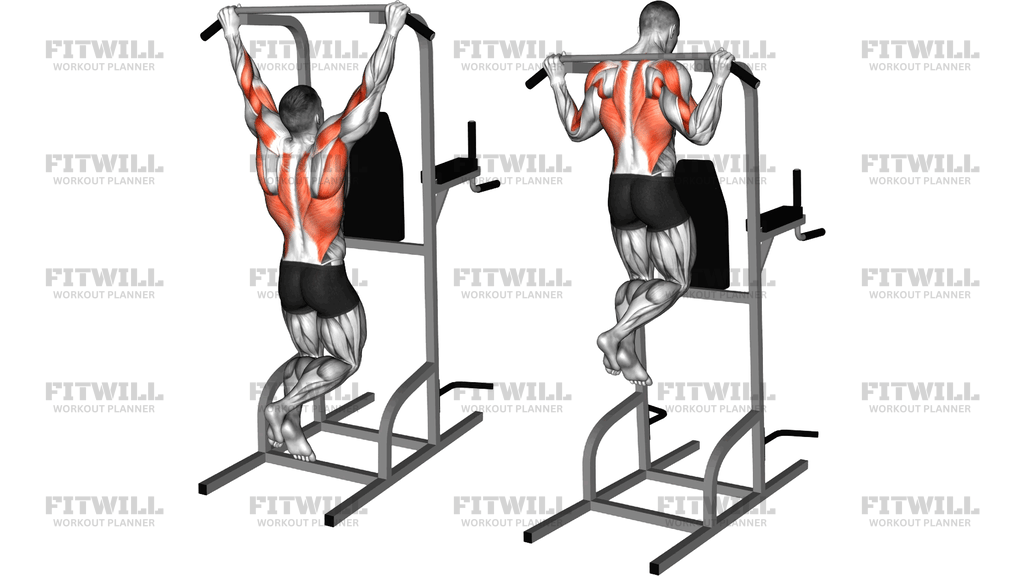
Wide-Grip Pull-Up is a bodyweight vertical pulling exercise performed from an overhead bar with a pronated grip set wider than shoulder width. It is used to build upper-body pulling strength, especially through the lats and upper back, while also challenging the arms, grip, and trunk stability. Because the hands are set wide, the movement usually feels more demanding on the shoulders and requires cleaner body control than a standard pull-up.
The exercise starts from a hanging position where your shoulders, ribcage, and legs all need to stay organized before the first pull. A controlled setup matters because momentum, loose shoulders, or an overextended lower back will quickly turn the rep into a swing instead of a strict pull. In a good Wide-Grip Pull-Up, the shoulders stay active, the torso stays quiet, and the elbows travel down and slightly out as the body rises.
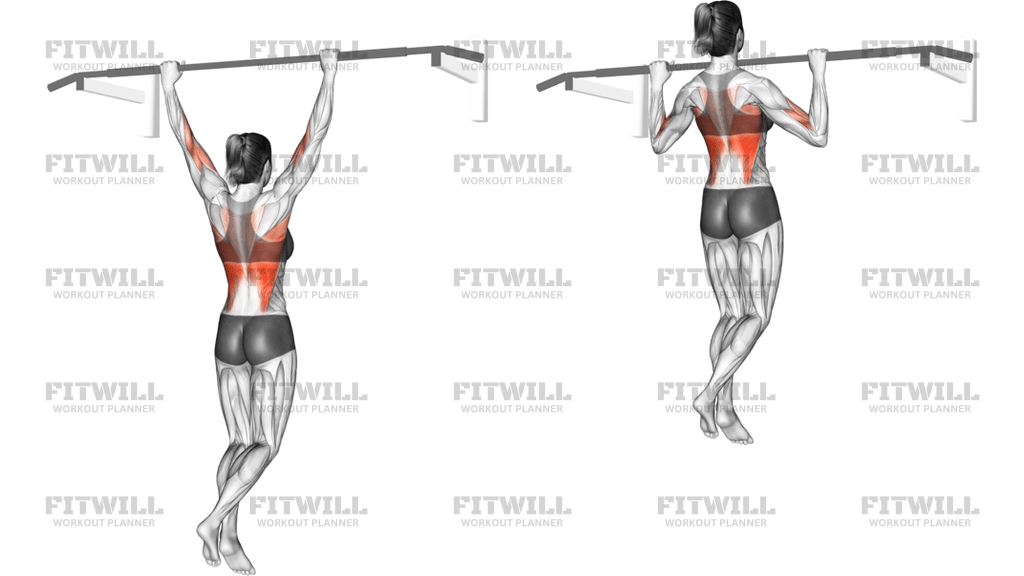
The main work comes from the latissimus dorsi, with help from the rhomboids, biceps brachii, forearm flexors, and the smaller muscles that keep the shoulder blades controlled. That makes the exercise useful for building both strength and visible upper-back thickness, but only if the range of motion is honest. A rep is complete when you have pulled yourself high enough without craning the neck or kicking the legs to finish the rep.
This movement is often used in back-focused strength sessions, upper-body pulling days, or bodyweight progressions for athletes who want a stronger hang and more controlled vertical pulling. Beginners can still use it, but assisted variations such as a band, pull-up machine, or slow negatives are usually a better starting point than forcing sloppy full reps. The wide grip can be effective, but it should still feel secure and repeatable rather than extreme.
Safety and quality both depend on controlling the descent and keeping the shoulders comfortable through the bottom position. If the front of the shoulder pinches, the grip is probably too wide or the range is too aggressive for the current level. Use a strict hang, a smooth pull, and a controlled return so each rep trains the back instead of turning into a momentum drill.
[ Workout Log & Planner ]
Put your next workout in Fitwill
Keep your plan and training log ready when you are.


Instructions
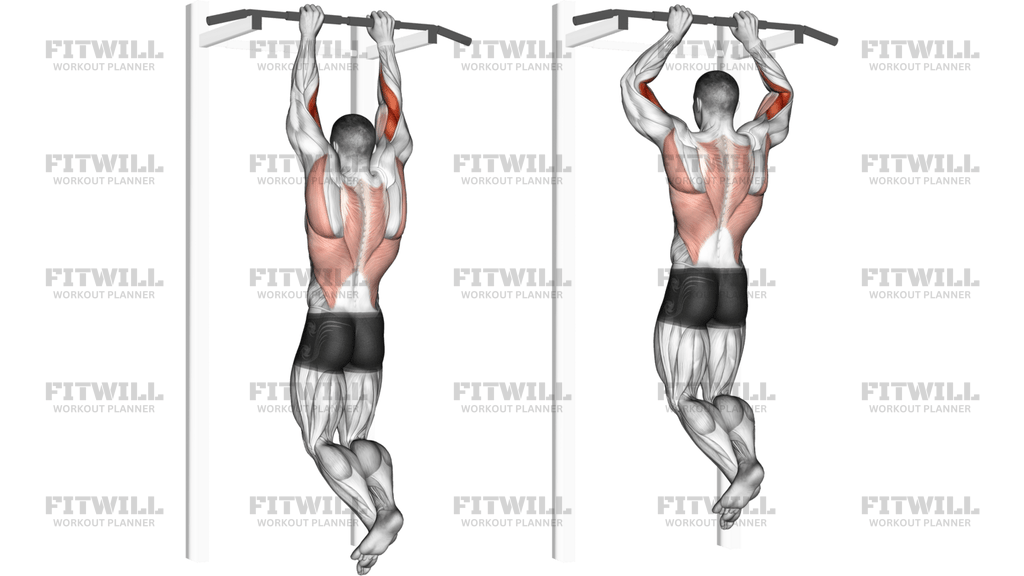
- Grip the pull-up bar with an overhand grip a little wider than shoulder width and hang with your arms straight, legs quiet, and ankles crossed or feet together.
- Set your shoulders down away from your ears, keep your ribs stacked over your pelvis, and hold a tight hollow body instead of letting your lower back arch.
- Start from a dead hang or a controlled active hang, letting the shoulders stay engaged without collapsing into the joints.
- Pull your elbows down and slightly out as you drive your chest toward the bar, keeping the torso still and the legs from swinging.
- Continue until your chin clears the bar or your upper chest reaches the highest strict position you can control.
- Squeeze the upper back briefly at the top without shrugging or kicking to finish the rep.
- Lower yourself under control until the elbows are straight again and the shoulders return to a strong hanging position.
- Inhale on the way down and exhale as you pull, then reset before the next repetition if you need to stop the swing.
Tips & Tricks
- A grip that is only slightly wider than shoulder width usually gives better range and shoulder comfort than an extreme wide grip.
- Think about driving the elbows toward the floor, not pulling the bar with your hands.
- Keep the ribs from flaring at the top; an overarched lower back usually means the rep is turning into a swing.
- Crossing the ankles helps quiet the legs and makes it easier to keep the torso strict.
- If you cannot control the lowering phase, use assistance or reduce the number of reps instead of forcing a sloppy descent.
- Do not crane the neck to get the chin over the bar; keep the head in line with the spine and let the chest rise naturally.
- If the shoulders feel pinchy at the bottom, narrow the grip slightly and stop a little short of a painful stretch.
- A brief pause at the top makes each rep cleaner than bouncing through the pull.
Frequently Asked Questions
What muscle does Wide Grip Pull Up target most?
The lats are the main target, with the upper back, biceps, and forearms helping to control the pull.
Can beginners perform this exercise?
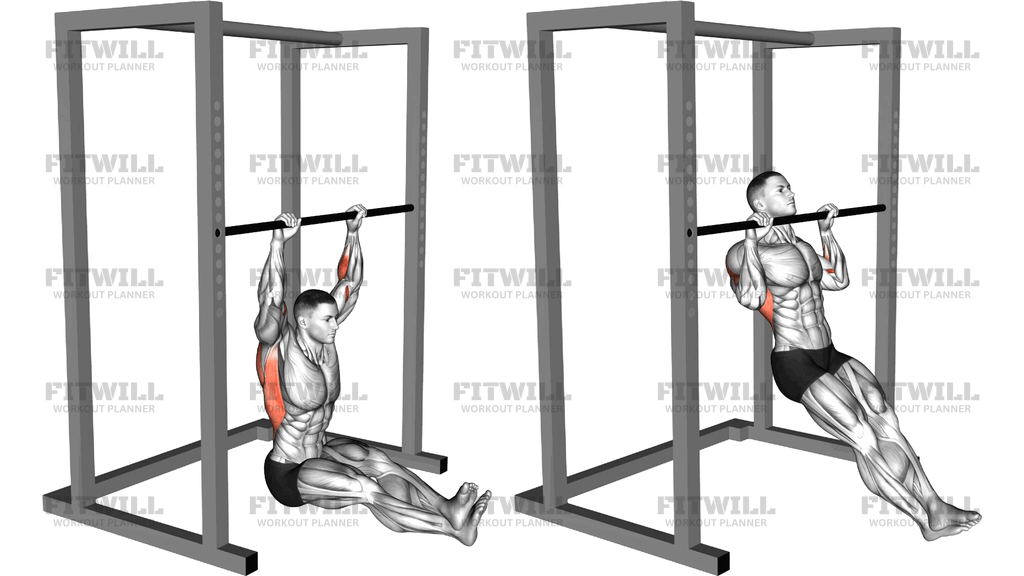
Yes, but most beginners should start with assistance from a band, pull-up machine, or slow negatives before attempting strict full reps.
How wide should my hands be on Wide-Grip Pull-Up?
Set your hands just wider than shoulder width. Going too wide usually shortens the range of motion and puts more stress on the shoulders without adding much benefit.
Should I pull all the way to my chest on Wide-Grip Pull-Up?
Not necessarily. A strict rep usually ends when your chin clears the bar or your chest reaches the highest controlled position you can achieve without swinging.
Why do my legs swing during Wide-Grip Pull-Up?
Swing usually comes from loose bracing or kicking from the hips. Cross the ankles, tighten the trunk, and pause briefly between reps to reduce it.
Is Wide-Grip Pull-Up harder than a regular pull-up?
Often yes, because the wider grip can reduce range of motion and make shoulder positioning more demanding.
What should I do if my shoulders feel pinchy at the bottom?
Narrow the grip slightly, keep the shoulders active instead of hanging loose, and stop just short of the painful stretch.
What is a good progression if I cannot do a full rep yet?
Use assistance, slow negatives, or top holds. Those variations let you practice the same pull pattern while building enough strength for strict reps.