Sitting Sumo Mobility Stretch
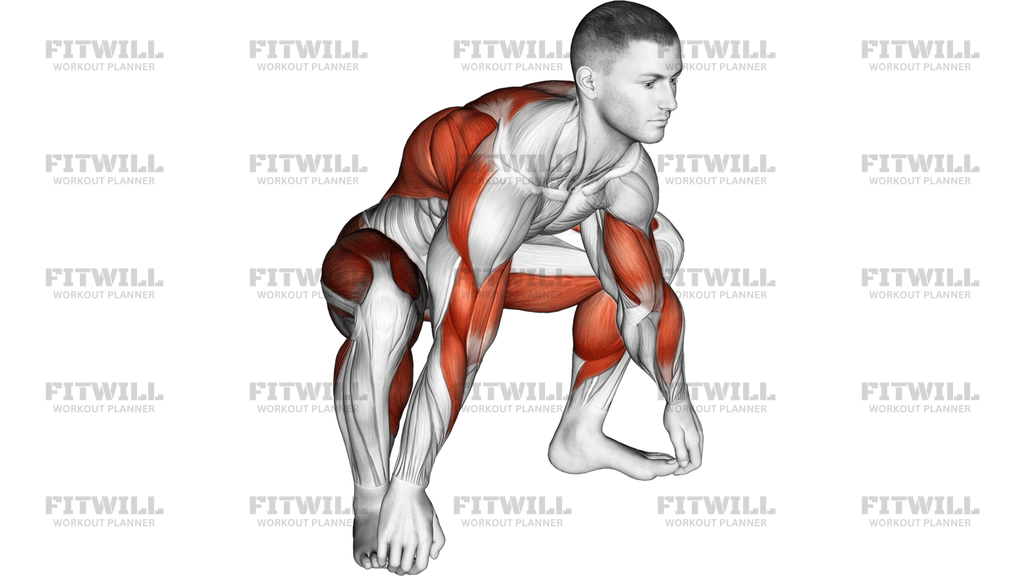
Sitting Sumo Mobility Stretch is a deep wide-stance mobility drill that opens the hips, inner thighs, ankles, and lower back while asking the shoulders and arms to support the position. In this version, the body drops into a low sumo squat with the feet turned out and the hands on the floor for balance. The goal is not to chase depth for its own sake, but to create a stable stretch that feels organized from the feet up.
The wide stance changes the demand on the adductors and hip rotators, so the setup matters. If the feet are too narrow, the knees often crowd forward and the stretch gets sloppy; if they are too wide, you may lose balance or lift the heels. A controlled setup lets you sit between the heels, keep the knees tracking out, and use the floor with the hands as light support rather than collapsing into the bottom.
As you settle into the stretch, keep a long spine and let the chest angle forward enough to preserve balance. The hips should drop smoothly while the knees open over the toes, and the pressure should stay spread across the whole foot. Small side-to-side shifts can help you find the tight spots in one adductor or ankle without forcing the range all at once.
This movement is useful before squats, deadlifts, lunges, or any session where hips and ankles need to move freely. It can also work as a short recovery drill when the groin and lower back feel stiff from sitting or training. Because the position is low and supported, it is usually best performed with calm breathing and a pause long enough for the tissues to relax.
Keep the stretch honest. If the heels pop up, the knees collapse inward, or the low back rounds hard, back the range off and reset the stance. A good Sitting Sumo Mobility Stretch feels like a controlled opening through the inner thighs and hips, not a forced fold into the floor.
Fitwill
Log Workouts, Track Progress & Build Strength.
Achieve more with Fitwill: explore over 9600 exercises with images and videos, access built-in and custom workouts, perfect for both gym and home sessions, and see real results.
Start your journey. Download today!




Instructions
- Stand on a mat with your feet wider than shoulder width, turn the toes out about 30 to 45 degrees, and let your arms hang between your legs.
- Bend your knees and hips to sink into a deep sumo squat, keeping your heels down and your chest angled forward for balance.
- Place your fingertips or palms on the floor inside your feet, and let your elbows track inside the knees if that support is available.
- Press your knees gently out over your toes so the inner thighs and hips can open without the arches collapsing.
- Shift your hips slightly side to side to find one tight adductor or ankle before moving deeper.
- Inhale through the nose and exhale slowly as you settle into the bottom position, keeping the spine long instead of rounding hard.
- Hold the end range for a few steady breaths, or add small controlled pulses by easing the hips a little lower and then returning to the same low position.
- Press through the heels, stand up safely, and reset your stance before the next repetition.
Tips & Tricks
- Turn the toes out only enough to keep the knees tracking over the second toes; excessive turnout can twist the knees.
- If the heels start to lift, narrow the stance slightly before forcing more depth.
- Use your fingertips on the floor for balance instead of folding the chest all the way down.
- Keep the chest long enough to avoid collapsing between the thighs; the stretch should come from the hips, not a shrug.
- A small side-to-side shift usually finds tighter adductors faster than trying to sink lower right away.
- Think about spreading the floor with both feet so the knees stay open and the arches do not cave inward.
- If the groin feels pinchy, reduce depth and shorten the hold instead of pushing harder.
- Slow nasal breathing often lets the hips relax faster than holding your breath at the bottom.
- Use this drill before lower-body lifting if balance is a concern, because the deep position can feel unstable after fatigue.
- Stop if the stretch turns into sharp knee or groin pain rather than a broad inner-thigh opening.
Frequently Asked Questions
What muscle does Sitting Sumo Mobility Stretch target most?
It mainly opens the inner thighs and hips, with the adductors doing most of the stretching. The ankles, glutes, and lower back also help with the position.
Can beginners perform this exercise?
Yes. Beginners should keep their hands on the floor, stay a little higher at first, and only sink as far as they can keep the heels down.
Should my heels stay on the floor in Sitting Sumo Mobility Stretch?
Ideally, yes. If the heels lift, reduce the depth or bring the feet a little closer so the stretch stays in the hips instead of turning into a balance drill.
Why do my knees drift inward in this stretch?
The stance is usually too narrow or the toes are not turned out enough. Press the knees gently over the toes and keep the whole foot rooted.
Do I need to keep both hands on the floor?
No, but the floor support makes the position more stable and helps you keep a long spine. Use both hands at first, then reduce support only if the stretch stays controlled.
Can I shift side to side while holding Sitting Sumo Mobility Stretch?
Yes. Small side-to-side shifts are a good way to find one tighter adductor or ankle without forcing more depth.
When should I use Sitting Sumo Mobility Stretch in a workout?
It works well in a warm-up before squats, deadlifts, or lunges, or as a short mobility reset between lower-body sets.
What should I do if I feel a pinch in my groin?
Back out of the bottom position, shorten the range, and hold a slightly higher stance. A broad stretch is fine; a sharp pinch means the position is too deep or too wide.