Sitting Sumo Left Twist Stretch
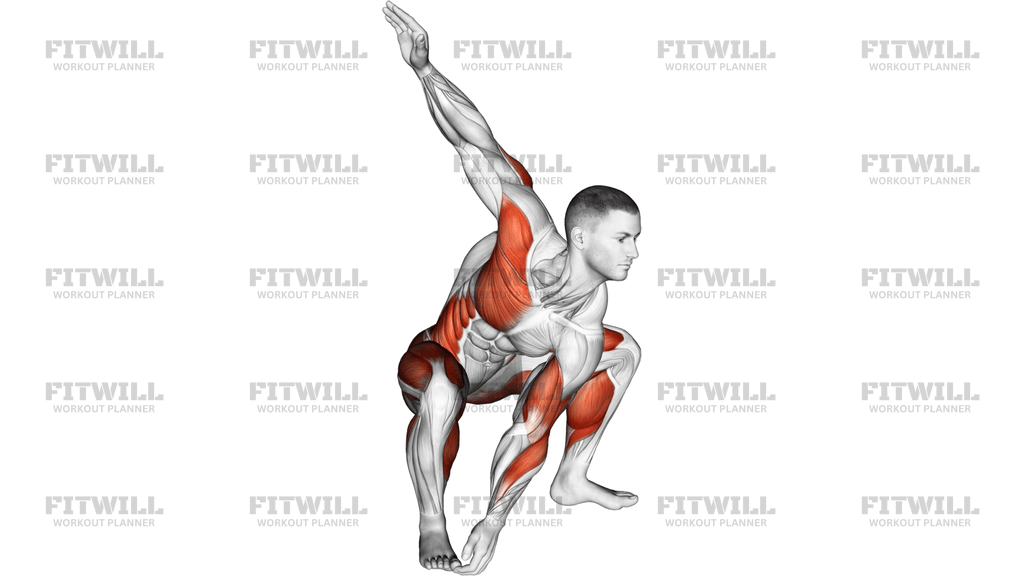
Sitting Sumo Left Twist Stretch is a deep squat mobility drill done with a very wide stance, turned-out feet, and a deliberate rotation toward the left side. The position combines a loaded hip opener with a rib-cage twist, so it is useful when you want to loosen the adductors, hips, glutes, lower back, and thoracic spine without turning the movement into a fast or sloppy flow.
The setup matters more than the depth. Your feet should be wide enough to let the knees track comfortably over the toes, the heels should stay rooted, and the pelvis should settle between the hips instead of tipping forward. From there, the left twist should come from the rib cage and upper back while the legs hold the squat. If the torso collapses, the stretch turns into a low-back crank instead of a clean mobility drill.
This exercise is especially useful before lower-body training, after long periods of sitting, or in a recovery session when the goal is to restore range in the hips and trunk. The wide squat position opens the inner thighs and groin, while the twist adds a rotational component that reaches into the side body and shoulders. The overhead reach shown in the movement also helps lengthen through the lats and upper torso.
Treat each rep or hold like a slow reset. Sink only as far as you can keep the heels down, the knees aligned, and the breath steady. Use the exhale to soften tension, then gently deepen the twist without bouncing or forcing. If your ankles, knees, or hips limit the position, shorten the range or raise the heels slightly so the stretch stays smooth and pain-free rather than forced.
[ Workout Log & Planner ]
Put your next workout in Fitwill
Keep your plan and training log ready when you are.


Instructions
- Stand on a mat and take a very wide sumo stance with your toes turned out so you can lower into a deep squat.
- Sit your hips down between your heels, keep both heels grounded, and let your knees track in line with your toes.
- Place your left hand near the floor for balance and start turning your chest toward the left side.
- Reach your opposite arm up and slightly back so the rib cage opens without leaning or arching your low back.
- Keep your chest lifted as you sink into the squat, using the hand on the floor only as light support.
- Breathe in through the nose, then use a slow exhale to relax the inner thighs and side body a little more.
- Hold the end range for a brief pause while keeping the neck long and the shoulders away from the ears.
- Unwind slowly back to the center before repeating the left twist or moving to the other side if your program calls for it.
Tips & Tricks
- Set your stance wide enough that the knees do not cave inward when you settle into the squat.
- If your heels lift, narrow the twist slightly or place a small wedge under the heels instead of forcing depth.
- Think about turning the rib cage, not just swinging the arm, or the stretch will stay superficial.
- Keep the supporting hand light; if you are leaning hard on it, the hips are probably not doing the work.
- Let the exhale soften the groin and side body, then stop short of any pinching in the hip or knee.
- Keep the chin tucked slightly so the neck follows the rotation instead of jutting forward.
- A shorter hold with cleaner alignment beats a deeper position that makes the low back round.
- If one side feels blocked, reduce the squat depth before trying to twist farther.
- Move slowly out of the bottom position so you do not strain the ankles or knees on the way up.
Frequently Asked Questions
What does Sitting Sumo Left Twist Stretch work most?
It mainly opens the inner thighs, hips, glutes, side body, and thoracic spine.
Do I need to keep my heels down in the sumo squat?
Yes. If the heels lift, reduce the depth or widen the stance until you can stay grounded.
Should the twist come from my lower back?
No. Rotate through the rib cage and upper back while the pelvis and legs stay stable.
Can I use my hand on the floor for support?
Yes. Use it as a light balance point, not as a way to dump your weight onto the shoulder.
Where should I feel the stretch?
You should feel it in the groin, inner thigh, hips, and the rotating side of the torso.
Is this more of a warmup or a finishers stretch?
It works well in a warmup, between strength sets, or in a cooldown when you want to restore hip mobility.
What if my ankles limit the squat depth?
Shorten the range, adjust the stance, or elevate the heels slightly so the stretch stays comfortable.
Can beginners do this exercise?
Yes, as long as they keep the squat shallow at first and avoid forcing the twist.